
AI-Driven Space Exploration Systems: Autonomous Interplanetary Mission Architectures Shaping the Future of Space Travel
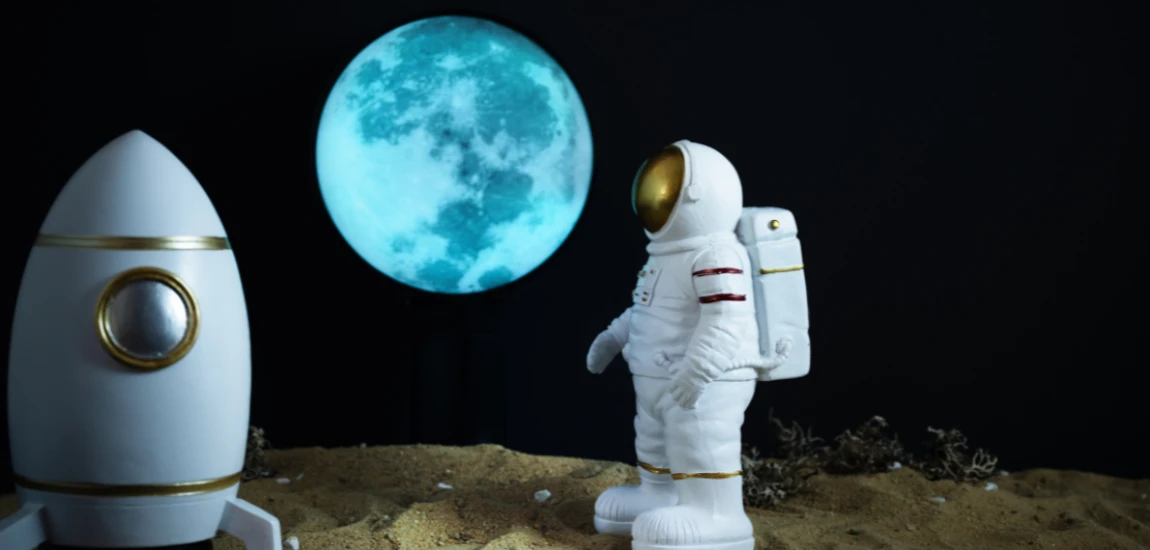
AI-driven space exploration systems are transforming humanity’s ability to explore the cosmos by enabling spacecraft and robotic missions to operate autonomously across vast interplanetary distances. Traditional space missions rely heavily on Earth-based control centers, where commands are transmitted with significant delays due to the vast distances involved. However, as missions extend beyond Earth’s orbit toward Mars, Jupiter, and deeper regions of space, communication delays make real-time human control impractical. Autonomous interplanetary mission architectures powered by artificial intelligence solve this challenge by enabling spacecraft to make independent decisions, adapt to unpredictable environments, and execute complex tasks without constant human intervention. These systems integrate machine learning, robotics, advanced navigation algorithms, and real-time data processing to create intelligent exploration frameworks. From planetary rovers navigating alien terrains to deep-space probes analyzing cosmic phenomena, AI is becoming the backbone of modern space exploration. This blog explores the architecture, technologies, applications, challenges, and future trends of AI-driven space exploration systems, providing insights into how they are shaping the next era of interplanetary discovery.
Understanding AI-Driven Space Exploration Systems

Core Concept and Functionality
AI-driven space exploration systems are advanced technological frameworks designed to enable spacecraft, satellites, and robotic explorers to operate autonomously in space environments. These systems use artificial intelligence to process sensor data, analyze environmental conditions, and make real-time decisions without relying on constant human input. Their core functionality includes autonomous navigation, mission planning, anomaly detection, and adaptive learning. By combining onboard computing with AI algorithms, spacecraft can respond dynamically to unexpected challenges such as terrain obstacles, system failures, or communication delays.
Key Components of Space AI Systems
These systems consist of several essential components, including onboard processors, machine learning models, sensor arrays, and autonomous control systems. Onboard processors handle data analysis locally, reducing dependency on Earth-based systems. Machine learning models interpret complex datasets, while sensors collect environmental information such as temperature, radiation levels, and spatial positioning. Autonomous control systems execute decisions in real time, ensuring mission continuity.
Importance in Modern Space Missions
AI-driven systems are crucial for modern space exploration because they enable long-duration and deep-space missions where human intervention is limited. They enhance mission efficiency, reduce operational risks, and allow exploration of previously unreachable regions of space.
Evolution of Autonomous Interplanetary Mission Architectures

Early Space Exploration Systems
Early space missions relied entirely on manual control from Earth. Commands were sent to spacecraft with significant delays, limiting real-time responsiveness. These systems were effective for short-range missions but struggled with deep-space exploration due to communication constraints.
Transition to Semi-Autonomous Systems
The introduction of semi-autonomous systems marked a significant advancement in space exploration. These systems allowed spacecraft to perform basic tasks independently while still relying on Earth for critical decisions. This hybrid approach improved efficiency but still had limitations in deep-space environments.
Emergence of Fully Autonomous Architectures
Modern interplanetary mission architectures are increasingly autonomous, enabling spacecraft to operate independently for extended periods. AI integration allows these systems to analyze data, make decisions, and adapt to environmental changes without human intervention, making deep-space exploration more feasible than ever before.
Core Technologies Behind AI Space Exploration

Machine Learning and Deep Learning Models
Machine learning plays a central role in AI-driven space systems by enabling predictive analytics and pattern recognition. Deep learning models analyze complex space data, such as planetary surfaces and cosmic radiation, to support decision-making processes. These models continuously improve through adaptive learning.
Computer Vision and Planetary Mapping
Computer vision technologies are used to interpret images captured by space probes and rovers. These systems enable terrain mapping, obstacle detection, and navigation on planetary surfaces such as Mars or the Moon.
Edge Computing in Space Systems
Edge computing allows data processing to occur directly on spacecraft rather than relying on Earth-based systems. This reduces latency and ensures faster decision-making, which is critical for autonomous operations in deep space environments.
Autonomous Navigation and Mission Control

Real-Time Navigation Systems
Autonomous navigation systems enable spacecraft to determine their position and trajectory in real time. These systems use AI algorithms to process sensor data and adjust course as needed, ensuring accurate navigation across vast distances.
Adaptive Mission Planning
AI-driven mission planning allows spacecraft to adjust objectives dynamically based on environmental conditions and mission progress. This adaptability ensures mission success even in unpredictable scenarios.
Fault Detection and Self-Healing Systems
Autonomous systems can detect anomalies and initiate corrective actions without human intervention. Self-healing capabilities ensure that spacecraft can recover from system failures and continue mission operations.


Anil Polat, behind the blog "FoxNomad," combines technology and travel. A computer security engineer by profession, he focuses on the tech aspects of travel.
Anil Polat

Prev Post

Next Post