
AI-Based Interstellar Research Systems and Autonomous Cosmic Discovery Intelligence Architectures
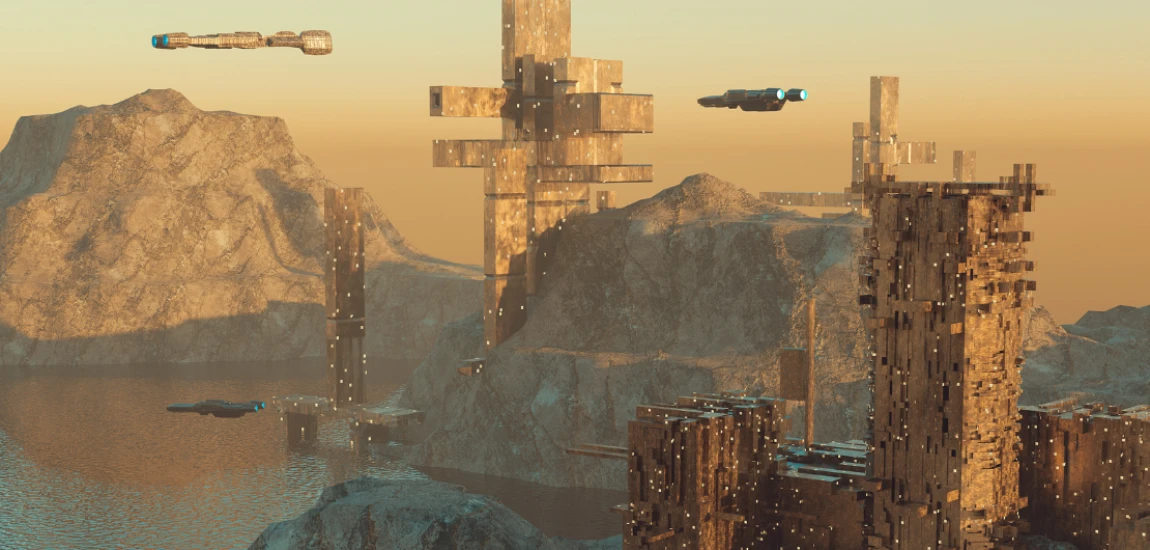
Humanity’s curiosity about the universe has always driven technological advancement. From early telescopes to modern space probes, each leap in exploration has expanded our understanding of the cosmos. Today, we are entering a new era defined by AI-Based Interstellar Research Systems and Autonomous Cosmic Discovery Intelligence Architectures.
These advanced systems combine artificial intelligence, autonomous spacecraft technology, quantum computing, and deep-space sensor networks to explore regions of the universe that are too vast, distant, or complex for human-controlled missions. Instead of relying solely on Earth-based analysis, these systems can independently collect, interpret, and act on cosmic data in real time.
Autonomous cosmic intelligence architectures are designed to function across interstellar distances where communication delays make human control impractical. They can identify exoplanets, analyze stellar phenomena, detect cosmic anomalies, and even hypothesize new astrophysical models without direct human intervention.
This marks a shift from passive observation to active, self-directed cosmic discovery—where machines become intelligent explorers of the universe.
Understanding AI-Based Interstellar Research Systems

AI-based interstellar research systems are advanced autonomous platforms designed to explore deep space using artificial intelligence, robotics, and self-learning computational models.
Artificial Intelligence in Deep Space Exploration
Artificial intelligence is the core driver of modern interstellar research systems. AI enables spacecraft and observation units to process massive volumes of cosmic data in real time, including electromagnetic signals, radiation patterns, and gravitational anomalies.
Machine learning models identify patterns that would be impossible for humans to detect manually. These systems can classify celestial objects, detect exoplanets, and analyze star formations with high precision.
AI also allows spacecraft to make autonomous decisions, such as adjusting their trajectory or prioritizing scientific targets based on real-time findings.
Autonomous Spacecraft Intelligence Systems
Autonomous spacecraft are designed to operate independently for years or even decades without human intervention. These systems use onboard AI to navigate, analyze, and adapt to unknown cosmic environments.
They can reroute themselves to investigate newly discovered celestial phenomena or avoid hazardous cosmic conditions. This autonomy is essential for deep-space missions where communication delays can span hours or even days.
Such systems transform spacecraft into self-learning scientific explorers.
Real-Time Cosmic Data Processing
Interstellar systems generate enormous amounts of data from sensors, telescopes, and onboard instruments. Real-time processing ensures that valuable discoveries are identified instantly rather than stored for later analysis.
AI systems compress, categorize, and interpret cosmic data on the fly, allowing for immediate scientific insights.
This accelerates discovery and reduces the delay between observation and understanding.
Autonomous Cosmic Discovery Intelligence Architectures

Autonomous cosmic discovery intelligence architectures are advanced frameworks that enable machines to independently analyze, interpret, and discover astronomical phenomena.
Self-Learning Astronomical Systems
Self-learning systems continuously improve their understanding of the universe by analyzing new cosmic data. These AI models refine their algorithms based on past discoveries and evolving astrophysical theories.
They can detect anomalies in star behavior, galaxy formation, or radiation patterns and adapt their models accordingly.
This self-improvement capability makes them highly efficient cosmic researchers.
Distributed Space Intelligence Networks
Instead of relying on a single spacecraft or telescope, modern systems use distributed networks of satellites, probes, and observatories.
These interconnected systems share data in real time, creating a unified cosmic intelligence network.
This distributed approach enhances accuracy, coverage, and redundancy in space exploration.
Predictive Astrophysical Modeling
AI systems can simulate cosmic events such as supernovae, black hole activity, and galaxy evolution.
Predictive models help scientists understand how celestial systems evolve over millions or billions of years.
These simulations provide insights into the past and future of the universe.
Core Technologies Behind Interstellar AI Systems

Several advanced technologies support AI-driven interstellar exploration and cosmic intelligence architectures.
Quantum Computing for Cosmic Simulation
Quantum computing enables the processing of extremely complex astronomical calculations that are beyond classical computing capabilities.
These systems simulate galaxy formations, dark matter interactions, and cosmic evolution at unprecedented speed.
Quantum algorithms significantly enhance the accuracy of space models.
Deep Space Sensor and Telescope Networks
Advanced telescopes and sensors capture data across multiple wavelengths, including radio, infrared, and gamma radiation.
These instruments feed continuous data into AI systems for analysis and interpretation.
Sensor networks act as the eyes of interstellar intelligence systems.
Edge AI in Spacecraft Systems
Edge AI allows spacecraft to process data onboard without relying on Earth-based servers.
This reduces communication delays and enables real-time decision-making in deep space.
Edge intelligence is critical for autonomous exploration missions.
Applications of Autonomous Cosmic Intelligence Systems

AI-based interstellar systems have wide-ranging applications in space exploration, research, and discovery.
Exoplanet Detection and Analysis
AI systems can identify planets outside our solar system by analyzing light fluctuations from distant stars.
They determine planetary size, composition, and habitability potential with high accuracy.
This accelerates the search for Earth-like planets.
Black Hole and Deep Space Research
Autonomous systems help scientists study black holes, neutron stars, and cosmic radiation.
They analyze gravitational waves and high-energy cosmic events in real time.
This improves understanding of extreme astrophysical phenomena.
Interstellar Navigation and Exploration Planning
AI systems assist in planning long-duration space missions by analyzing cosmic hazards and navigation routes.
They optimize spacecraft trajectories and fuel efficiency for deep-space travel.
This enhances mission safety and efficiency.


Anil Polat, behind the blog "FoxNomad," combines technology and travel. A computer security engineer by profession, he focuses on the tech aspects of travel.
Anil Polat
Prev Post

Next Post