
Quantum Virtual Reality Communication Systems and Hyper-Immersive Human Interaction Frameworks
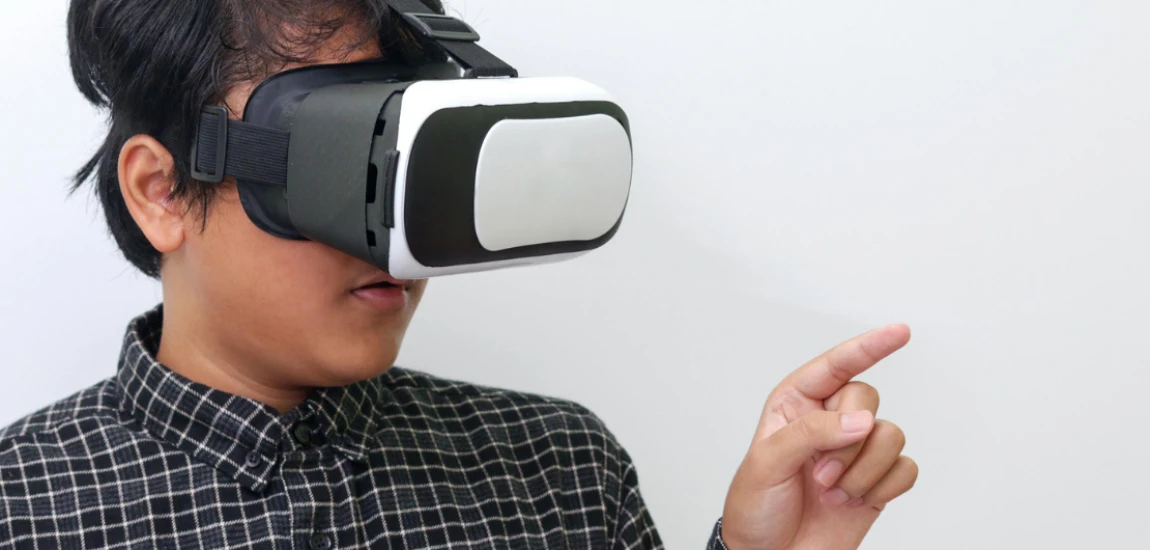
The future of communication is rapidly evolving beyond screens, calls, and text-based interaction. With the convergence of quantum computing, artificial intelligence, neuroscience, and immersive virtual reality, a new paradigm is emerging: Quantum Virtual Reality Communication Systems and Hyper-Immersive Human Interaction Frameworks.
These systems aim to recreate human presence digitally with such precision that distance becomes irrelevant. Instead of merely seeing or hearing another person, users will experience full sensory immersion—touch, spatial awareness, emotional feedback, and even cognitive synchronization.
Unlike conventional VR platforms, quantum-enhanced systems process massive real-time datasets simultaneously, enabling seamless global communication with near-zero latency. Combined with AI-driven behavioral modeling, these frameworks allow users to interact through lifelike avatars that replicate not only appearance but also personality, emotional state, and micro-expressions.
This transformation is not just technological—it represents a complete shift in how humans connect, collaborate, learn, and experience digital reality.
Understanding Quantum Virtual Reality Communication Systems

Quantum virtual reality communication systems represent a fusion of immersive simulation technologies and quantum-level computing power. These systems aim to eliminate latency, enhance realism, and enable massive-scale simultaneous interactions in virtual environments.
Quantum Computing in Communication Systems
Quantum computing is the backbone of next-generation VR communication networks. Traditional systems struggle with processing complex environments involving thousands of users, high-resolution simulations, and real-time physics calculations. Quantum computing solves this by performing parallel computations at unprecedented speed.
This allows VR environments to render ultra-detailed simulations instantly, supporting global-scale virtual spaces where millions of users can interact simultaneously. Quantum encryption also enhances communication security by making data interception virtually impossible.
Additionally, quantum algorithms improve prediction models used in VR systems, allowing environments to pre-render interactions before they occur, further reducing latency and improving realism.
Immersive Virtual Reality Environments
The VR environments in these systems are not static digital spaces but fully dynamic ecosystems. They evolve in real time based on user interactions, environmental data, and AI-driven logic systems.
These environments can replicate real-world locations with photorealistic detail or generate entirely fictional universes governed by physics engines. Users can walk, fly, manipulate objects, or even reshape environments using voice or neural input.
The key advancement is persistence—virtual worlds continue to exist and evolve even when users are offline, creating living digital ecosystems.
Real-Time Data Synchronization
A critical component of quantum VR systems is synchronization across all users and environments. Every action, gesture, or environmental change must be reflected instantly for all participants.
AI-driven orchestration engines manage this synchronization by prioritizing data packets based on importance and context. For example, emotional expressions or critical movements are transmitted faster than background environmental updates.
This ensures a smooth and natural communication flow, eliminating lag-induced disruptions common in traditional VR systems.
Hyper-Immersive Human Interaction Frameworks

Hyper-immersive interaction frameworks are designed to simulate human presence in digital environments with near-perfect realism, focusing on emotional depth, sensory engagement, and cognitive alignment.
AI-Driven Human Avatars
AI-powered avatars are far more advanced than simple digital representations. They are built using deep learning models trained on facial expressions, voice patterns, behavioral traits, and emotional responses.
These avatars can mimic real human micro-expressions, breathing patterns, and subtle body language cues. Over time, they adapt to their user's personality, making digital interactions increasingly natural.
In professional environments, AI avatars can even represent users autonomously, attending meetings, responding to basic queries, and performing tasks based on predefined behavioral models.
Emotional and Cognitive Simulation
One of the most revolutionary aspects of hyper-immersive systems is emotional simulation. These frameworks analyze emotional signals through voice tone, biometric data, eye movement, and interaction behavior.
AI systems then adjust the virtual environment accordingly. For example, calming visual effects may be generated during stressful conversations, or collaborative spaces may become more dynamic during brainstorming sessions.
Cognitive synchronization also allows shared thinking spaces, where multiple users can collaboratively solve problems in real time using visualized thought models.
Multi-Sensory Interaction Systems
Beyond sight and sound, hyper-immersive systems incorporate haptic feedback, temperature simulation, and spatial force feedback.
Wearable devices allow users to feel virtual objects, experience directional wind, or sense pressure during interactions. Advanced research is also exploring neural feedback systems that directly stimulate sensory perception.
This creates a communication experience that closely mirrors physical presence, blurring the boundary between virtual and real interaction.
Core Technologies Behind Quantum VR Communication

These systems rely on a powerful technological ecosystem combining AI, neuroscience, quantum networking, and advanced rendering systems.
Artificial Intelligence and Machine Learning
AI is the central intelligence layer managing user behavior, environment adaptation, and system optimization. Machine learning models continuously analyze interaction patterns to improve responsiveness and realism.
AI also enables predictive interaction—anticipating user actions before they occur to reduce perceived latency. This makes conversations feel more fluid and natural.
Additionally, AI moderates virtual environments, ensuring safety, personalization, and content optimization in real time.
Neural Interface Technologies
Neural interfaces represent one of the most transformative aspects of future communication systems. These devices translate brain signals into digital commands, enabling direct thought-based interaction.
Users may navigate environments, communicate, or manipulate objects simply by intention. Over time, neural systems may also decode emotional states, enabling more empathetic digital communication.
This technology reduces dependency on physical controllers and enhances immersion dramatically.
High-Speed Quantum Networking
Quantum networks enable ultra-secure and ultra-fast data transmission using quantum entanglement principles. This ensures that communication remains instant and tamper-proof across global distances.
These networks eliminate traditional bottlenecks such as server latency, bandwidth limitations, and data congestion. As a result, massive VR environments can function smoothly at a planetary scale.
Quantum networking is essential for sustaining real-time immersive communication ecosystems.
Applications of Quantum VR Communication Systems

The real-world applications of these systems span multiple industries, transforming how humans work, learn, and interact.
Virtual Workspaces and Collaboration
Corporate environments are rapidly transitioning toward immersive virtual offices. Employees can meet in realistic digital spaces, collaborate on 3D models, and share interactive data dashboards.
AI assistants streamline workflows by organizing tasks, summarizing discussions, and providing real-time insights during meetings.
This reduces geographical barriers and enhances productivity in global teams.
Education and Training Systems
Education becomes far more engaging in immersive environments. Students can explore historical civilizations, conduct virtual science experiments, or practice medical procedures in safe simulations.
AI tutors personalize learning experiences based on individual progress, ensuring adaptive education systems.
This improves retention, engagement, and accessibility for learners worldwide.
Entertainment and Social Interaction
Entertainment evolves into fully immersive storytelling experiences where users actively participate in narratives. Games become persistent worlds, and social platforms become living digital societies.
Users can interact through lifelike avatars, attend virtual events, or build shared environments.
This creates entirely new forms of digital culture and expression.


Known as "Nomadic Matt," Matthew Kepnes offers practical travel advice with a focus on budget backpacking. His blog aims to help people travel cheaper and longer.
Matthew Kepnes

Prev Post
Next Post