
Advanced Materials Science and Atomic-Level Manufacturing Technologies
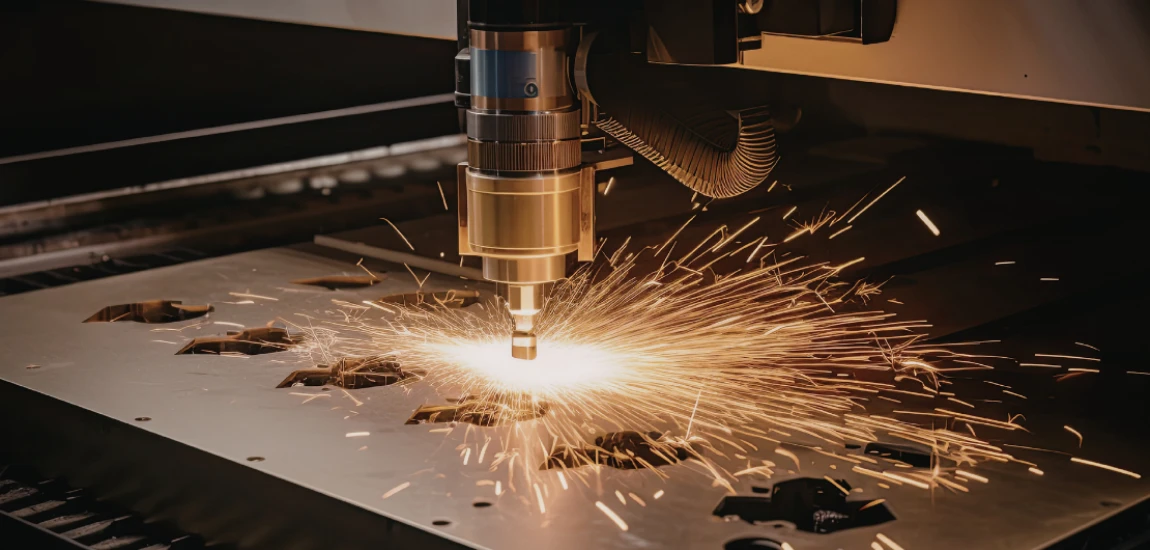
The progress of human civilization has often been defined by breakthroughs in materials. From the Stone Age and Bronze Age to the Silicon Age, advancements in material technologies have continuously reshaped industries, economies, and societies. Today, humanity stands on the threshold of another major transformation driven by Advanced Materials Science and Atomic-Level Manufacturing Technologies. These emerging innovations are enabling scientists and engineers to design, manipulate, and manufacture materials with extraordinary precision at the atomic and molecular scale.
Traditional manufacturing methods typically shape materials through cutting, molding, casting, or assembly processes. While these techniques have supported industrial development for centuries, they often involve limitations related to efficiency, waste generation, material performance, and design complexity. Atomic-level manufacturing introduces a fundamentally different approach by allowing the controlled placement and arrangement of atoms and molecules to create materials with highly specific properties.
This capability has profound implications across numerous industries, including electronics, aerospace, healthcare, renewable energy, construction, defense, and computing. Researchers are developing ultra-lightweight composites, self-healing materials, nanostructures, programmable matter, advanced semiconductors, and molecular machines that were once considered science fiction.
As technologies such as nanotechnology, artificial intelligence, quantum computing, and molecular engineering continue to evolve, atomic-level manufacturing is becoming increasingly feasible. These advancements promise not only to improve existing products but also to unlock entirely new categories of materials and devices. Understanding this rapidly evolving field provides valuable insight into one of the most transformative technological frontiers of the twenty-first century.
Understanding Advanced Materials Science

The Evolution of Materials Innovation
Materials science is an interdisciplinary field that combines physics, chemistry, engineering, and nanotechnology to understand and develop new materials. Historically, material innovation focused on discovering naturally occurring substances and improving manufacturing techniques.
Modern materials science goes much further by enabling researchers to engineer material structures at microscopic and atomic scales. This level of control allows the creation of materials with customized properties tailored for specific applications.
Advancements in analytical tools and computational modeling have accelerated the pace of material discovery and innovation.
The Importance of Atomic Structure
The properties of any material are determined by how its atoms are arranged and interact with one another. Strength, flexibility, conductivity, durability, and thermal resistance all depend on atomic structure.
By controlling atomic arrangements, scientists can design materials that exhibit characteristics not found in nature. This ability represents one of the most significant breakthroughs in modern engineering.
Atomic-level understanding enables highly precise material optimization.
Emerging Classes of Advanced Materials
Researchers are developing a wide range of innovative materials, including nanomaterials, metamaterials, smart materials, graphene-based structures, and high-performance composites.
These materials offer exceptional capabilities such as enhanced strength-to-weight ratios, self-repair mechanisms, adaptive responses, and superior energy efficiency.
Their applications are driving innovation across multiple industries and technological domains.
Atomic-Level Manufacturing Technologies

What Is Atomic-Level Manufacturing?
Atomic-level manufacturing refers to the precise manipulation and assembly of atoms and molecules to create structures, components, and products with extraordinary accuracy.
Unlike conventional manufacturing methods that remove or reshape bulk material, atomic manufacturing builds structures from the bottom up. This approach minimizes waste while maximizing precision and efficiency.
Researchers view atomic manufacturing as a potential revolution in production technologies.
Molecular Assembly Processes
Molecular assembly involves arranging atoms and molecules into predefined configurations to create desired structures.
Advanced tools such as scanning probe microscopes, nanoscale fabrication systems, and molecular engineering techniques enable researchers to manipulate matter with increasing precision.
Future manufacturing systems may automate these processes on industrial scales.
Advantages Over Traditional Manufacturing
Atomic-level manufacturing offers numerous advantages, including reduced material waste, improved product quality, enhanced customization, and greater design flexibility.
Products can be engineered with precise mechanical, electrical, thermal, and chemical properties tailored to specific applications.
These benefits have the potential to transform manufacturing economics and sustainability.
Nanotechnology and Precision Material Engineering

The Foundation of Nanotechnology
Nanotechnology focuses on manipulating matter at dimensions measured in nanometers. At these scales, materials often exhibit unique physical and chemical properties that differ from their bulk counterparts.
Researchers leverage these characteristics to create highly specialized materials and devices.
Nanotechnology serves as a critical foundation for atomic-level manufacturing systems.
Nanomaterials and Enhanced Performance
Nanomaterials offer remarkable improvements in strength, conductivity, reactivity, and durability. Examples include carbon nanotubes, graphene sheets, quantum dots, and nanoparticle composites.
These materials are increasingly used in electronics, medicine, energy systems, and advanced manufacturing applications.
Their unique properties continue to drive technological innovation.
Precision Engineering at Molecular Scales
Atomic-level control allows engineers to optimize materials for specific performance requirements.
By tailoring molecular structures, researchers can create lightweight aerospace materials, highly efficient batteries, advanced sensors, and next-generation semiconductors.
Precision engineering enables unprecedented levels of functionality and performance.
Smart Materials and Adaptive Systems

Materials That Respond to Their Environment
Smart materials possess the ability to change properties in response to environmental stimuli such as temperature, pressure, light, electricity, or chemical conditions.
These adaptive behaviors enable materials to perform functions beyond traditional structural roles.
Smart materials are becoming increasingly important in advanced engineering applications.
Self-Healing and Self-Repairing Materials
One of the most exciting developments in materials science involves self-healing materials capable of repairing damage automatically.
Inspired by biological systems, these materials can restore structural integrity after experiencing cracks, fractures, or wear.
Self-healing technologies may significantly extend product lifespans and reduce maintenance costs.
Programmable Matter and Dynamic Structures
Programmable matter represents a futuristic class of materials capable of changing shape, properties, or functionality based on external commands.
Researchers envision applications ranging from adaptive buildings and medical devices to reconfigurable robotics and aerospace systems.
Although still in early stages of development, programmable matter demonstrates the transformative potential of atomic-level design.


Shivya Nath authors "The Shooting Star," a blog that covers responsible and off-the-beaten-path travel. She writes about sustainable tourism and community-based experiences.
Shivya Nath

Prev Post

Next Post