
The Future of Auto-Scouting Drones That Generate 3D Scene Layouts Instantly

Auto-scouting drones are ushering in a new era of filmmaking, where location scouting and environment mapping can be completed in minutes instead of days. Powered by AI-driven navigation, real-time LiDAR mapping, and volumetric reconstruction, these drones allow filmmakers to gather detailed visual, geographic, and spatial data instantly. As production cycles tighten and budgets become increasingly competitive, this technology is becoming essential for studios, indie creators, and virtual production teams alike. With the growing demand for digital twins, immersive scenes, and rapid pre-production pipelines, these drones are set to redefine how storytellers plan, visualize, and execute every shot.
The Rise of Auto-Scouting Drones in Modern Filmmaking

Reinventing Traditional Location Scouting
For decades, location scouting required travel, physical walkthroughs, and extensive photography. Auto-scouting drones eliminate the need for repeated site visits by capturing full environmental data in a single flight. These drones can traverse complex terrain, navigate obstacles autonomously, and gather lighting, elevation, and geographic mapping information — all in one mission. Instead of sending a team to inspect every angle, directors, DoPs, and art departments can access detailed digital models from their studios.
The Role of AI-Assisted Navigation
AI-powered navigation allows drones to make intelligent decisions mid-flight. They can identify optimal pathways, avoid hazards, and adjust flight patterns to capture maximum detail. This is especially useful in unstable environments or remote areas where manual scouting is challenging. Through advanced machine learning algorithms, drones continuously refine their mapping strategies to produce more accurate 3D scene layouts over time.
Saving Time, Reducing Costs, Improving Precision
One of the strongest benefits of auto-scouting drones is efficiency. Pre-production teams can save thousands of dollars in travel, labor, and reshoots caused by poor location planning. The captured data ensures every department — from costume design to VFX — works from accurate spatial references. This reduces guesswork, eliminates inconsistencies, and ensures production decisions are grounded in precise digital representations of real environments.
How 3D Scene Layouts Are Generated Instantly

LiDAR, Photogrammetry, and Volumetric Capture
Modern auto-scouting drones combine LiDAR scanning with high-resolution photogrammetry to produce volumetric 3D models. These technologies work in tandem — LiDAR provides structural depth while photogrammetry supplies visual texture. The resulting output is a hyper-accurate digital twin of the filming location, complete with measure-accurate geometry and lighting references. This allows production teams to digitally explore the scene before ever stepping foot on location.
Real-Time Processing Through Edge Computing
The breakthrough enabling “instant” 3D scene layouts is edge computing, which lets drones process data mid-flight rather than waiting for post-capture uploads. With onboard GPUs and real-time mesh reconstruction algorithms, a drone can generate a simplified 3D model within minutes of takeoff. More detailed rendering is completed later, but teams can begin planning immediately.
Instant Layouts in Virtual Production Pipelines
The ability to generate 3D layouts instantly is especially valuable for virtual production. Environments can be imported directly into Unreal Engine or Unity, allowing set designers and VFX specialists to create digital extensions, test camera moves, or design LED volume backgrounds. This speeds up virtual set planning and ensures hybrid physical-digital scenes match perfectly.
Transforming Pre-Production With Auto-Scouting Drones

Faster Storyboarding and Shot Visualization
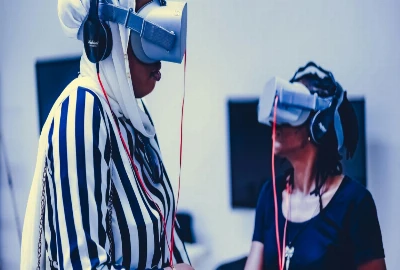
With instant 3D layouts, filmmakers can block scenes, plan drone shots, pre-visualize movement paths, and determine focal lengths without visiting the location physically. Directors can walk through the environment using VR headsets or desktop viewers, exploring angles that would be impossible to imagine from flat reference photos. This boosts creativity while giving teams a realistic sense of spatial constraints.
Department-Wide Collaboration
Pre-production no longer operates in silos. Art teams can design sets to scale, lighting teams can plan fixtures based on accurate natural light patterns, and cinematographers can test camera rigs virtually. Everyone works from the same digital reference model, eliminating the discrepancies that often lead to costly revisions.
Budget Optimization and Risk Reduction
Instant 3D scene layouts enable productions to forecast challenges earlier — unstable terrain, narrow paths, or areas requiring additional lighting. Identifying these before the shoot avoids delays and ensures budgets reflect real logistical needs. Drones also reduce physical risks by scouting dangerous environments without exposing crew members to hazards.
The Integration of Auto-Scouting Drones in Virtual and Mixed Reality

Building Digital Twins for Immersive Exploration
Auto-scouting drones are now essential tools for creating digital twins used in VR location planning. Once a 3D layout is generated, filmmakers can explore the environment from any distance or elevation. This helps production teams decide whether a location is suitable before committing to transportation, logistics, or permits.
Enhancing Unreal Engine and Real-Time Rendering Pipelines
Game engines rely on spatial accuracy, and auto-scouting drones deliver exactly that. When imported into a virtual production workflow, environments can be textured, lit, and manipulated instantly. This enables filmmakers to test VFX-heavy sequences, simulate weather, or re-create scenes digitally if reshoots are needed later.
Blending Physical and Virtual Set Design
Hybrid sets — part physical, part digital — are increasingly common. Auto-scouting drones ensure both components align perfectly. Production designers can build physical structures knowing exactly where digital extensions will begin, creating seamless scenes that feel natural to the viewer.


Shivya Nath authors "The Shooting Star," a blog that covers responsible and off-the-beaten-path travel. She writes about sustainable tourism and community-based experiences.
Shivya Nath
Prev Post

Next Post