
How Cross-Reality Performance Capture Is Blending Physical and Virtual Acting
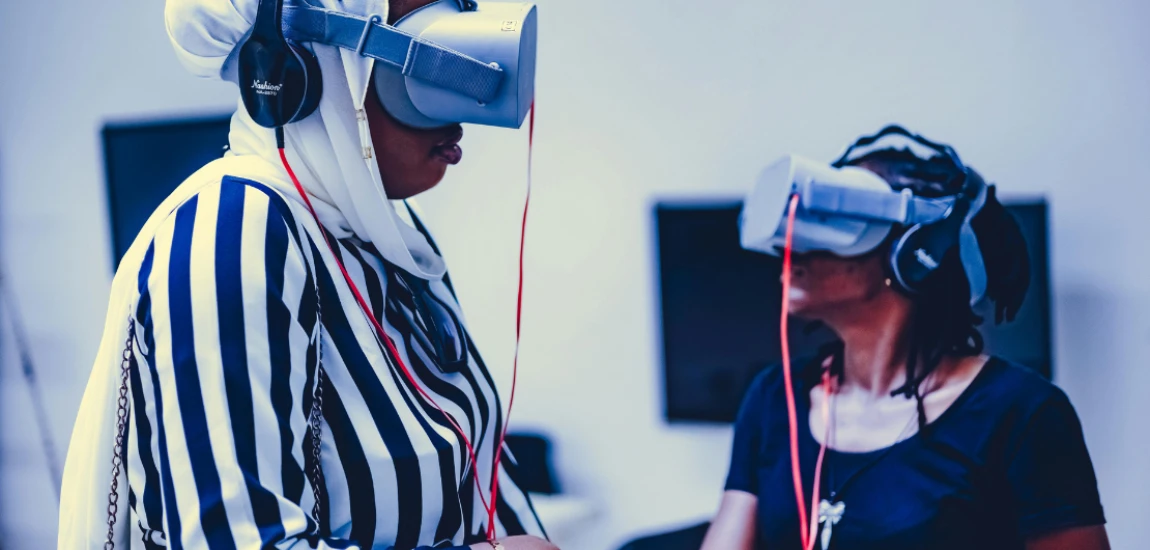
The merge of physical and digital performance
Cross-reality performance capture refers to the integration of real-world acting with virtual environments, digital characters, and interactive scenes. Unlike traditional motion-capture setups that only record movement, cross-reality systems allow actors to see, feel, interact with, and respond to virtual elements in real time. This means performers no longer act against a blank volume or green screen—they act within a blended reality that matches the digital world their characters inhabit. This intersection creates a more authentic emotional performance because the actor’s reactions become grounded in the environment rather than imagined.
How XR stages elevate immersion for performers
With virtual production stages powered by LED walls, volumetric capture, and real-time engines like Unreal Engine, actors can step into fully realized worlds. They may perform inside a virtual city, alien landscape, or historical reconstruction that responds dynamically to their movements. This XR immersion helps performers maintain eye lines, adapt to spatial cues, and deliver nuanced emotional expressions—resulting in more believable performances when translated to digital characters or hybrid scenes.
Why the industry is shifting toward cross-reality methods
With audience expectations rising, studios need methods that accelerate production while enhancing cinematic realism. Cross-reality performance capture reduces guesswork, compresses post-production cycles, and unifies physical and digital storytelling. The technique supports films, TV, AAA games, VR experiences, and even virtual concerts—making it a cornerstone of next-generation content creation.
Real-Time Motion Capture Innovations That Bridge the Physical-Virtual Gap

Real-time feedback for actors and directors
In cross-reality setups, actors often wear advanced motion-capture suits with inertial sensors, facial cameras, and marker nodes. What makes these systems revolutionary is the ability to see the captured performance instantly rendered on digital characters inside a virtual environment. Directors can monitor emotional fidelity, body mechanics, scene composition, and virtual camera angles on the spot. This drastically reduces the number of takes needed and increases creative freedom.
Refining digital characters with AI-driven enhancements
AI-enhanced motion capture now fills gaps, fixes artifacts, and elevates performances without requiring costly manual cleanup. AI smoothing tools correct unnatural joint angles, jittering, or missing frames. Machine learning models can even infer secondary motions—such as subtle eye darts or micro-expressions—to make digital doubles appear more lifelike. As AI augments raw mocap data, the boundary between human nuance and digital precision becomes seamless.
Multi-actor capture for shared interaction
Cross-reality systems allow multiple actors to perform together in a shared motion-capture volume. Their digital counterparts interact naturally—exchanging props, fighting, embracing, or delivering emotionally intense scenes. Multiplayer mocap enhances chemistry because actors can build authentic physical and emotional connections, which then translate into rich virtual scenes.
How Cross-Reality Performance Capture Enhances Acting Quality

Giving performers real emotional anchors
One of the strongest advantages of cross-reality production is that actors don’t need to imagine entire worlds or characters—they can see them. Virtual creatures, environments, props, and lighting cues appear around the performer. Natural reactions happen instinctively when actors are visually grounded. This reduces “acting in the dark” and enables more organic movement, pacing, and emotional delivery.
Supporting complex emotional expression through digital augmentation
Facial capture rigs allow high-resolution tracking of every muscle movement, wrinkle, and micro-expression. When paired with real-time rendering, actors see how their emotional choices translate directly onto their digital avatars. This enables them to fine-tune their performance, ensuring emotional continuity across scenes. Directors benefit by evaluating emotional authenticity early rather than fixing inconsistencies in post.
Overcoming physical limitations with digital embodiment
Cross-reality capture empowers actors to portray characters impossible in the real world—giants, creatures, robots, aliens—while retaining their emotional depth. Their physical actions can be amplified, stylized, or reshaped through digital rigging. As a result, performers can push the boundaries of expressive movement, creating characters that feel believable even when they defy real-world physics.
The Technical Foundations Making Cross-Reality Performance Possible

The role of motion capture suits, sensors, and full-body tracking
Today’s mocap suits combine inertial systems, optical tracking, and biomechanical modeling to deliver ultra-accurate motion data. These precision sensors allow virtual limbs, faces, and bodies to match human movement without perceptible delay. High-density marker arrays provide extra realism in joint articulation and secondary motion capture like clothing folds or hand gestures.
Real-time engines that unify physical and digital space
Game engines such as Unreal Engine and Unity power virtual production workflows by rendering full environments instantly. Whether it’s a stormy coastline, a sci-fi chamber, or a medieval village, these virtual worlds respond to lighting changes, physics interactions, and camera adjustments in real time. This allows DP teams to experiment with cinematography on the spot, integrating both real and digital elements seamlessly.
Virtual camera tools bringing filmmakers deeper control
Directors can use handheld virtual cameras—tablets, rigs, or VR headsets—to frame shots inside the digital world while watching real actors perform. This gives them unprecedented creative control, as they can physically “walk” through virtual scenes and scout angles that would be impossible on a traditional set.
Cross-Reality Production Benefits for Filmmakers and Studios

Faster workflows and fewer costly reshoots
Because directors see the digital results immediately, cross-reality capture minimizes post-production uncertainty. Mistakes are flagged instantly. Performances can be reshot on the spot. This eliminates traditional bottlenecks associated with waiting weeks or months to see final renders. Studios save time, budget, and manpower without compromising visual quality.
Richer worldbuilding with flexible scene scaling
Virtual environments are infinitely scalable. Need a different location? Change it in seconds. Need a massive battle scene? Duplicate digital elements instantly. Want alternate lighting? Adjust it without rebuilding anything. Cross-reality production affords filmmakers enormous creative freedom to prototype and finalize scenes quickly without logistical restrictions.
Enhanced collaboration across departments
Sound designers, VFX teams, cinematographers, animators, and directors can all work together in real time. Departments no longer operate in isolated stages. Instead, virtual production unifies the entire workflow, encouraging creative synergy and improving overall visual coherence.


Gary Arndt operates "Everything Everywhere," a blog focusing on worldwide travel. An award-winning photographer, Gary shares stunning visuals alongside his travel tales.
Gary Arndt

Prev Post

Next Post