
The Aesthetic of Automation: Beauty Without a Maker
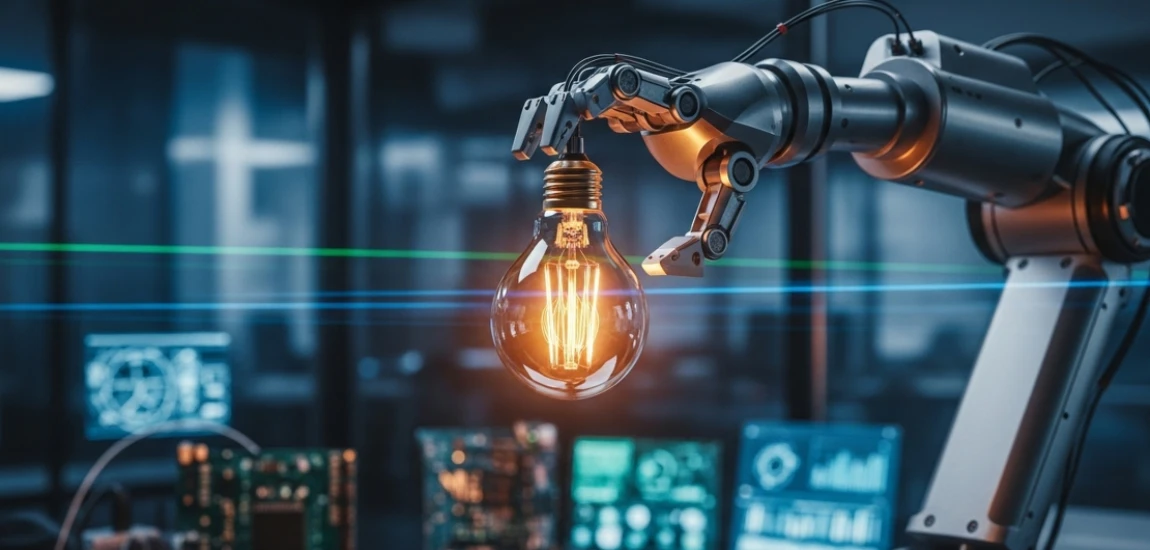
The rise of machine-made beauty
From AI-generated portraits selling for millions to neural networks composing symphonies, automation has entered the realm of aesthetics with remarkable confidence. Beauty, once thought to require emotion, inspiration, and intentionality, is now being produced by algorithms that know nothing of such things. These systems are not inspired—they are trained. Yet their creations often move us, provoke thought, and inspire awe. This paradox sits at the heart of the aesthetic of automation.
Beauty without intention
Traditionally, beauty has been linked to intention—a sculptor shaping marble, a poet choosing words, a painter guiding a brush. But automated systems disrupt that connection. When a generative model creates a painting, who—or what—is the artist? The algorithm? The dataset? The human who trained it? Or the collective cultural history embedded in its code? The absence of a clear “maker” forces us to redefine authorship and aesthetic value in an age of intelligent automation.
A new kind of creative gaze
AI-generated art invites us to see beauty as emergent rather than expressive. It’s not about what the maker meant, but about what the system manifests. In this sense, the aesthetic of automation is not human-centered—it’s systemic, procedural, and relational. Beauty arises from interaction between data, design, and chance, rather than from personal emotion or vision.
The Algorithmic Imagination

From creation to computation
At its core, automated aesthetics depend on pattern recognition. Algorithms process immense amounts of data, identifying correlations invisible to human perception. When applied creatively, these correlations become new forms of expression. The algorithm doesn’t “imagine” in the human sense—it extrapolates, synthesizes, and mutates existing information to produce something new. Yet the results often possess a strange familiarity, as though machines are mirroring our imagination back to us.
Training the machine’s eye
Machine learning models such as DALL·E, Midjourney, and Stable Diffusion are trained on vast datasets of human art, photography, and design. Through exposure, they internalize visual relationships—light, texture, proportion, mood—and recombine them into images that feel intentional but are not. This process turns aesthetics into computation: style becomes a statistical pattern rather than a subjective experience.
The emergence of synthetic style
As these systems evolve, they develop distinct visual identities—a kind of algorithmic signature. Certain AI models produce dreamlike distortions, others favor hyperreal precision or surreal abstraction. These emerging “styles” suggest that even without consciousness, systems can generate recognizable artistic tendencies. The machine’s imagination is statistical, yet its outputs evoke emotion, hinting that perhaps beauty can exist without empathy—or at least simulate it convincingly.
The Aesthetic Experience in the Age of Automation

Emotional response to mechanical art
One of the most fascinating aspects of automated beauty is our reaction to it. When viewers encounter AI-generated art, they often describe feelings of wonder, confusion, or even unease. This emotional ambiguity stems from the tension between appearance and origin—what looks deeply human is, in fact, machine-made. The aesthetic of automation thus becomes a form of cognitive dissonance: we feel, even when we know no feeling was intended.
The uncanny beauty of the algorithmic
Automation’s aesthetic often carries an uncanny quality—a strangeness that hovers between perfection and alienation. Faces are flawless yet lifeless; landscapes sublime yet unreal. This tension gives rise to what theorists call post-human beauty—an aesthetic that transcends biological limits and celebrates the precision, symmetry, and scale only machines can achieve. Beauty here is not about imperfection or soul, but about computation and control.
The sensory language of data
Automation has expanded aesthetic language beyond the visual. Algorithms shape our soundscapes, compose music, design architecture, and generate text. In each domain, the beauty lies not just in output, but in process—the harmony of numbers, the elegance of efficiency, the rhythm of code. The experience of algorithmic beauty invites us to see data as art, and automation as a new sensory medium.
The Displacement of the Artist

Authorship in the automated age
When machines can paint, compose, and write, where does that leave the human artist? Some argue that automation merely extends human creativity—tools enhancing expression. Others contend it replaces the artist altogether, reducing creativity to computation. In truth, the relationship is more nuanced: humans design the frameworks within which algorithms create, setting parameters and curating outcomes. The artist becomes less a maker and more a mediator between human intention and machine capability.
The new role of curation
In this context, creativity shifts from production to selection. Artists now act as curators of machine potential, guiding algorithms toward aesthetic directions that resonate with human values. This symbiotic relationship redefines authorship: rather than the singular genius of the creator, we now have collaborative intelligence, where beauty emerges from the interplay between data and desire.
The politics of ownership
Automation also complicates intellectual property. If an AI artwork is created using millions of human-made images, who owns the result? The coder, the dataset contributors, or the machine itself? The aesthetic of automation forces society to confront the ethics of digital authorship in an era when creative boundaries are blurred. In many ways, this is not just a question of law, but of identity—what does it mean to be a “creator” when creation itself is automated?
The Philosophical Beauty of Mechanized Creation

The shift from meaning to pattern
Traditional aesthetics prized meaning—art as a vehicle for human expression. Automation, by contrast, privileges pattern. The beauty of code lies not in what it says, but in how it functions. A perfectly optimized algorithm possesses a kind of minimalist elegance, admired for its symmetry and efficiency. This mathematical beauty transcends emotion; it’s beauty as structure rather than sentiment.
The rise of post-intentional aesthetics
Post-intentional aesthetics describe artworks or systems that generate meaning without deliberate purpose. Machine-generated art fits perfectly here—it’s not made for anyone, yet it finds resonance through human interpretation. Viewers project significance onto automated outputs, turning randomness into revelation. The aesthetic of automation thus becomes participatory: beauty is co-created by the algorithm and the observer.
The sublime in the system
Automation revives the concept of the technological sublime—the awe we feel before vast, incomprehensible systems. Just as early industrial machines inspired both fear and fascination, today’s intelligent systems provoke a similar reaction. When confronted with the creative power of algorithms, we glimpse a new kind of sublimity: not the majesty of nature, but the majesty of complexity. Beauty without a maker is no less profound—only differently mysterious.
Designing for Automated Aesthetics

The art of human-machine collaboration
Rather than resisting automation, designers and artists are learning to collaborate with it. By shaping training data, refining prompts, and interpreting outputs, they create a dialogue between intuition and computation. The result is augmented creativity—works that combine human sensitivity with machine precision. Designing for automation isn’t about relinquishing control; it’s about co-authoring the conditions of emergence.
Building ethical beauty
As we embrace automated aesthetics, we must also consider ethics. Algorithmic art can reproduce biases embedded in its datasets or perpetuate visual stereotypes. Building systems that generate beauty responsibly means curating inclusive data, implementing transparency, and prioritizing creative equity. Ethical beauty is not just about what machines create, but about the values they encode.
Toward an ecology of creation
Automation calls for an ecological view of creativity—one that sees human, machine, and environment as interdependent. In this ecology, beauty emerges from the interaction between data flows, cultural values, and technological infrastructures. By designing systems that evolve with awareness and empathy, we can ensure that automation enhances rather than erases our collective aesthetic diversity.


Kate McCulley, the voice behind "Adventurous Kate," provides travel advice tailored for women. Her blog encourages safe and adventurous travel for female readers.
Kate McCulley
Prev Post

Next Post