
Sci-Fi to Science Fact: When Entertainment Predicts Real Technology
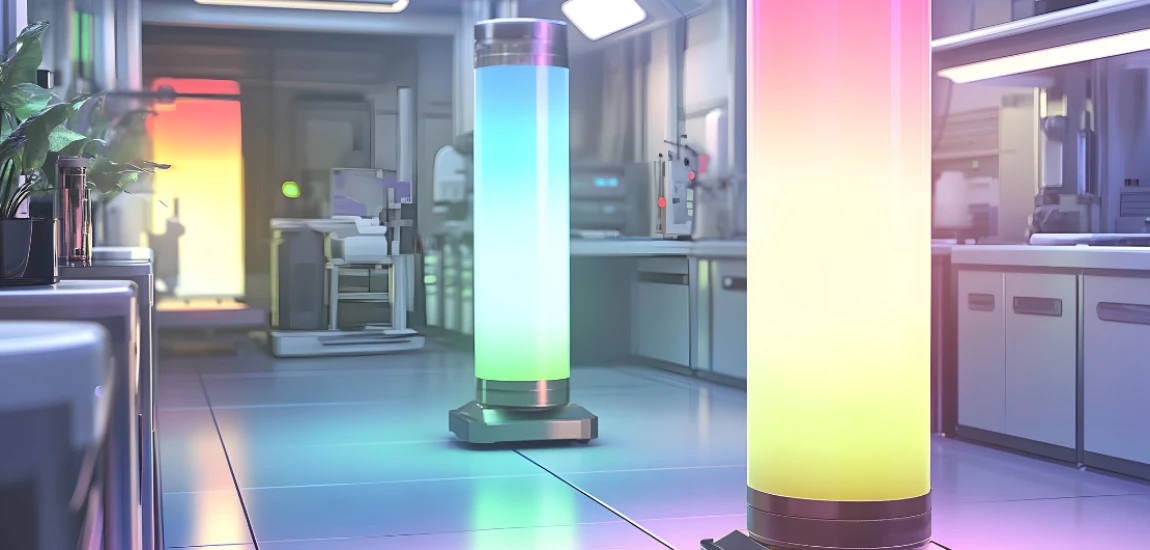
Science fiction has always been more than entertainment. It is a creative playground where imagination becomes a blueprint for real innovation. For decades, writers, filmmakers, and futurists have envisioned worlds where advanced machines, interstellar travel, intelligent robots, and digital realities shape everyday life. What was once dismissed as fantasy often becomes the foundation for scientific breakthroughs. This transformation—from sci-fi to science fact—is not a coincidence; it reflects how deeply storytelling influences innovation. Engineers, researchers, and technologists frequently cite sci-fi as the inspiration behind their pioneering ideas. From Star Trek’s communicators (the precursor to smartphones) to Minority Report’s gesture-based interfaces and Black Mirror’s wearable devices, entertainment has repeatedly mapped out a technological future that eventually arrives.
The Power of speculative storytelling in inspiring innovation

How imagination sparks scientific curiosity
Science fiction provides a safe space for imagining the impossible. These imagined worlds let creators explore concepts that current technology cannot yet achieve: teleportation, brain-machine interfaces, hyper-intelligent AI, or interplanetary colonies. For scientists and technologists, these ideas serve as both a challenge and a vision of what could be. This imaginative leap bridges the gap between fiction and eventual scientific pursuit.
Creative problem-solving through storytelling
Sci-fi narratives often revolve around overcoming complex challenges—whether environmental collapse, communication barriers across galaxies, or biological limitations. The fictional solutions inspire real-world researchers to think differently. For example, the idea of an exoskeleton to enhance human mobility appeared in early sci-fi long before medical robotics made it possible for paraplegic patients to walk again. Sci-fi becomes a form of creative problem-solving, offering models that scientists attempt to replicate or refine.
Why storytellers see the future first
Storytellers are not constrained by budgets, physics, or politics. They can imagine freely, exploring scenarios far ahead of their time. This freedom allows them to envision future societal issues, technological dilemmas, and scientific possibilities decades before researchers begin pursuing them. In many ways, science fiction writers are cultural futurists whose ideas plant seeds in the minds of innovators.
From screen to lab: technologies inspired directly by sci-fi

Smartphones, tablets, and voice assistants
Many of today’s most popular consumer technologies were first imagined in film and literature. The mobile communicator in Star Trek is considered the conceptual ancestor of the modern smartphone. Tablet-style devices seen in 2001: A Space Odyssey resemble today’s iPads. Meanwhile, AI voice assistants like Alexa, Siri, and Google Assistant draw heavily from HAL 9000 and the conversational computers in Star Trek. These technologies didn’t happen by accident; engineers referenced these fictional devices directly during development.
Robotics and artificial intelligence
Isaac Asimov’s Three Laws of Robotics shaped the ethical framework for AI research for decades. Humanoid robots, automated service machines, and emotion-conscious AI began as fictional constructs long before appearing in real laboratories. Today’s robots—whether Boston Dynamics’ agile machines, social robots like Jibo, or AI-driven drones—carry echoes of sci-fi’s long-standing fascination with mechanical lifeforms.
Wearable technology and AR/VR systems
From the heads-up displays in Iron Man to the immersive worlds in Ready Player One, entertainment envisioned wearable tech long before it arrived. Modern AR glasses, VR headsets, smart contact lenses, and gesture-controlled interfaces reflect ideas nurtured in fiction. Entertainment often acts as a prototype, allowing technologists to preview potential user interactions before building real devices.
Space exploration: fiction as the industry’s blueprint

Sci-fi motivating real astronauts and engineers
Many NASA scientists and SpaceX engineers openly admit that their careers were inspired by classic space-based stories—Star Wars, Star Trek, Dune, and Arthur C. Clarke’s novels. These stories sparked dreams of interstellar travel, faster-than-light communication, and human colonies beyond Earth.
Real technology born from fictional visions
The idea of a space station existed in fiction long before the International Space Station was built. Sci-fi introduced concepts of reusable rockets, cryosleep, asteroid mining, and autonomous rovers decades ahead of scientific reality. SpaceX’s Falcon rockets resemble sci-fi spacecraft not by coincidence, but because the aesthetic and function were rooted in entertainment’s futuristic portrayals.
The future of space inspired by fiction
As humanity prepares for lunar colonies and Mars habitation, fiction continues to guide scientific possibility. Shows like The Expanse or films like Interstellar influence how researchers think about propulsion, resource extraction, time dilation, and human resilience in hostile environments. Sci-fi helps scientists anticipate challenges and design around them long before the real missions take place.
Biotech and medical breakthroughs predicted by fiction

Genetic engineering and human augmentation
Sci-fi has long imagined humanity enhanced by genetic modification, cybernetic implants, and biological upgrades. While fiction sometimes explores dystopian possibilities, it has undeniably inspired biomedical research. CRISPR gene editing, prosthetic limbs with neural control, bionic vision, and lab-grown organs all began as fictional ideas.
Nanotechnology and microscopic machines
The concept of microscopic robots repairing the human body appeared in earlier sci-fi like Fantastic Voyage. Today, nanomedicine is a rapidly expanding field where tiny machines deliver drugs, repair tissues, or attack cancer cells with precision. Fiction laid the groundwork for envisioning the microscopic future of healthcare.
Longevity science and futuristic treatments
Cryonics, anti-aging serums, and regenerative medicine appeared in sci-fi long before becoming areas of legitimate scientific interest. Researchers now study telomere extension, cell rejuvenation, and life-extending therapies that echo concepts explored by authors decades ago. Fiction continues to influence the ethical, social, and physiological discussions around human longevity.
The future of sci-fi and science fact: what we may see next

AI-driven companionship and hybrid intelligence
Sci-fi often portrays AI as emotional, empathetic, and deeply integrated into human life. With advances in large language models, emotional AI, and companion robotics, the gap between fiction and fact is closing. Future AI systems may resemble the companions seen in Her or the androids in Westworld—raising complex ethical questions.
Quantum computing and reality-altering tech
Fiction frequently explores parallel universes, time manipulation, and hyper-computing power. While not at a fictional level, quantum computing is already unlocking possibilities that echo sci-fi themes—unbreakable encryption, advanced simulations, and computational speed that feels unreal. Future breakthroughs may take us even closer to fictional realities.
Interplanetary society and human evolution
As humanity approaches multi-planetary existence, sci-fi helps predict how cultures, politics, biology, and identity will change in space. Concepts like Martian-born humans, interplanetary trade networks, off-world agriculture, and space-based economies are likely to move from imagination to practical planning.


Known as "Nomadic Matt," Matthew Kepnes offers practical travel advice with a focus on budget backpacking. His blog aims to help people travel cheaper and longer.
Matthew Kepnes

Prev Post
Next Post