
How Neural Scene Reconstruction Is Transforming Location Scouting in Filmmaking
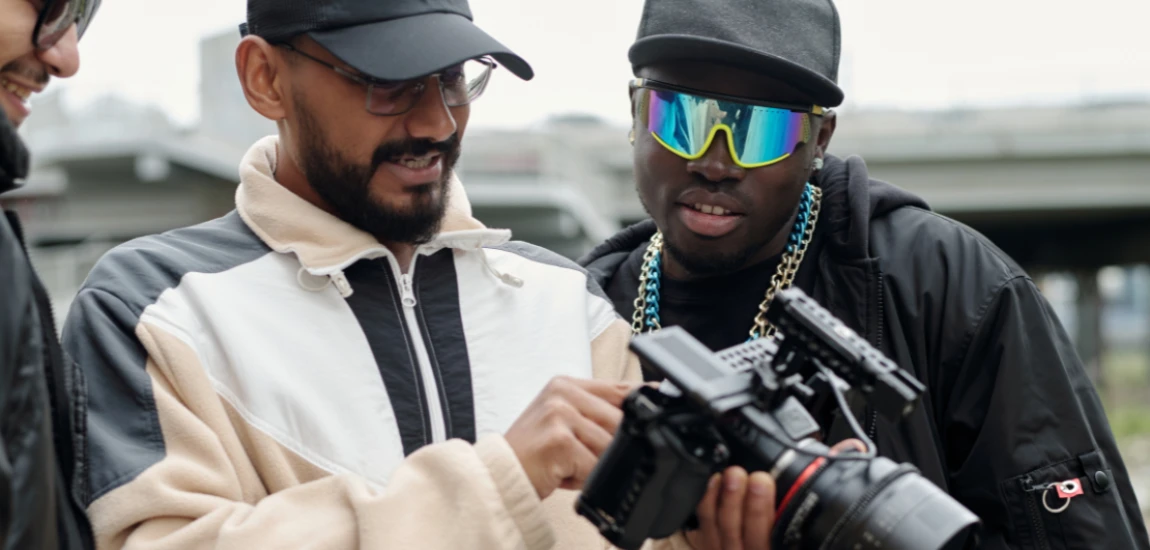
Artificial intelligence has long been making its way into Hollywood, but one of its most transformative applications is happening behind the scenes—in the invisible yet essential stage of location scouting. Traditionally, directors, cinematographers, and production designers spent weeks traveling to potential locations, taking reference photos, testing angles, and assessing lighting conditions. But thanks to neural scene reconstruction, filmmaking teams can now build high-fidelity 3D environments from just a handful of photos or video clips. These environments act as digital replicas of real places, enabling remote exploration, real-time lighting simulation, and precise pre-visualization long before a crew steps on set.
As studios embrace virtual production, AI-enhanced scouting, and extended-reality filmmaking, neural reconstruction is becoming a critical tool in modern production pipelines. It speeds up decision-making, reduces location costs, and empowers creators to visualize scenes with extraordinary accuracy. Below, we explore how this technology works, why it matters, and how it is reshaping the future of creative storytelling.
Understanding Neural Scene Reconstruction in Filmmaking

How neural reconstruction works
Neural scene reconstruction uses AI models—often based on neural radiance fields (NeRFs)—to convert simple 2D imagery into a volumetric 3D representation. The model learns how light interacts with surfaces, how objects relate spatially, and how the environment is shaped. The result is a hyper-realistic digital world that can be explored from any angle.
Why the technology is so powerful
Unlike traditional photogrammetry, neural reconstruction doesn’t require hundreds of photos or specialized scanning equipment. This means filmmakers can capture a location quickly using handheld cameras or even smartphones. The AI handles the heavy lifting of building the environment, filling in details and smoothing imperfections.
Where it fits in the production pipeline
Neural scene reconstruction now sits at the intersection of scouting, pre-visualization, and virtual production. It becomes part of a film’s digital ecosystem, enabling collaborative planning across departments, from VFX to cinematography to art direction.
Why Neural Scene Reconstruction Is Revolutionizing Location Scouting

Faster scouting with fewer resources
Traditional location scouting involves large teams traveling to assess potential scenes. This can be costly and time-consuming. Neural scene reconstruction reduces all of that by enabling teams to visit the location once, capture the imagery, and then evaluate it endlessly in digital form. Directors can revisit angles, lighting, and layout without additional travel.
Remote and collaborative exploration
Because reconstructed scenes are digital, teams around the world can join the scouting process. A cinematographer in London, a director in Seoul, and a production designer in Los Angeles can all explore the same virtual environment simultaneously. This remote collaboration boosts efficiency and reduces scheduling conflicts.
Enhanced decision-making
The ability to evaluate locations in 3D means that scouting becomes far more precise. Filmmakers can simulate lens choices, lighting conditions, blocking, and even how actors will move through the environment. This reduces uncertainty, prevents costly surprises, and ensures the chosen location truly works.
The Role of Neural Scene Reconstruction in Previsualization and Story Planning

Storyboards brought to life
Previsualization (“previs”) helps directors map out scenes before production. With neural reconstructions, previs becomes drastically more accurate. Instead of using generic 3D models or approximated environments, filmmakers can visualize scenes in actual, photorealistic locations built directly from AI.
More accurate cinematic planning
The 3D models allow cinematographers to test camera placements, dolly paths, aerial movements, and natural lighting scenarios. This ensures that scenes are aligned with the director’s visual intent and eliminates the guesswork that often comes with traditional scouting.
Better collaboration between creative departments
Art directors, VFX teams, set decorators, and lighting designers all benefit from having a shared, detailed 3D environment. It acts as a “source of truth” for the entire team, so everyone understands scale, distance, color palette, and environmental details—long before filming begins.
Digital Twins: How Filmmakers Use AI-Generated Replicas of Real Locations

What digital twins mean for filmmaking
A digital twin is a precise virtual replica of a real-world location. Neural scene reconstruction enables extremely accurate digital twins that can be edited, enhanced, or merged with virtual environments. These digital replicas can be used for previs, VFX, virtual production, and even full scene creation.
Enhancing safety and logistics
Digital twins allow teams to plan stunts, pyrotechnics, and large-scale scenes without putting cast or crew at risk. They can measure heights, distances, and hazards accurately using the AI-generated model. This leads to better safety planning and more controlled execution on set.
Extending physical locations with virtual elements
Sometimes real locations are perfect—but too small, too fragile, or too expensive to modify. Neural reconstruction allows teams to extend locations digitally. For example, a small alley can be turned into a sprawling futuristic cityscape. This blending of real and virtual worlds is becoming standard in modern filmmaking.


Shivya Nath authors "The Shooting Star," a blog that covers responsible and off-the-beaten-path travel. She writes about sustainable tourism and community-based experiences.
Shivya Nath

Prev Post

Next Post