
Navigation Confidence Loops – Repeating Routes Until Cities Feel Predictable
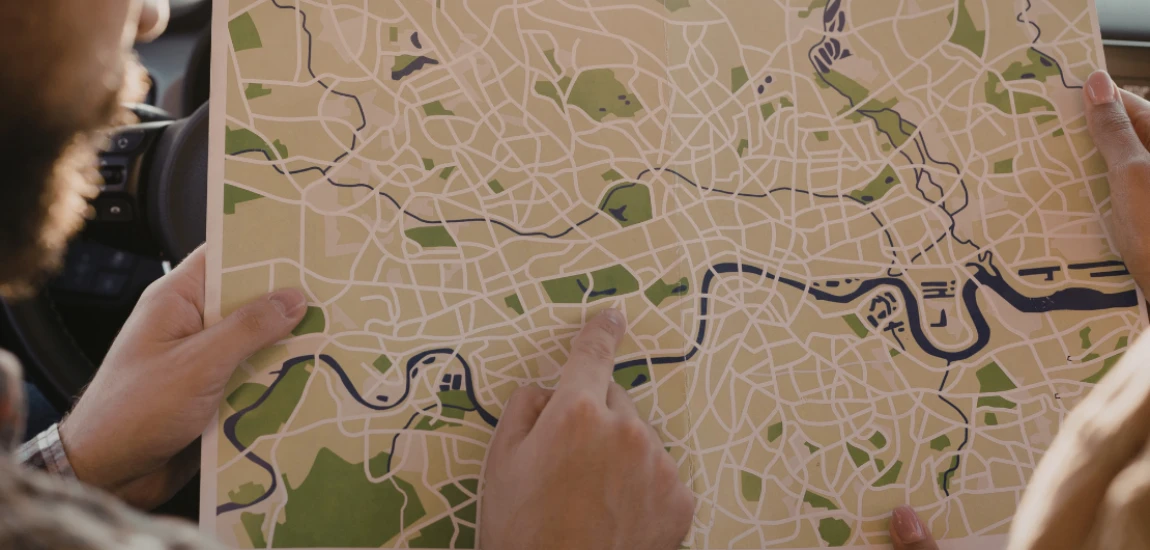
Arriving somewhere new can feel like stepping into a puzzle without the picture on the box. Streets twist unexpectedly, distances feel deceptive, and simple decisions demand constant attention. Navigation Confidence Loops offer a structured way to transform unfamiliar cities into predictable environments through purposeful repetition. Instead of constantly exploring new paths, travelers repeat selected routes until spatial awareness becomes intuitive.
This method is not about limiting exploration — it is about building a stable mental foundation that makes exploration easier, safer, and more enjoyable. By turning unfamiliar movement into predictable patterns, travelers reduce cognitive load, strengthen spatial memory, and gain a sense of belonging faster.
The Psychology of Spatial Familiarity and Predictability

The Brain Seeks Environmental Stability
Human cognition is designed to detect patterns and predict outcomes. In unfamiliar cities, the absence of predictable patterns forces the brain into continuous alert mode. Every intersection becomes a decision point, and every turn requires conscious verification. This constant processing increases mental fatigue.
Repeated exposure shifts processing from conscious effort to automatic recognition. Urban thinker Jane Jacobs observed that familiarity with street environments increases perceived safety and social comfort. When the brain recognizes surroundings quickly, attention can shift from orientation to observation and engagement.
Cognitive Load and Decision Density
Navigation requires micro-decisions: confirming direction, choosing a path, monitoring surroundings, estimating distance, and recalculating when uncertain. These small choices accumulate into significant cognitive load. Travelers often misinterpret this fatigue as general stress, when in reality it stems from environmental uncertainty.
Confidence loops reduce decision density. By repeating a route, many decisions disappear entirely. The brain recognizes sequences rather than processing each element independently. This creates mental efficiency similar to habit formation.
Emotional Safety Through Predictability
Predictable environments feel safer because outcomes are expected. When travelers know what comes next — a familiar intersection, a recognizable storefront, a reliable crossing — anxiety decreases. Emotional safety is not solely determined by objective conditions but by perceived control.
Navigation Confidence Loops transform unknown space into structured territory. Predictability becomes a psychological resource that stabilizes mood, improves focus, and enhances travel enjoyment.
Designing Your First Confidence Loop in a New City

Selecting a Functional Core Route
A foundational confidence loop should connect essential daily needs: accommodation, food access, transit connection, and a comfortable rest location such as a park or café. The route should be short enough to repeat easily yet meaningful enough to support daily movement.
Digital tools like Google Maps can help identify an initial path, but the long-term goal is internal navigation rather than continuous digital guidance. The route becomes effective when it can be walked confidently without constant reference to a screen.
Intentional Repetition as Training
Repetition must be deliberate to produce spatial familiarity. Walking the same route at different times of day reveals environmental rhythms — traffic density, lighting patterns, and pedestrian flow. This exposure strengthens environmental prediction.
Each repetition builds layered knowledge. The first walk establishes recognition. Subsequent walks reinforce memory, reduce hesitation, and increase movement fluidity. Over time, the route transitions from unfamiliar terrain to reliable infrastructure.
Controlled Expansion From Stability
Once the foundational loop feels automatic, expansion should occur gradually. Introducing a small variation — an alternate return street or nearby detour — extends spatial understanding without overwhelming cognitive capacity.
Designing a confidence loop is not about covering distance. It is about building certainty. Stability first, expansion second.
Environmental Anchors That Strengthen Spatial Memory

Visual Landmarks as Orientation Framework
Distinct physical features provide cognitive anchors that structure spatial memory. A building façade, park entrance, transit sign, or bridge becomes a fixed reference point that simplifies navigation decisions.
Repeated encounters with these landmarks reduce the need for constant directional reasoning. Recognition replaces calculation. Over time, the route becomes a sequence of known markers rather than an abstract path.
Multi-Sensory Encoding of Place
Spatial memory is strengthened when multiple senses are involved. Sound patterns, textures, light levels, and even temperature differences contribute to environmental recognition. A quiet street with tree cover feels different from a busy commercial corridor.
Repeating routes allows sensory information to accumulate. This layered encoding creates deeper familiarity than visual observation alone. The environment becomes known through experience rather than description.
Micro-Predictability and Environmental Rhythm
Confidence grows not only from major landmarks but also from small recurring details. Traffic signal timing, pedestrian movement patterns, and storefront sequences create micro-predictability. These patterns allow travelers to anticipate movement rather than react to it.
Environmental anchors transform navigation into recognition. Recognition reduces effort, and reduced effort builds confidence.
Reducing Travel Anxiety Through Route Repetition

Predictability as Stress Reduction Mechanism
Uncertainty activates vigilance. Even in safe environments, unfamiliarity triggers monitoring behavior. Travelers scan surroundings more frequently, move cautiously, and second-guess decisions. This constant vigilance is mentally exhausting.
Repeated routes reduce perceived uncertainty. When travelers know what lies ahead, movement becomes smoother and more relaxed. Predictability functions as psychological reassurance.
Decision Fatigue and Mental Energy Conservation
Navigation consumes cognitive resources that could otherwise support exploration, creativity, or social engagement. When travelers must continuously evaluate direction, distance, and safety, mental energy drains quickly.
Confidence loops eliminate redundant decisions. Familiar routes require less monitoring, freeing attention for meaningful experiences. The city becomes a place to engage rather than a problem to solve.
Building Self-Trust Through Repeated Success
Every successful navigation reinforces confidence. Travelers begin to trust their spatial judgment and directional memory. This self-trust reduces dependence on external guidance and increases autonomy.
Reduced anxiety is not achieved by eliminating complexity but by building reliable experience within it.
Expanding Confidence Loops Into City-Wide Familiarity

Layered Spatial Learning
City familiarity develops through accumulation rather than coverage. Each new route should connect to an existing known pathway, forming a network of predictable corridors. This layered learning mirrors how residents understand their environment.
Instead of attempting to learn the entire city, travelers build familiarity outward from stable anchors. The environment gradually transforms from fragmented space into a coherent mental map.
Movement as Spatial Intelligence Training
Repeated movement develops intuitive distance estimation, directional awareness, and environmental prediction. Travelers begin to sense orientation without conscious reasoning. Spatial intelligence becomes embodied rather than analytical.
This transformation reduces navigation stress even when encountering unfamiliar streets, because the broader environmental structure feels understood.
From Orientation to Belonging
As familiarity expands, emotional connection grows. Known routes create a sense of place rather than temporary presence. Travelers begin to anticipate daily patterns and environmental rhythms.
City-wide familiarity emerges from repetition, not rapid exploration. Predictability becomes the foundation for meaningful engagement.


Derek Baron, also known as "Wandering Earl," offers an authentic look at long-term travel. His blog contains travel stories, tips, and the realities of a nomadic lifestyle.
Derek Baron

Prev Post

Next Post