
Quantum Memory Architectures and the Future of Ultra-Secure Data Storage Systems
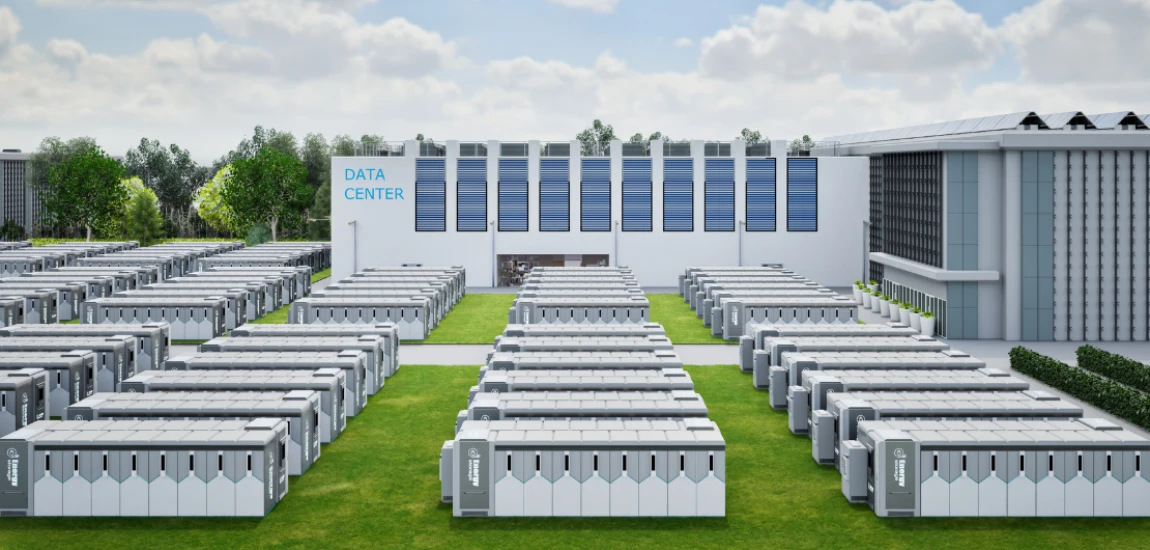
As the digital world continues to expand, protecting sensitive information has become one of the greatest technological challenges of the modern era. Every second, businesses, governments, healthcare organizations, financial institutions, and individuals generate enormous volumes of data that require secure storage and rapid access. Traditional storage technologies have served society well for decades, but the rapid advancement of cyber threats and the emergence of quantum computing are exposing the limitations of current security systems. Future cyberattacks powered by quantum computers may be capable of breaking many widely used encryption methods, making it necessary to develop entirely new approaches to data protection.
One of the most promising innovations in this field is quantum memory architecture. Unlike conventional storage systems that rely on binary bits, quantum memory stores information as quantum bits, or qubits, allowing data to retain unique quantum properties such as superposition and entanglement. These properties make quantum memory a critical building block for future quantum computers, quantum communication networks, and highly secure cloud infrastructures.
Although large-scale quantum memory is still under development, researchers around the world are making remarkable progress in improving storage time, stability, and scalability. Governments and technology companies are investing billions of dollars into quantum technologies because they recognize their potential to revolutionize data security, scientific research, financial systems, and digital communication. As these technologies continue to mature, quantum memory architectures are expected to become an essential part of next-generation computing ecosystems.
This article explores how quantum memory works, why it is transforming secure data storage, and what the future holds for organizations preparing for the quantum era.
Understanding Quantum Memory Architectures

What Is Quantum Memory?
Quantum memory is a specialized technology designed to store quantum information while preserving the delicate quantum states of qubits. Unlike traditional memory devices that store data as either a zero or a one, quantum memory can preserve information in multiple states simultaneously through the principle of superposition. This allows quantum systems to process and store information in ways that classical computers cannot achieve.
The biggest challenge in quantum memory is maintaining these fragile quantum states. Even tiny environmental disturbances such as heat, electrical noise, or vibrations can cause qubits to lose their stored information, a process known as decoherence. Scientists are therefore developing advanced storage methods capable of protecting qubits for longer periods while maintaining high accuracy.
Modern quantum memory systems rely on carefully engineered materials and environments. Researchers use superconducting circuits, trapped ions, rare-earth crystals, cold atoms, and even specially engineered diamonds to create stable storage platforms. Each approach offers unique advantages depending on the intended application, whether it involves long-distance communication, high-speed computing, or secure cloud storage.
As technology advances, quantum memory is becoming more reliable and scalable, making it an essential component of future quantum computers and secure communication systems.
How Quantum Memory Differs from Traditional Storage
Traditional storage devices—including hard disk drives, solid-state drives, and cloud storage servers—store information using classical binary bits. While these systems are extremely efficient for today's applications, they rely on mathematical encryption methods that could eventually become vulnerable to quantum computers.
Quantum memory introduces an entirely different approach. Instead of storing only digital values, it preserves the complete quantum state of information. This enables entirely new capabilities, including quantum communication, distributed quantum computing, and ultra-secure information transfer.
Another major difference lies in security. Quantum information cannot be copied perfectly because of the no-cloning principle in quantum mechanics. This unique characteristic naturally enhances data protection and makes unauthorized duplication significantly more difficult than with conventional storage technologies.
Core Components of Quantum Memory Systems
A modern quantum memory architecture consists of several interconnected technologies working together to preserve quantum information. These include quantum processors that generate qubits, quantum memory modules that temporarily store them, optical communication systems that transfer quantum information, quantum repeaters for long-distance communication, and quantum error correction mechanisms that protect stored data from environmental interference.
Cryogenic cooling systems also play an important role because many quantum devices must operate at temperatures close to absolute zero. Maintaining these extremely cold environments helps reduce electrical noise and improves qubit stability.
As engineers continue refining these components, future quantum memory systems will become faster, more reliable, and easier to integrate into commercial computing infrastructure.
Why Quantum Memory Is Revolutionizing Ultra-Secure Data Storage

Meeting the Growing Demand for Data Security
The amount of digital information generated worldwide continues to grow at an extraordinary pace. From online banking transactions and medical records to government intelligence and scientific research, nearly every industry depends on secure storage systems. At the same time, cybercriminals are becoming increasingly sophisticated, constantly developing new methods to steal valuable information.
Quantum memory architectures provide a powerful solution by enabling storage systems that are designed for the quantum age. Instead of relying solely on traditional encryption techniques, these systems support quantum communication protocols that use the laws of physics to secure information. Any attempt to intercept or measure quantum data changes its state, making unauthorized access immediately detectable.
This capability could dramatically improve cybersecurity for organizations handling sensitive information, including financial institutions, healthcare providers, military agencies, and cloud service companies.
Improving Long-Term Data Integrity
Protecting data involves more than preventing unauthorized access. Information must also remain accurate and unchanged over long periods of time. Quantum memory systems are designed to preserve the integrity of quantum information while minimizing errors caused by environmental disturbances.
Scientists have developed advanced quantum error correction methods that continuously monitor storage systems without directly disturbing the stored quantum information. These sophisticated algorithms help extend coherence times and significantly improve storage reliability.
As research progresses, these techniques are expected to enable quantum memory capable of preserving valuable information for much longer durations, making long-term secure storage increasingly practical.
Preparing for the Quantum Computing Era
The arrival of powerful quantum computers will transform industries ranging from medicine and finance to logistics and artificial intelligence. However, these same machines may also break many existing encryption algorithms that currently protect digital information.
Quantum memory architectures are helping organizations prepare for this transition by supporting secure quantum communication and post-quantum security technologies. Businesses investing in quantum-ready infrastructure today will be better positioned to protect sensitive information against future cyber threats.
For governments and technology companies alike, quantum memory is becoming a strategic investment that supports both innovation and national cybersecurity objectives.
Technologies Driving the Evolution of Quantum Memory

Superconducting Quantum Memory
Superconducting quantum circuits are among the leading technologies used in quantum computing and memory development. Operating at extremely low temperatures, these circuits allow qubits to maintain stable quantum states while performing complex computational tasks.
Researchers continue improving superconducting materials, fabrication techniques, and circuit designs to increase storage capacity and reduce operational errors. These improvements are bringing practical quantum computers closer to commercial reality.
Superconducting quantum memory also integrates effectively with existing quantum processors, making it one of the strongest candidates for future large-scale quantum computing systems.
Atomic and Photonic Quantum Memories
Another promising approach involves storing quantum information using atoms and photons. Atomic quantum memories temporarily capture photons carrying quantum information and release them when needed. This synchronization is essential for building reliable quantum communication networks.
Photonic systems are especially valuable because light can travel long distances through fiber-optic cables with relatively low signal loss. Combining photons with atomic storage enables highly secure communication across cities, countries, and eventually global quantum networks.
Researchers believe these technologies will play a vital role in the future quantum internet, supporting secure communication and distributed quantum computing.
Hybrid Quantum Memory Architectures
No single quantum memory technology currently satisfies every performance requirement. As a result, researchers are developing hybrid architectures that combine multiple storage technologies within a single system.
For example, superconducting processors may perform calculations while photonic memories handle communication and atomic systems provide long-term storage. This integrated approach allows each technology to contribute its unique strengths while compensating for its limitations.
Hybrid quantum memory systems are expected to improve scalability, efficiency, and reliability, making them an attractive solution for next-generation computing platforms.
Real-World Applications of Quantum Memory Architectures

Quantum Cloud Storage and Enterprise Data Security
As businesses continue migrating their operations to cloud-based platforms, protecting sensitive information has become more important than ever. Traditional cloud storage systems rely on encryption techniques that are effective today but may become vulnerable as quantum computing technology advances. Quantum memory architectures offer a promising alternative by enabling cloud infrastructures capable of storing and transmitting quantum information with significantly enhanced security.
Future quantum cloud storage systems could allow organizations to protect confidential business records, financial transactions, intellectual property, and customer information using quantum encryption protocols. Since quantum data cannot be copied without altering its quantum state, unauthorized access attempts become much easier to detect. This provides organizations with an additional layer of protection beyond conventional cybersecurity measures.
Large enterprises are also expected to benefit from distributed quantum storage, where information can be securely stored across multiple quantum nodes instead of a single centralized server. This approach improves resilience against cyberattacks, hardware failures, and data corruption while ensuring business continuity.
Technology companies are already investing in quantum cloud research to prepare for commercial deployment. Although fully operational quantum cloud storage is still under development, ongoing advancements in quantum memory are steadily bringing this vision closer to reality. As infrastructure continues to improve, organizations that adopt quantum-ready security strategies will be better equipped to safeguard valuable digital assets in the years ahead.
Secure Government and Defense Communications
Government agencies and defense organizations handle some of the world's most sensitive information. Military intelligence, diplomatic communications, national security records, and classified research require storage systems capable of resisting increasingly sophisticated cyber threats. Quantum memory architectures provide an opportunity to strengthen these systems by supporting highly secure communication networks based on the principles of quantum mechanics.
Quantum communication systems use entangled particles and quantum encryption methods to ensure that any interception attempt immediately alters the transmitted information, alerting authorized users to potential security breaches. Quantum memory acts as the storage component that preserves these delicate quantum states until they are needed for secure transmission or processing.
In addition to protecting communications, quantum memory can improve the coordination of secure defense networks by enabling faster synchronization between multiple locations. This capability may prove invaluable during emergency response operations, intelligence sharing, and strategic decision-making.
As geopolitical concerns continue to grow, many countries are increasing investments in quantum technologies to strengthen national cybersecurity. Quantum memory is expected to become a key element of future defense infrastructure, helping governments protect critical information from both current and emerging threats.
Healthcare, Finance, and Scientific Research
Beyond government applications, quantum memory architectures have enormous potential across healthcare, finance, and scientific research. Hospitals and medical research institutions manage vast amounts of highly sensitive patient data, genomic information, and clinical trial records. Protecting this information is essential for maintaining privacy and regulatory compliance.
Financial institutions process millions of secure transactions every day. Quantum memory could help create more secure banking systems by supporting advanced encryption, fraud prevention, and secure communication between financial networks. This would reduce the risk of cybercrime while increasing confidence in digital financial services.
Scientific research also stands to benefit significantly. Fields such as climate modeling, pharmaceutical development, material science, and space exploration generate massive datasets that require secure storage and rapid processing. Quantum memory enables researchers to preserve complex quantum information while supporting collaboration between quantum computers located in different research facilities.
These diverse applications demonstrate that quantum memory is not limited to computing laboratories. Instead, it has the potential to reshape multiple industries by providing stronger security, greater computational capabilities, and more reliable long-term data storage.


Gilbert Ott, the man behind "God Save the Points," specializes in travel deals and luxury travel. He provides expert advice on utilizing rewards and finding travel discounts.
Gilbert Ott

Prev Post
Next Post