
Quantum Internet Mesh Networks and the Evolution of Ultra-Secure Global Communication
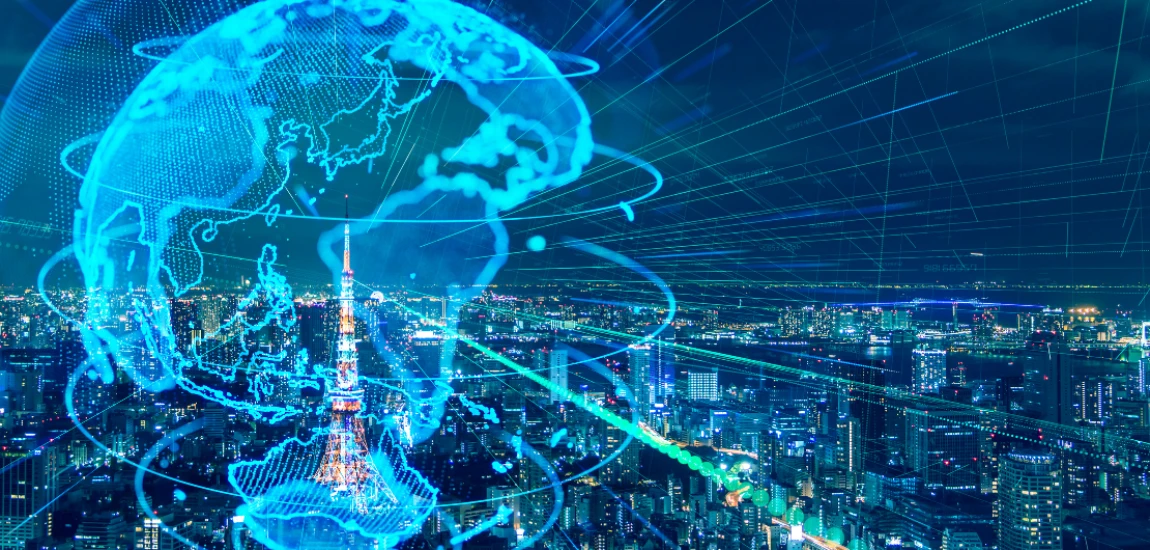
The internet has transformed how the world communicates, but the next generation of global connectivity could be based on an entirely different technological foundation. As cyberattacks become more sophisticated, data volumes continue to grow, and governments, businesses, financial institutions, and research organizations demand stronger security, traditional communication networks are facing new challenges. The future may require networks that do more than transmit information quickly. They may need to provide fundamentally different methods of protecting information itself.
This is where quantum internet mesh networks could become transformative. A quantum internet is envisioned as a communication infrastructure capable of transmitting quantum information between connected nodes. Instead of relying only on conventional digital bits, quantum networks use quantum states such as photons and the principles of quantum mechanics to enable new forms of communication and security.
A quantum internet mesh network would connect many quantum nodes through multiple pathways rather than depending on a single linear connection. This could create a flexible and resilient architecture for quantum communication across cities, countries, continents, and eventually global networks.
The technology is still developing, and a fully operational global quantum internet remains a long-term objective. However, advances in quantum key distribution, quantum repeaters, photonic systems, quantum memories, and satellite communication are gradually building the foundations for this future.
The evolution of quantum internet mesh networks could redefine secure communication. Instead of simply encrypting information and hoping that mathematical algorithms remain difficult to break, quantum communication can use the physical properties of quantum states to detect certain types of interception. This could create powerful new security capabilities for the future of global digital infrastructure.
What Are Quantum Internet Mesh Networks?

From Classical Internet Architecture to Quantum Connectivity
Traditional internet networks transmit information using classical bits represented as zeros and ones. These bits can be copied, stored, routed, and transmitted through conventional networks.
Quantum internet networks are designed to transmit quantum information. Quantum bits, or qubits, can exist in complex quantum states and can demonstrate properties such as superposition and entanglement. These properties create new possibilities for communication and information processing.
A quantum internet mesh network would connect multiple quantum nodes through a network of interconnected links. Instead of depending on one direct connection between two locations, a mesh architecture could provide multiple routes for transmitting quantum information.
This structure could improve network resilience. If one connection becomes unavailable, alternative paths may potentially be used. However, quantum information cannot simply be copied and retransmitted in the same way as classical data, which makes quantum networking fundamentally different from conventional networking.
The Importance of Quantum Nodes
Quantum nodes could serve as important connection points within the network. These nodes may include quantum processors, quantum memories, photon sources, detectors, and specialized communication equipment.
A node could receive quantum information, store it temporarily, perform certain operations, and transfer it to another location. The development of reliable quantum nodes will be essential for building large-scale quantum networks.
Future quantum nodes may be installed in research facilities, data centers, telecommunications hubs, satellites, and secure government infrastructure. As the technology matures, these nodes could become part of a global quantum communication ecosystem.
Why a Mesh Architecture Matters
A mesh network offers greater flexibility than a simple point-to-point system. In a global quantum network, distances can be enormous and direct connections may not always be practical.
A mesh structure could allow quantum information to travel through interconnected pathways. This could help create regional quantum networks that eventually connect to one another.
The long-term goal may be a layered global infrastructure in which classical and quantum communication systems operate together. Classical networks could manage routing and ordinary data, while quantum networks could support specialized secure communication and distributed quantum applications.
How Quantum Communication Creates Ultra-Secure Connections

Quantum Key Distribution
One of the most important applications of quantum networking is quantum key distribution, commonly known as QKD. QKD enables two parties to generate shared cryptographic keys using quantum states.
The security advantage comes from the behavior of quantum systems. Measuring a quantum state can disturb it. Therefore, an unauthorized attempt to intercept certain quantum communications may create detectable changes in the transmitted information.
This does not mean that quantum communication automatically makes every digital system completely secure. Authentication, endpoint security, software protection, and network management remain essential. However, quantum technologies could provide a powerful additional layer of protection.
Detecting Interception Through Quantum Principles
In traditional communication systems, data can often be copied without immediately changing the original information. Quantum states behave differently.
The inability to perfectly copy unknown quantum states is associated with the no-cloning principle. In practical quantum communication systems, this can make certain interception attempts detectable.
This creates a different security model. Instead of relying entirely on the assumption that an attacker cannot mathematically break an encryption method, quantum communication can provide physical mechanisms that reveal specific types of interference.
Protection Against Future Threats
The rise of quantum computers creates concerns about the future security of many existing encryption systems. Powerful quantum computers could potentially threaten certain cryptographic methods that are widely used today.
Quantum internet networks may become part of a broader strategy for long-term information security. Quantum communication could support highly sensitive applications, while post-quantum cryptography could protect conventional digital networks against future quantum attacks.
The future of cybersecurity will likely involve multiple layers of protection rather than one universal solution.
Quantum Repeaters and the Challenge of Global Distance

Why Quantum Signals Cannot Simply Travel Forever
One of the greatest challenges in building a global quantum internet is distance. Quantum signals can lose strength as they travel through optical fibers and other communication channels.
In classical communication networks, amplifiers can strengthen signals. Quantum information cannot always be amplified in the same way because copying unknown quantum states is fundamentally restricted.
This creates the need for new technologies capable of extending quantum communication over long distances.
The Role of Quantum Repeaters
Quantum repeaters are being developed to help connect distant quantum nodes. A quantum repeater may use quantum memory and entanglement-based techniques to extend communication across multiple network segments.
Instead of directly transmitting a fragile quantum state across an enormous distance, a network could establish quantum connections between neighboring nodes and gradually extend those connections.
This technology remains technically challenging. Quantum memories must preserve delicate states, and synchronization between nodes must be extremely precise.
Building Continental and Intercontinental Links
Future quantum internet mesh networks may begin with metropolitan-area networks connecting nearby research centers, universities, laboratories, and data facilities.
These regional networks could eventually connect through long-distance fiber links, satellite systems, and advanced quantum repeaters. A global network may therefore develop gradually through interconnected regional ecosystems.
Satellite-based quantum communication could become particularly important for connecting distant locations where fiber infrastructure is impractical. Space-based links may provide new opportunities for long-distance quantum networking.
Applications of Quantum Internet Mesh Networks

Financial Services and Critical Infrastructure
Financial institutions handle extremely sensitive information and require secure communication between data centers, trading systems, banks, and regulatory organizations.
Quantum communication could potentially support high-security connections for financial transactions and sensitive data exchange. Although quantum networks would not replace all financial infrastructure, they could provide specialized channels for the most critical information.
Critical infrastructure such as energy grids, transportation systems, telecommunications networks, and government services could also benefit from advanced quantum security.
Scientific Research and Distributed Quantum Computing
The quantum internet may eventually enable quantum computers to communicate with one another. This could create distributed quantum computing systems in which separate quantum processors collaborate across a network.
Researchers could potentially share quantum resources, exchange quantum states, and connect specialized quantum machines.
This could expand the capabilities of quantum computing beyond the limitations of a single device. Instead of one large quantum computer performing every task, multiple quantum systems could potentially cooperate through a quantum network.
Healthcare and Sensitive Data Exchange
Healthcare organizations increasingly depend on digital communication and data sharing. Medical records, genomic data, imaging information, and research results require strong privacy protection.
Quantum communication could support highly secure exchanges between hospitals, laboratories, research institutions, and government agencies.
The integration of quantum networking with privacy-preserving technologies could become increasingly important as healthcare becomes more connected and data-driven.


Kate McCulley, the voice behind "Adventurous Kate," provides travel advice tailored for women. Her blog encourages safe and adventurous travel for female readers.
Kate McCulley
Prev Post

Next Post