
Programmable Molecular Robotics and the Rise of Atomic-Scale Manufacturing
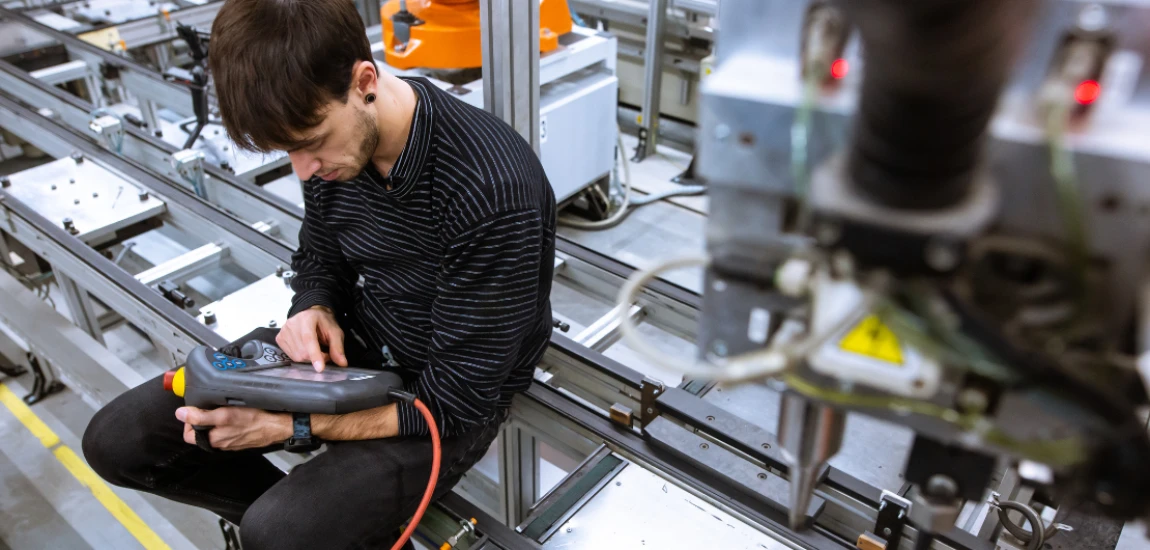
Manufacturing has progressed from shaping raw materials with hand tools to using automated factories, industrial robots, advanced software, and artificial intelligence. The next major transformation could occur at a scale far smaller than conventional machines can reach. Instead of manufacturing products by cutting, melting, assembling, or printing large materials, future systems may manipulate individual molecules and atoms to create highly precise structures.
This emerging vision is connected to programmable molecular robotics, a field that combines nanotechnology, molecular engineering, chemistry, robotics, artificial intelligence, and advanced materials science. The goal is to create molecular-scale machines capable of performing controlled actions according to programmed instructions.
Molecular robots could theoretically recognize specific molecules, transport chemical components, assemble structures, respond to environmental signals, and perform repetitive nanoscale tasks. Although many advanced applications remain experimental, research into molecular machines and nanoscale engineering is steadily expanding the possibilities.
The rise of atomic-scale manufacturing could transform medicine, electronics, materials science, energy systems, and industrial production. Manufacturing at the molecular level could potentially create materials with precisely engineered properties, construct highly efficient components, and enable technologies that are impossible to produce using traditional methods.
However, this future also presents significant challenges. Molecular systems operate in complex environments where heat, chemical reactions, Brownian motion, and molecular interactions influence behavior. Creating programmable machines that can operate reliably at this scale requires new approaches to design, control, energy, and manufacturing.
As science progresses, programmable molecular robotics could become an important foundation for a future in which manufacturing is controlled not only at the level of machines and components but also at the level of individual molecules.
What Is Programmable Molecular Robotics?

The Concept of Molecular Machines
Programmable molecular robotics refers to the design of molecular-scale systems that can perform specific tasks according to instructions. These systems may be constructed from DNA, proteins, synthetic molecules, nanoparticles, or other engineered materials.
Unlike traditional robots, molecular robots do not necessarily contain motors, gears, batteries, or electronic circuits in the conventional sense. Their movements and functions may be driven by chemical reactions, molecular interactions, changes in environmental conditions, or external energy sources.
A molecular machine might change shape when it encounters a particular molecule. Another could transport a chemical payload or assemble components through a sequence of molecular interactions.
Programming at the Molecular Level
Programming molecular robots requires a different approach from writing software for computers. Molecular systems may be programmed through chemical structures, DNA sequences, reaction pathways, environmental triggers, or physical configurations.
Researchers can design molecules that respond to specific signals. For example, a molecular structure might activate when it detects a particular chemical environment. This creates the possibility of logic-based behavior at the nanoscale.
The system may follow a sequence of molecular instructions: detect a target, attach to it, change shape, release a payload, and deactivate. Such behavior could represent a form of molecular programming.
Why Molecular Robotics Matters
The importance of molecular robotics comes from its potential to perform tasks that conventional machines cannot. Traditional manufacturing tools are limited by physical scale. Molecular robots could operate directly within materials, biological systems, and chemical environments.
This could create new possibilities for highly precise manufacturing. Instead of producing an object and modifying it afterward, future systems could potentially assemble structures from the bottom up.
Atomic-Scale Manufacturing and the Bottom-Up Revolution

Building from Molecules Instead of Cutting Materials
Most modern manufacturing follows a top-down approach. A large material is cut, shaped, drilled, molded, or processed until the desired product is created.
Atomic-scale manufacturing represents a different approach. It focuses on building structures from smaller components, potentially including molecules and atoms.
This bottom-up strategy could reduce material waste and enable unprecedented levels of precision. Instead of removing unwanted material, manufacturing systems could place components exactly where they are needed.
Precision Engineering at the Smallest Scale
The ability to control materials at atomic and molecular scales could lead to new types of products. Scientists may be able to design materials with specific electrical, mechanical, chemical, or optical properties.
For example, a material could be engineered to be extremely strong while remaining lightweight. Another could be designed to conduct electricity efficiently or respond to specific environmental conditions.
Molecular manufacturing could also help create complex structures with precise internal arrangements that are difficult or impossible to produce through traditional techniques.
The Role of Self-Assembly
Self-assembly could become a central principle of atomic-scale manufacturing. In self-assembly, components naturally organize themselves according to chemical or physical rules.
Programmable molecular robotics could guide this process. Molecular machines might bring components together, trigger specific reactions, or prevent unwanted connections.
This could allow large numbers of nanoscale structures to be created simultaneously rather than assembled individually. The combination of automation and molecular self-assembly could significantly increase manufacturing efficiency.
Artificial Intelligence and the Control of Molecular Robots

AI-Driven Molecular Design
Artificial intelligence is becoming increasingly important in molecular engineering. AI systems can analyze enormous numbers of possible molecular structures and predict how they might behave.
This can help researchers identify promising designs more quickly. Instead of testing every possibility in a laboratory, machine learning models can narrow the search space.
AI could eventually help design molecular robots optimized for specific tasks, environments, and manufacturing processes.
Autonomous Molecular Decision-Making
Future molecular robots may need to make decisions based on their surroundings. A molecular system could detect a chemical signal and determine whether to activate, move, attach, release a payload, or remain inactive.
These decisions would not necessarily involve conventional processors. Instead, molecular logic and chemical reactions could provide the decision-making mechanism.
This could create a new category of autonomous systems capable of operating in environments where traditional electronics cannot function.
Digital Twins and Molecular Simulation
Advanced simulations could help researchers model molecular robots before building them. Digital molecular environments could simulate chemical reactions, molecular movement, and interactions between engineered structures.
AI-assisted simulations may help identify design weaknesses and predict performance.
This could accelerate development while reducing the cost of physical experimentation. As computational chemistry and machine learning improve, molecular robotics may increasingly rely on virtual testing before laboratory construction.


Gilbert Ott, the man behind "God Save the Points," specializes in travel deals and luxury travel. He provides expert advice on utilizing rewards and finding travel discounts.
Gilbert Ott

Prev Post

Next Post