
Programmable Molecular Manufacturing and the Rise of Atomically Precise Production
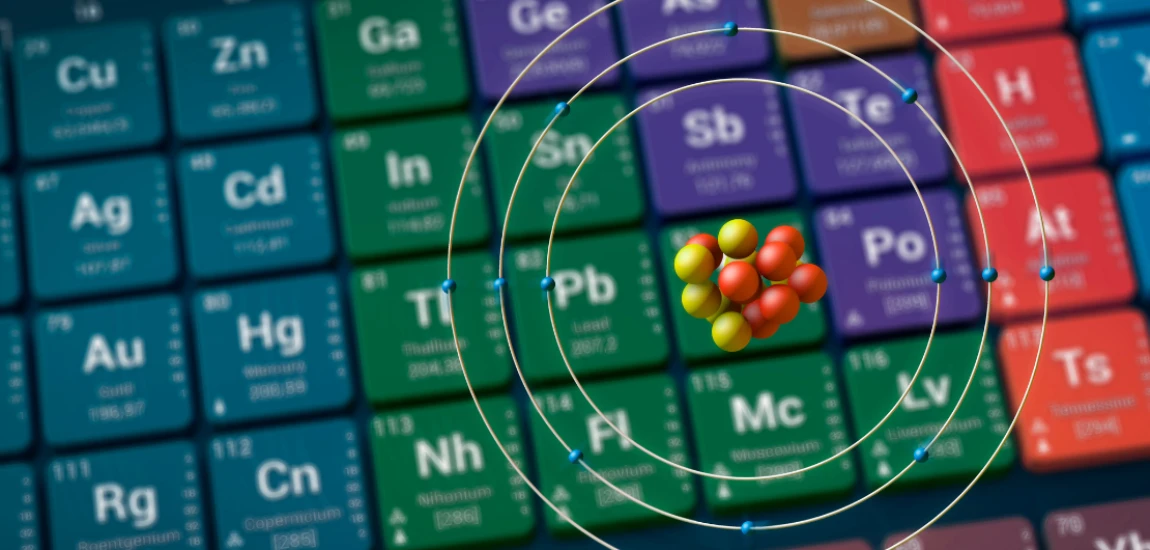
Manufacturing has evolved dramatically over the centuries, progressing from manual craftsmanship to mechanized factories, automated production lines, robotics, and artificial intelligence-driven industrial systems. Despite these advancements, traditional manufacturing methods still face limitations in material efficiency, production precision, energy consumption, and waste generation. Many products are created by cutting, shaping, molding, or assembling materials, processes that often result in significant resource loss and environmental impact. As industries seek more sustainable and highly efficient production methods, researchers are exploring revolutionary technologies capable of building products with atomic-level precision.
One of the most promising innovations is Programmable Molecular Manufacturing (PMM). This emerging field combines molecular engineering, nanotechnology, artificial intelligence, programmable chemistry, and advanced robotics to construct materials and products atom by atom or molecule by molecule. Instead of removing material from larger objects or assembling pre-manufactured parts, molecular manufacturing creates structures with extraordinary precision, minimizing waste while maximizing performance.
The rise of atomically precise production has the potential to transform nearly every industry, including healthcare, electronics, aerospace, energy, construction, and environmental protection. By controlling matter at the molecular level, scientists could develop stronger materials, highly efficient batteries, advanced medical devices, self-healing infrastructure, and customized products with unprecedented accuracy. As research continues to advance, Programmable Molecular Manufacturing is expected to become one of the defining technologies of the twenty-first century, reshaping global manufacturing and enabling innovations that were once considered impossible.
Understanding Programmable Molecular Manufacturing

The Concept of Building Matter Atom by Atom
Traditional manufacturing generally begins with raw materials that are cut, molded, cast, or assembled into finished products. Although highly effective for mass production, these methods often produce excess waste and limit the precision with which materials can be engineered. Programmable Molecular Manufacturing introduces an entirely different approach by constructing objects directly from atoms and molecules according to digitally programmed instructions.
Using molecular engineering techniques, specialized molecular machines manipulate individual atoms or carefully designed molecular building blocks to create highly organized structures. Every molecular bond can be controlled to optimize strength, conductivity, flexibility, thermal resistance, or chemical stability. This extraordinary level of precision enables manufacturers to design products whose properties are tailored specifically for their intended applications.
The ability to build materials atom by atom also dramatically reduces production errors because every stage of assembly can be monitored and corrected at the molecular level. As fabrication techniques mature, atomically precise production may surpass traditional manufacturing in both quality and efficiency.
The Integration of Nanotechnology and Artificial Intelligence
Nanotechnology provides the physical tools required for molecular manufacturing, while artificial intelligence supplies the computational intelligence needed to control complex molecular assembly processes. AI algorithms continuously monitor chemical reactions, optimize assembly pathways, predict structural outcomes, and automatically correct microscopic defects before they affect the finished product.
Machine learning models analyze enormous datasets describing molecular interactions, enabling manufacturing systems to identify the most efficient assembly strategies. Intelligent automation allows programmable molecular factories to adapt dynamically to changing production requirements while maintaining exceptional precision.
Nanorobots, molecular manipulators, programmable catalysts, and advanced imaging technologies work together under AI supervision, creating highly autonomous production environments capable of manufacturing materials far beyond the capabilities of conventional industrial systems.
From Laboratory Research to Industrial Production
Although much of Programmable Molecular Manufacturing remains under active research, significant progress has already been achieved in fields such as DNA nanotechnology, molecular self-assembly, atomic manipulation, and nanoscale fabrication. Researchers have demonstrated the ability to position individual atoms, construct molecular frameworks, and create nanoscale electronic components with remarkable accuracy.
As these technologies continue evolving, experimental laboratory methods will gradually transition into scalable industrial manufacturing platforms. Future production facilities may utilize programmable molecular assembly systems capable of fabricating advanced semiconductors, medical implants, energy storage materials, aerospace components, and environmental technologies with unmatched consistency and efficiency.
This transition represents one of the most significant shifts in manufacturing history, replacing traditional subtractive processes with intelligent molecular construction systems capable of producing entirely new classes of materials.
Core Technologies Behind Atomically Precise Production

Molecular Engineering and Atomic-Level Design
Molecular engineering forms the scientific foundation of Programmable Molecular Manufacturing by enabling researchers to design materials at the atomic scale. Instead of selecting existing materials with fixed properties, engineers can customize molecular structures to achieve specific mechanical, electrical, thermal, or chemical characteristics.
Precise atomic arrangements influence material performance in ways impossible to achieve through conventional manufacturing. Scientists can develop lightweight aerospace materials with exceptional strength, highly conductive electronic components, advanced catalysts for clean energy production, and medical materials specifically engineered for compatibility with biological systems.
Atomic-level design also enables the creation of multifunctional materials capable of performing several roles simultaneously, reducing manufacturing complexity while improving product performance.
Artificial Intelligence, Automation, and Digital Manufacturing
Artificial intelligence plays a central role in managing the extraordinary complexity involved in molecular manufacturing. Every production process involves billions of molecular interactions that must be carefully coordinated to ensure accurate assembly.
AI continuously analyzes sensor data, predicts chemical behavior, optimizes manufacturing sequences, and monitors quality throughout production. Machine learning algorithms improve assembly efficiency over time by learning from previous manufacturing cycles, reducing defects while increasing productivity.
Digital manufacturing platforms create virtual molecular models before physical production begins, allowing engineers to simulate molecular assembly, identify potential challenges, and optimize product designs before resources are consumed.
Programmable Chemistry and Self-Assembly Systems
One of the most exciting aspects of molecular manufacturing is programmable chemistry. Scientists design molecules that naturally organize themselves into predetermined structures through carefully controlled chemical interactions. Rather than positioning every atom individually, self-assembling molecular systems perform much of the construction process automatically.
Programmable catalysts guide chemical reactions with exceptional precision, ensuring that molecules connect only in desired configurations. DNA-based molecular scaffolds, synthetic proteins, and nanoscale molecular machines further expand the possibilities for self-directed assembly.
As programmable chemistry becomes increasingly sophisticated, manufacturing systems will produce highly complex products more efficiently while consuming fewer raw materials and significantly reducing environmental waste.
Applications of Programmable Molecular Manufacturing Across Industries

Transforming Healthcare and Personalized Medicine
Healthcare is expected to become one of the greatest beneficiaries of Programmable Molecular Manufacturing. Modern medicine increasingly relies on highly specialized materials for implants, diagnostic devices, drug delivery systems, and tissue engineering. Conventional manufacturing methods often struggle to achieve the molecular precision required for next-generation medical technologies.
Atomically precise production enables scientists to create customized biomaterials designed specifically for individual patients. Medical implants can be engineered with molecular structures that improve compatibility with human tissue, reducing the risk of rejection while accelerating healing. Artificial intelligence-guided molecular manufacturing can also produce advanced drug delivery systems that release medication only when and where it is needed, improving treatment effectiveness while minimizing side effects.
Researchers are also exploring molecular manufacturing for tissue scaffolds, regenerative medicine, biosensors, and nanoscale surgical tools. These innovations have the potential to revolutionize disease diagnosis, personalized therapies, and preventive healthcare. As manufacturing technologies continue to advance, hospitals and research institutions may gain access to customized medical solutions that were previously impossible to produce.
Advanced Electronics and Semiconductor Manufacturing
The semiconductor industry demands extraordinary manufacturing precision as electronic components become increasingly smaller and more powerful. Programmable Molecular Manufacturing offers a revolutionary approach by constructing electronic materials and circuits at the atomic level.
Instead of relying solely on conventional lithography techniques, molecular assembly enables manufacturers to position atoms exactly where they are needed. This precision improves transistor performance, increases processing speed, reduces energy consumption, and extends the capabilities of future computer chips.
Next-generation quantum processors, photonic circuits, flexible electronics, and molecular-scale sensors all benefit from atomically precise fabrication. Manufacturers can also develop highly efficient batteries, energy storage materials, and advanced communication devices with optimized molecular architectures. As demand for faster computing and artificial intelligence continues growing, molecular manufacturing will become increasingly important for sustaining semiconductor innovation.
Aerospace, Energy, and Sustainable Manufacturing
Industries operating under extreme environmental conditions require materials that combine exceptional strength with lightweight construction. Programmable Molecular Manufacturing allows engineers to create advanced composites whose atomic structures maximize durability while minimizing weight.
Aircraft, spacecraft, satellites, and renewable energy systems all benefit from stronger structural materials, improved thermal resistance, and enhanced corrosion protection. Molecular engineering can also produce highly efficient catalysts for hydrogen production, carbon capture technologies, next-generation solar cells, and high-capacity energy storage systems.
Sustainability represents another major advantage. Because molecular manufacturing assembles products with extraordinary precision, material waste is dramatically reduced. Fewer raw materials are required, manufacturing consumes less energy, and production generates fewer harmful byproducts. These environmental benefits make atomically precise production an attractive solution for industries seeking cleaner and more sustainable manufacturing practices.
Advantages of Atomically Precise Production

Unmatched Manufacturing Precision
The defining characteristic of Programmable Molecular Manufacturing is its ability to control matter at the atomic scale. Every molecular bond, structural arrangement, and material property can be engineered according to precise design specifications.
This unprecedented precision enables manufacturers to eliminate microscopic defects that often reduce product reliability. Components become stronger, more efficient, and more consistent because every stage of production is carefully controlled. High-performance industries such as aerospace, medical technology, quantum computing, and advanced electronics particularly benefit from these improvements.
Greater precision also reduces production variability, allowing manufacturers to maintain exceptional quality standards across large-scale manufacturing operations.
Resource Efficiency and Environmental Sustainability
Traditional manufacturing often removes excess material during machining, cutting, or shaping processes, generating considerable waste. Molecular manufacturing takes the opposite approach by building products only where material is required.
This additive molecular assembly dramatically improves material efficiency while reducing raw material consumption. Less waste means lower production costs, reduced environmental pollution, and decreased reliance on limited natural resources.
Energy efficiency also improves because molecular assembly requires fewer energy-intensive manufacturing steps compared with conventional industrial processes. Combined with renewable energy technologies and intelligent automation, Programmable Molecular Manufacturing supports the transition toward greener industrial production.
Accelerated Innovation and Product Development
Developing new materials using conventional methods often requires years of experimentation and repeated manufacturing trials. Programmable Molecular Manufacturing accelerates innovation through digital design, AI-driven simulation, and molecular-level modeling.
Researchers can evaluate thousands of molecular structures virtually before physical production begins, identifying optimal material designs more quickly. Artificial intelligence predicts material behavior, chemical stability, and manufacturing feasibility, reducing research costs while shortening development timelines.
This rapid innovation cycle enables industries to introduce advanced products more frequently, maintaining competitiveness in rapidly evolving global markets.


Derek Baron, also known as "Wandering Earl," offers an authentic look at long-term travel. His blog contains travel stories, tips, and the realities of a nomadic lifestyle.
Derek Baron

Prev Post

Next Post