
Molecular Nanofabrication Systems and the Future of Atomic-Scale Manufacturing
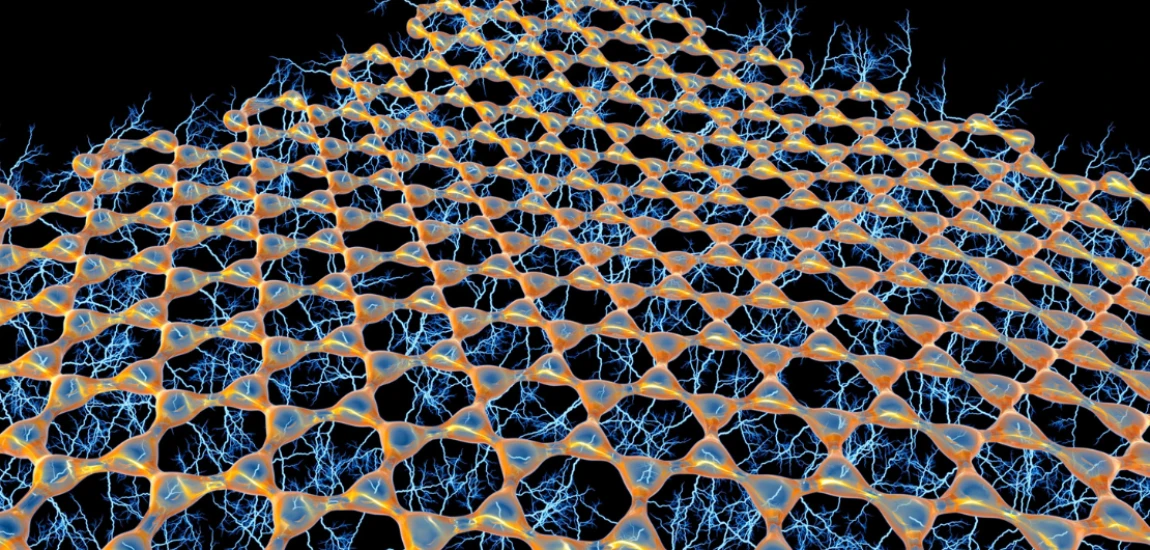
Manufacturing has always evolved by becoming more precise. Early industries worked with large physical structures, while modern factories can produce components measured in micrometers and nanometers. The next stage of this evolution could move even deeper into the structure of matter. Molecular nanofabrication systems represent a future in which manufacturing processes are designed to manipulate molecules, atoms, and nanoscale structures with extraordinary precision.
Traditional manufacturing typically begins with large quantities of material and removes, shapes, or combines them to create a final product. Molecular nanofabrication takes a different approach. Instead of simply cutting or molding materials, it seeks to control matter at its smallest functional levels. Molecular machines, nanoscale assembly systems, advanced chemical synthesis, artificial molecular structures, and atomically precise manufacturing could eventually work together to create materials and devices with properties that are difficult or impossible to achieve through conventional production methods.
This emerging field could influence electronics, medicine, energy, aerospace, robotics, biotechnology, and environmental engineering. Imagine materials designed molecule by molecule, medicines assembled with extreme precision, or electronic components manufactured with atomic-level control. Such possibilities could redefine the limits of manufacturing efficiency and product design.
However, atomic-scale manufacturing is extremely challenging. Atoms and molecules are constantly influenced by heat, vibration, chemical reactions, and quantum effects. Controlling them reliably requires advanced tools, sophisticated computational systems, and new approaches to automation.
As research in nanotechnology and molecular engineering advances, molecular nanofabrication systems could become the foundation of a new industrial era. The future of manufacturing may not depend only on larger factories or faster machines. It may depend on the ability to intelligently design and assemble matter at the molecular level.
Understanding Molecular Nanofabrication Systems

Manufacturing at the Molecular Scale
Molecular nanofabrication systems are technologies designed to create, manipulate, and assemble nanoscale structures with high precision. At this scale, materials can behave very differently from their larger forms. Electrical conductivity, strength, optical properties, chemical reactivity, and biological behavior can all change depending on how atoms and molecules are arranged.
The goal of molecular nanofabrication is to control these properties by engineering structures at the smallest practical level. This may involve chemical synthesis, molecular self-assembly, nanoscale lithography, scanning probe technologies, DNA-based construction, or programmable molecular systems.
Unlike traditional manufacturing, where a product is often shaped from a larger block of material, molecular fabrication may involve constructing complex structures from individual components. This approach could enable more efficient use of resources and produce materials with highly customized characteristics.
The Role of Molecular Machines
Molecular machines are one of the most exciting components of future nanofabrication systems. These tiny structures can perform controlled movements or chemical actions in response to specific stimuli.
Some molecular machines are inspired by biological systems. Nature already uses molecular-scale machines to transport materials, produce energy, and build complex structures inside living cells. Scientists are studying these mechanisms to create artificial systems capable of performing similar functions.
Future molecular manufacturing platforms could use molecular machines to transport components, trigger chemical reactions, and assemble nanoscale structures. Although large-scale molecular manufacturing remains an emerging concept, advances in synthetic chemistry and nanotechnology are steadily expanding what is possible.
From Nanotechnology to Atomic Precision
Nanotechnology already enables the production of materials and devices at extremely small scales. Molecular nanofabrication pushes this concept further by seeking greater control over individual molecules and atomic arrangements.
This transition from nanoscale manufacturing to atomic-scale manufacturing could produce new levels of precision. It may allow researchers to design materials based not only on their chemical composition but also on the exact arrangement of atoms within them.
The Technologies Powering Atomic-Scale Manufacturing

Advanced Lithography and Patterning
Modern semiconductor manufacturing demonstrates the power of nanoscale fabrication. Advanced lithography techniques can create incredibly small patterns on silicon and other materials.
Future fabrication systems may combine lithography with molecular engineering to create structures that are even smaller and more complex. Researchers are exploring techniques that use light, electrons, ions, and chemical processes to manipulate materials at extremely fine scales.
These technologies are important because many future devices will require precise control over their structure. Quantum devices, nanosensors, advanced processors, and molecular electronics may all depend on fabrication techniques capable of producing consistent nanoscale patterns.
Scanning Probe Technologies
Scanning probe microscopes allow scientists to observe and manipulate surfaces at the atomic scale. Instruments such as atomic force microscopes can detect surface structures and, under carefully controlled conditions, move individual atoms or molecules.
Although these techniques are not yet suitable for mass manufacturing, they demonstrate that atomic-scale manipulation is technically possible. Future systems may combine scanning probe technologies with automation and artificial intelligence to improve speed and precision.
AI could help identify target structures, control nanoscale tools, and optimize fabrication processes. This could create a new generation of intelligent nanofabrication platforms capable of making complex decisions during manufacturing.
Chemical and Molecular Self-Assembly
Self-assembly is another major pathway toward molecular manufacturing. In self-assembly systems, molecules are designed to organize themselves into specific structures based on chemical interactions.
This approach is inspired by biology, where complex structures naturally form through molecular interactions. By designing molecules with specific properties, researchers can guide them toward creating useful materials.
Self-assembly could be particularly valuable for large-scale manufacturing because it may allow billions of molecules to organize simultaneously. Instead of manually positioning every component, manufacturers could create conditions that cause materials to build themselves.
Molecular Self-Assembly and Programmable Matter

Learning from Biological Manufacturing
Living organisms are among the most advanced examples of molecular manufacturing. Cells create proteins, membranes, genetic structures, and complex biological systems through highly coordinated molecular processes.
Scientists are studying these biological systems to understand how nature builds complex structures from simple components. The lessons learned could inspire artificial manufacturing systems that operate through molecular instructions.
Biological manufacturing demonstrates that molecular-scale construction can be efficient, adaptive, and highly organized. Future technologies may combine biological mechanisms with synthetic materials to create new forms of programmable fabrication.
Programmable Molecular Structures
Programmable matter refers to materials or systems whose properties and structures can be controlled through instructions. At the molecular scale, this could involve molecules that respond to chemical signals, light, electricity, or mechanical forces.
A programmable molecular system might change shape, assemble into a specific structure, or perform a chemical function when activated. Such materials could be used in medicine, robotics, sensors, and advanced manufacturing.
The ability to program matter could eventually transform product design. Instead of manufacturing a static object, manufacturers might create materials capable of changing according to their environment or intended function.
DNA Nanotechnology
DNA nanotechnology is another example of molecular-scale construction. Scientists can use DNA molecules as programmable building materials because their chemical interactions are highly predictable.
Researchers have designed DNA structures that form complex shapes, containers, and nanoscale devices. These systems could eventually support drug delivery, biosensing, molecular computing, and precision manufacturing.
Although DNA-based systems are not universal manufacturing solutions, they demonstrate how biological molecules can be repurposed as engineering tools.
Applications of Molecular Nanofabrication Across Industries

Medicine and Precision Drug Delivery
Molecular nanofabrication could significantly transform medicine. Researchers may be able to create nanoscale drug delivery systems designed to target specific cells or tissues.
Molecular structures could be engineered to release medicines only when they encounter specific biological conditions. This could improve treatment precision and reduce unnecessary exposure to healthy tissue.
Nanofabricated materials could also support regenerative medicine, biosensors, diagnostic systems, and artificial tissues. As manufacturing becomes more precise, medical technologies could become increasingly personalized.
Electronics and Quantum Technologies
The electronics industry is another major beneficiary of atomic-scale manufacturing. As conventional semiconductor technologies approach physical limits, molecular and atomic-scale fabrication could provide new ways to build electronic components.
Molecular electronics could use individual molecules or nanoscale structures to perform electrical functions. Quantum technologies may also require materials with highly controlled atomic properties.
Future processors, sensors, memory systems, and quantum devices could depend on manufacturing techniques that provide extreme control over material structure.
Energy and Advanced Materials
Molecular nanofabrication could lead to improved batteries, solar cells, fuel cells, and energy storage systems. By controlling the structure of materials at the molecular level, scientists may improve energy efficiency and performance.
New materials could be designed to absorb more sunlight, store more energy, conduct electricity more efficiently, or withstand extreme conditions.
This could support the development of lighter aerospace materials, more efficient electric vehicles, and sustainable energy systems.


Ben Schlappig runs "One Mile at a Time," focusing on aviation and frequent flying. He offers insights on maximizing travel points, airline reviews, and industry news.
Ben Schlappig

Prev Post

Next Post