
Living Bioelectronic Interfaces and the Future of Human–Machine Integration
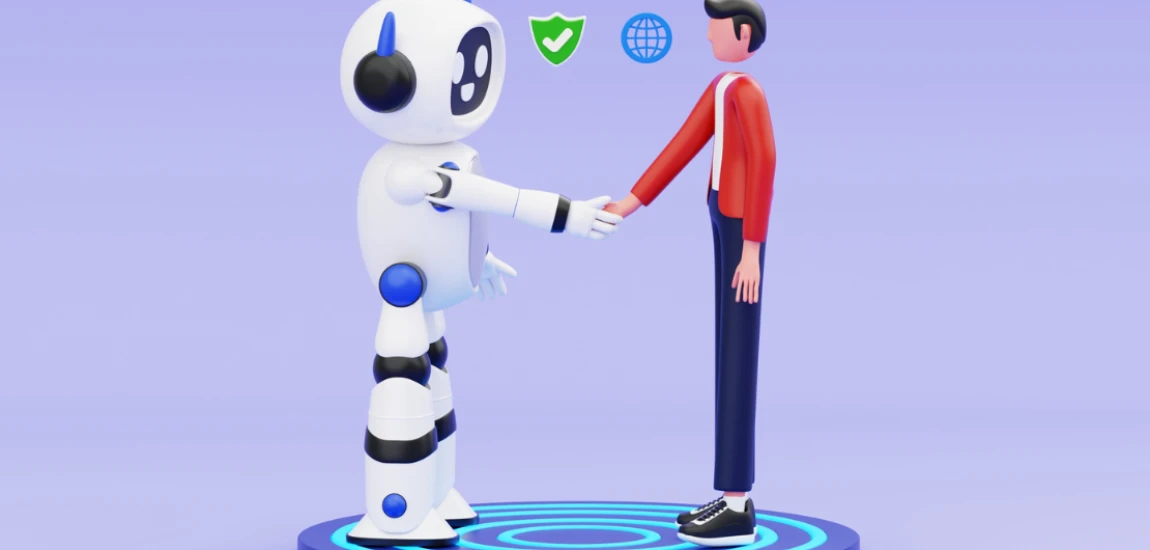
The relationship between humans and machines is entering a remarkable new era. For decades, technology interacted with the human body through external devices such as smartphones, wearable sensors, prosthetic limbs, and medical equipment. Today, researchers are exploring a more advanced possibility: systems in which living biological materials and electronic technologies communicate directly with one another.
This emerging field is driving interest in living bioelectronic interfaces, a concept that combines biology, electronics, artificial intelligence, materials science, neuroscience, and biotechnology. Instead of creating machines that simply operate beside the human body, researchers are investigating systems capable of communicating with cells, tissues, neurons, organs, and other biological structures.
The long-term vision of human–machine integration is not necessarily a science-fiction world where humans are completely replaced by machines. Instead, it may involve subtle and highly integrated technologies that support the body, restore lost functions, improve communication between biological systems and computers, and enable more responsive healthcare.
Living bioelectronic interfaces could eventually transform prosthetics, brain-computer interfaces, personalized medicine, rehabilitation, disease monitoring, and human augmentation. However, this technology also raises significant questions about safety, privacy, ethics, identity, and the boundaries between biological and digital systems.
As research continues, the future of human–machine integration may be shaped by a new principle: technology does not always need to imitate life. In some cases, the most powerful machines may be designed to communicate directly with living systems.
Understanding Living Bioelectronic Interfaces

Where Biology Meets Electronics
Living bioelectronic interfaces are technologies designed to create communication pathways between biological systems and electronic devices. These systems may interact with neurons, muscles, cells, organs, or engineered biological materials.
Traditional electronics rely on electrical signals moving through wires, circuits, and semiconductor components. Biological systems communicate through a combination of electrical activity, chemical signals, mechanical forces, and biochemical processes. A major challenge in bioelectronics is therefore creating a common communication language between these two worlds.
Researchers are developing materials and devices capable of detecting biological signals and translating them into digital information. Similarly, electronic signals can potentially be converted into forms that biological systems can understand.
For example, a neural interface may detect electrical activity from the nervous system and convert it into commands for a computer or robotic limb. In another application, a bioelectronic device could deliver precisely controlled stimulation to influence the activity of specific tissues.
Why “Living” Changes the Technology
The word “living” introduces an important dimension to bioelectronic systems. Some future interfaces may incorporate living cells, engineered tissues, biological components, or materials designed to interact more naturally with the body.
Living biological systems can adapt, repair themselves, respond to environmental changes, and process information in complex ways. This creates possibilities that conventional machines may struggle to replicate.
Researchers are exploring biological materials that can function as sensors, processors, or responsive components. Engineered cells, neural tissues, and biological circuits may eventually work alongside electronic systems to create hybrid technologies.
This could lead to interfaces that are more adaptive and compatible with the human body than rigid electronic devices.
Moving Beyond Traditional Human–Machine Interaction
Most current technology requires humans to communicate through keyboards, screens, voice commands, or physical controls. Living bioelectronic interfaces could create more direct forms of communication.
A person might control a prosthetic device using neural signals. A medical system might monitor cellular activity continuously. An AI platform might receive biological information and respond with personalized stimulation.
This does not mean that human consciousness will instantly merge with computers. Instead, integration is likely to develop gradually through increasingly sophisticated communication channels between biology and electronics.
The Technologies Powering Human–Machine Integration

Neural Interfaces and Brain–Computer Communication
Neural interfaces are among the most important technologies connected to living bioelectronic systems. These devices can detect activity in the nervous system and convert it into digital signals.
Brain-computer interfaces could allow people to control software, robotic limbs, communication systems, or assistive devices using neural activity. This could be especially valuable for individuals with paralysis or neurological conditions that affect movement and communication.
Future systems may become more precise by detecting signals from specific neural circuits. Instead of simply identifying broad patterns of brain activity, advanced interfaces could interpret increasingly detailed information.
However, neural signals are extremely complex, and the brain is highly sensitive. Long-term compatibility, signal stability, safety, and protection of neural data will remain essential.
Flexible and Biocompatible Electronics
Traditional electronic devices are often rigid, while biological tissues are soft, flexible, and constantly moving. This difference can create problems when electronic devices are placed inside the body.
Flexible electronics are being developed to address this challenge. These systems can bend, stretch, and conform to biological surfaces.
Biocompatible materials may also reduce irritation and improve long-term interaction with tissues. Future bioelectronic devices could become thinner, softer, and more integrated with the body.
Such technologies could be used for wearable health monitoring, implantable sensors, neural stimulation, and advanced prosthetics.
Artificial Intelligence as the Interpretation Layer
AI plays a crucial role in making sense of biological signals. Human nervous systems generate enormous amounts of complex data, and machine learning can help identify meaningful patterns.
An AI system could learn how a person’s neural signals correspond to intended movements. Over time, the system might adapt to changes in the user’s body or signal patterns.
This creates a personalized human–machine interface. Instead of requiring every person to use exactly the same system, AI could help technology adapt to individual biology.
Transforming Healthcare and Medical Technology

Intelligent Prosthetics and Artificial Limbs
One of the most important applications of living bioelectronic interfaces is the development of more advanced prosthetic technology.
Traditional prosthetics may restore physical function, but many devices do not provide natural sensory feedback. A future bioelectronic prosthetic could potentially receive neural commands while also providing information about pressure, temperature, or movement.
This could make artificial limbs feel more natural and responsive. The user might be able to control the device more intuitively rather than relying on mechanical switches or complicated movements.
AI could improve this process by learning individual movement patterns and adjusting the prosthetic’s response.
Continuous Monitoring of Biological Systems
Bioelectronic interfaces could also transform health monitoring. Instead of measuring health only during occasional medical appointments, embedded systems could continuously monitor biological activity.
Sensors may detect changes in electrical signals, chemical markers, tissue behavior, or physiological conditions. AI systems could analyze this information and identify unusual patterns.
This could support earlier detection of health problems and more personalized treatment strategies. However, continuous monitoring also creates serious privacy concerns because biological data can be extremely sensitive.
Strong security and clear ownership rules will be essential.
Targeted Bioelectronic Treatments
Some future medical devices may not simply monitor the body but actively influence biological processes.
Bioelectronic stimulation could potentially target specific nerves, muscles, or tissues. Instead of delivering broad treatments throughout the body, a device might provide highly localized intervention.
This approach could support personalized therapies with fewer unwanted effects. The technology may become increasingly adaptive, adjusting stimulation according to real-time biological feedback.
The combination of sensing, AI analysis, and targeted stimulation could create closed-loop medical systems that continuously respond to changes within the body.
The Role of Living Materials in Future Interfaces

Engineered Cells as Biological Components
One of the most futuristic possibilities involves using living cells as components of technological systems. Engineered cells could potentially detect environmental changes, produce signals, or respond to specific biological conditions.
In the future, biological components might work alongside electronic circuits in hybrid systems. Electronics could provide computational power while living components perform sensing or adaptive functions.
This approach could create technologies that respond more naturally to complex environments.
Biological Self-Repair and Adaptability
Living systems possess a unique ability to adapt and, in some cases, repair themselves. Conventional electronics typically require external maintenance when damaged.
Researchers are exploring materials inspired by biology that can respond to damage or environmental changes. Combining these concepts with living biological components could eventually lead to systems with greater resilience.
For human–machine integration, adaptability is particularly important because the body constantly changes. An interface that works perfectly today may require adjustment over time.
Living or bio-inspired components could help future technologies adapt more effectively to the user.
Hybrid Biological Computing
Another possibility is the development of biological computing systems. Living cells and biological networks can process information through complex chemical and electrical interactions.
Although biological computing remains an emerging field, it could eventually complement conventional processors. Hybrid systems might combine silicon electronics, AI algorithms, and biological information processing.
Such architectures could be particularly useful for tasks involving pattern recognition, environmental sensing, and complex biological data.


Ben Schlappig runs "One Mile at a Time," focusing on aviation and frequent flying. He offers insights on maximizing travel points, airline reviews, and industry news.
Ben Schlappig

Prev Post

Next Post