
Autonomous Underwater Intelligence Systems and Deep-Sea Exploration Networks
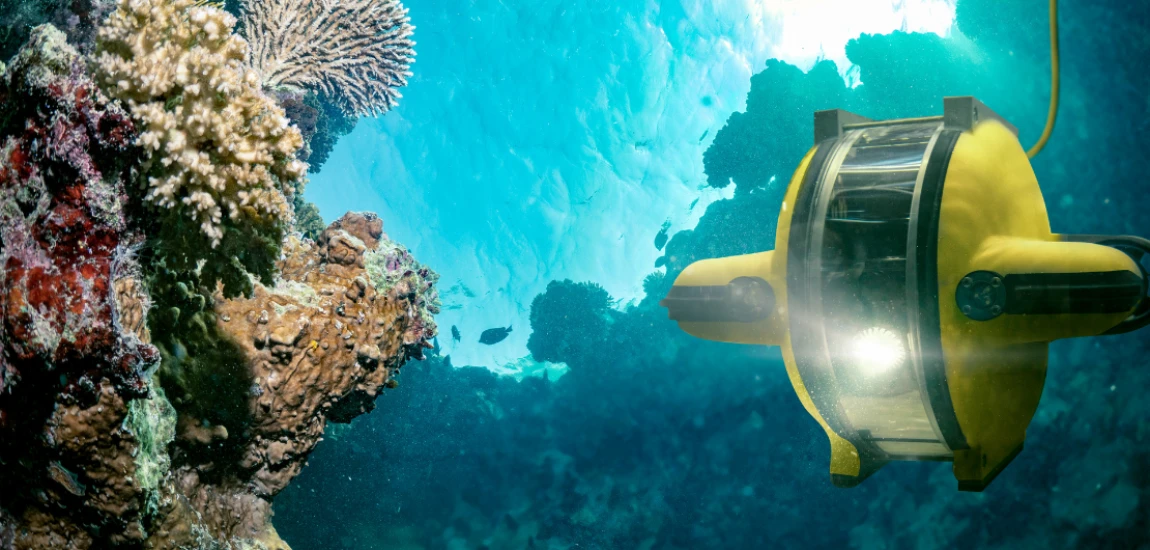
The oceans remain one of the least explored frontiers on Earth, covering more than 70% of the planet’s surface yet hiding vast unknown ecosystems, geological structures, and natural resources. Traditional underwater exploration methods are often limited by human endurance, pressure constraints, and environmental risks. To overcome these challenges, autonomous underwater intelligence systems and deep-sea exploration networks have emerged as revolutionary technologies. These systems combine artificial intelligence, robotics, sonar imaging, sensor networks, and advanced communication technologies to explore the depths of the ocean with precision and autonomy. From mapping the ocean floor to studying marine life and monitoring underwater ecosystems, AI-powered underwater systems are transforming oceanography, marine biology, defense, and energy exploration. This blog explores how these systems work, their technologies, applications, benefits, challenges, and future innovations shaping deep-sea exploration.
Understanding Autonomous Underwater Intelligence Systems

What Are Autonomous Underwater Intelligence Systems?
Autonomous underwater intelligence systems are advanced robotic platforms designed to operate independently in underwater environments without direct human control. These systems include autonomous underwater vehicles (AUVs), remotely operated vehicles (ROVs), and intelligent sensor networks that work together to explore and monitor ocean environments.
They are equipped with artificial intelligence algorithms that allow them to navigate complex underwater terrains, avoid obstacles, and collect data autonomously. These systems are capable of performing long-duration missions in deep-sea environments where human access is impossible or extremely risky.
Unlike traditional underwater exploration tools, autonomous systems can make real-time decisions based on environmental conditions, making them highly efficient and adaptable.
Role of Artificial Intelligence in Underwater Systems
Artificial intelligence is the core technology that enables underwater systems to function autonomously. AI algorithms process data from sensors, cameras, and sonar systems to interpret underwater environments.
Machine learning models help these systems recognize underwater objects, map terrain structures, and detect anomalies such as shipwrecks or geological formations. AI also enables predictive navigation, allowing underwater vehicles to adjust their routes based on ocean currents and obstacles.
Deep learning techniques improve image recognition and enable better classification of marine species and underwater structures.
Key Features of Autonomous Underwater Systems
Modern underwater intelligence systems include features such as autonomous navigation, real-time data processing, environmental sensing, and intelligent decision-making capabilities.
These systems are equipped with sonar imaging, underwater cameras, temperature sensors, pressure detectors, and communication modules.
They can operate in extreme conditions, including high pressure, low visibility, and deep-sea environments where human exploration is not possible.
Deep-Sea Exploration Networks Explained

What Are Deep-Sea Exploration Networks?
Deep-sea exploration networks are interconnected systems of underwater devices, sensors, and robotic platforms that work together to study ocean environments. These networks collect and share data across multiple underwater nodes, creating a comprehensive understanding of marine ecosystems.
They combine AI, IoT, satellite communication, and underwater robotics to enable large-scale ocean monitoring and exploration.
These networks are essential for scientific research, environmental monitoring, and resource exploration in deep-sea regions.
Real-Time Data Collection and Transmission
One of the most important aspects of exploration networks is real-time data collection. Underwater sensors and robotic vehicles continuously gather information about temperature, salinity, pressure, underwater currents, and marine life activity.
This data is transmitted to surface stations or satellites using acoustic communication or advanced wireless underwater communication systems.
Real-time data transmission allows researchers to monitor ocean conditions as they evolve, enabling faster decision-making and response.
Coordination Between Underwater Systems
Deep-sea exploration networks rely on coordinated communication between multiple autonomous systems. Each underwater vehicle or sensor node works as part of a larger network, sharing data and collaborating on exploration tasks.
This coordination improves efficiency, reduces redundancy, and enables large-scale mapping of underwater environments.
AI-based coordination systems ensure that tasks such as mapping, sampling, and monitoring are distributed effectively among all units.
Core Technologies Behind Underwater Intelligence Systems

Sonar Imaging and Underwater Vision Systems
Sonar technology is one of the most important tools used in underwater exploration. It uses sound waves to map underwater environments and detect objects in low-visibility conditions.
Advanced sonar systems combined with AI allow for high-resolution mapping of the ocean floor and detection of underwater structures.
Underwater cameras and optical sensors further enhance visual data collection in clearer environments.
Machine Learning and Autonomous Navigation
Machine learning enables underwater systems to learn from environmental data and improve navigation over time.
AI-powered navigation systems analyze ocean currents, obstacles, and terrain features to determine optimal movement paths.
This ensures safe and efficient exploration even in complex underwater environments.
Underwater Communication Technologies
Communication underwater is challenging due to the limitations of radio waves in water. Instead, acoustic communication and optical communication systems are used.
These technologies allow underwater devices to transmit data over long distances, although with limited bandwidth.
Advancements in underwater networking are improving communication speed and reliability across exploration systems.
Applications Across Industries

Marine Research and Oceanography
Autonomous underwater systems are widely used in marine research to study ocean ecosystems, underwater geology, and climate change effects.
They help scientists monitor marine biodiversity, track species migration, and analyze underwater habitats.
These systems provide valuable data for understanding global ocean health.
Oil, Gas, and Energy Exploration
In the energy sector, underwater intelligence systems are used to locate and monitor underwater oil and gas reserves.
They assist in pipeline inspection, structural maintenance, and resource mapping.
These systems reduce the need for human divers in dangerous environments, improving safety and efficiency.
Defense and Security Applications
Military organizations use underwater autonomous systems for surveillance, mine detection, and submarine tracking.
These systems provide strategic intelligence in maritime security operations.
Their ability to operate silently and autonomously makes them valuable for defense missions.


Shivya Nath authors "The Shooting Star," a blog that covers responsible and off-the-beaten-path travel. She writes about sustainable tourism and community-based experiences.
Shivya Nath

Prev Post

Next Post