
AI-Powered Nano Manufacturing Systems and Molecular-Level Smart Production Networks
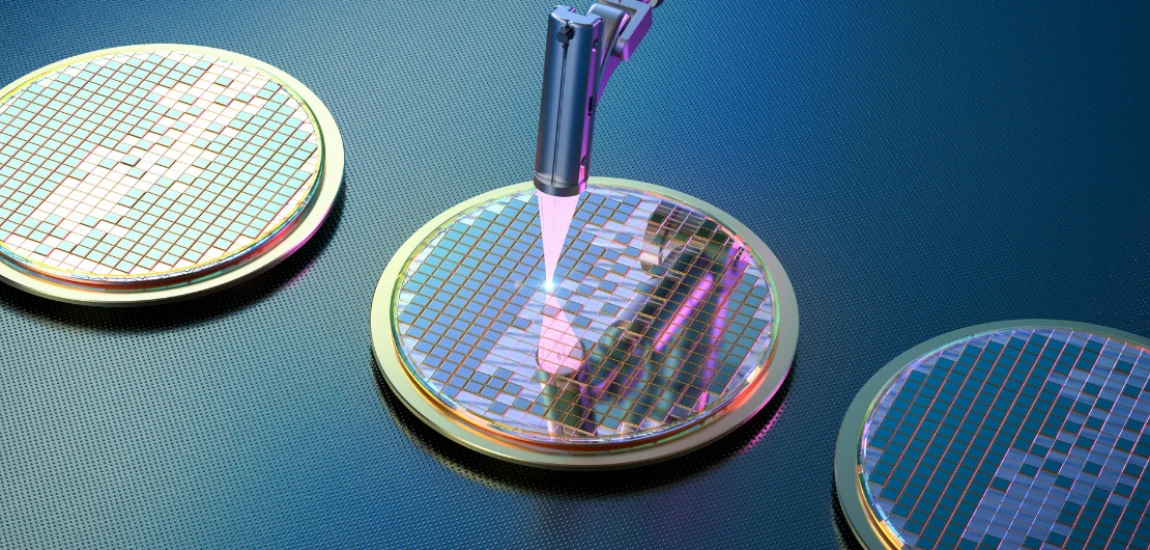
The manufacturing industry has continuously evolved through technological innovation, from the mechanization of the Industrial Revolution to the digital transformation driven by Industry 4.0. Today, a new frontier is emerging at the intersection of artificial intelligence and nanotechnology. AI-Powered Nano Manufacturing Systems represent a groundbreaking approach to production, enabling the design, assembly, monitoring, and optimization of products at the molecular and atomic levels.
Traditional manufacturing processes often face limitations related to material waste, production precision, scalability, and quality control. As products become increasingly complex and demand for advanced materials grows, manufacturers require more sophisticated technologies capable of operating with extraordinary accuracy. Nano manufacturing addresses these challenges by manipulating matter at dimensions measured in billionths of a meter.
When combined with artificial intelligence, nano manufacturing systems become highly adaptive and intelligent. AI algorithms can analyze production conditions, predict equipment behavior, optimize material usage, and make real-time adjustments throughout the manufacturing process. These capabilities enable Molecular-Level Smart Production Networks that continuously improve performance while minimizing inefficiencies.
From electronics and healthcare to aerospace and energy, AI-driven nano manufacturing may redefine industrial production in the coming decades. By enabling unprecedented precision, sustainability, and customization, these technologies are poised to become key drivers of future economic growth and technological advancement.
Understanding AI-Powered Nano Manufacturing Systems

The Evolution of Manufacturing Technologies
Manufacturing has undergone several major transformations throughout history. Mechanized production introduced mass manufacturing capabilities, while automation improved consistency and efficiency. The rise of digital technologies further enhanced industrial operations through data-driven decision-making and connected systems.
AI-Powered Nano Manufacturing Systems represent the next stage in this evolution. Rather than focusing solely on large-scale production processes, these systems operate at microscopic and molecular scales. Advanced nanotechnology enables manufacturers to manipulate individual molecules, atoms, and nanoscale structures with remarkable precision.
This capability opens new possibilities for creating stronger materials, more efficient electronics, advanced medical devices, and innovative industrial products. Unlike conventional manufacturing methods that often rely on subtractive processes, nano manufacturing can support highly efficient additive and self-assembly techniques.
The convergence of artificial intelligence and nanotechnology allows production systems to become increasingly adaptive, intelligent, and autonomous, creating opportunities that were previously unimaginable.
Artificial Intelligence as the Manufacturing Brain
Artificial intelligence acts as the central control system within nano manufacturing environments. AI platforms continuously analyze production data, monitor equipment performance, and optimize manufacturing parameters in real time.
Machine learning algorithms can identify patterns that influence product quality, detect anomalies before defects occur, and recommend process improvements automatically. These capabilities reduce waste, improve efficiency, and enhance consistency.
As manufacturing systems generate increasing amounts of data, AI becomes essential for transforming information into actionable insights that support operational excellence.
Molecular Precision and Smart Production
One of the defining characteristics of nano manufacturing is molecular precision. AI-powered systems can coordinate production activities at scales where even minor variations significantly affect product performance.
This level of control enables the creation of highly specialized materials and components tailored to specific applications, supporting innovation across numerous industries.
Core Technologies Behind Molecular-Level Smart Production Networks

Nanotechnology and Atomic Engineering
Nanotechnology provides the foundational capabilities required for molecular-level manufacturing. By manipulating matter at nanoscale dimensions, engineers can create materials with unique mechanical, electrical, thermal, and chemical properties.
Nanomaterials often exhibit behaviors that differ significantly from their larger-scale counterparts. These characteristics enable the development of innovative products with enhanced performance and functionality.
Atomic engineering techniques allow manufacturers to design structures with extraordinary precision and control.
Advanced Robotics and Automation
Nano manufacturing environments require exceptional levels of precision and consistency. Advanced robotic systems perform highly accurate tasks that would be impossible for human operators alone.
AI-powered robotics can adapt to changing conditions, optimize movement patterns, and maintain production quality across complex manufacturing processes.
Automation enhances productivity while reducing errors and operational costs.
Digital Twins and Virtual Manufacturing
Digital twin technologies create virtual representations of physical manufacturing systems. These models simulate production processes, predict outcomes, and support optimization efforts.
AI analyzes data from both physical and virtual environments, enabling manufacturers to identify opportunities for improvement before implementing changes in real-world operations.
This capability reduces risks while accelerating innovation.
Intelligent Material Design and Precision Production

AI-Assisted Material Discovery
Developing new materials traditionally requires extensive experimentation and testing. AI accelerates this process by analyzing vast datasets and identifying promising material combinations.
Machine learning algorithms can predict material properties, optimize compositions, and recommend innovative design approaches.
This significantly reduces research timelines and development costs.
Custom Manufacturing at the Molecular Scale
Future production systems may create highly customized products tailored to specific customer requirements. Nano manufacturing enables precise control over material structures and functional characteristics.
Personalized medical implants, specialized electronics, and advanced industrial components are just a few examples of potential applications.
Customization enhances product performance while meeting diverse market needs.
Real-Time Quality Optimization
Quality control is critical in advanced manufacturing environments. AI systems continuously monitor production variables and adjust processes automatically to maintain desired outcomes.
Real-time optimization reduces defects, improves consistency, and enhances overall production efficiency.
Industrial Applications of AI-Powered Nano Manufacturing Systems

Healthcare and Biomedical Innovation
Healthcare is expected to be one of the primary beneficiaries of nano manufacturing technologies. Advanced medical devices, targeted drug delivery systems, and personalized treatments can be produced with unprecedented precision.
Nano-engineered materials may improve treatment effectiveness while reducing side effects.
These innovations have the potential to transform patient care and medical research.
Electronics and Semiconductor Production
Modern electronics require increasingly sophisticated manufacturing techniques. Nano manufacturing enables the creation of smaller, faster, and more energy-efficient components.
AI-driven production systems optimize fabrication processes while maintaining strict quality standards.
These capabilities support continued advancements in computing and communication technologies.
Aerospace and Advanced Engineering
Aerospace applications demand materials that are lightweight, durable, and highly reliable. Nano-engineered materials offer significant advantages in performance and efficiency.
AI-powered manufacturing systems ensure these materials meet rigorous industry requirements.
Enhanced production capabilities contribute to safer and more efficient aerospace technologies.


Shivya Nath authors "The Shooting Star," a blog that covers responsible and off-the-beaten-path travel. She writes about sustainable tourism and community-based experiences.
Shivya Nath

Prev Post

Next Post