
AI-Driven Underwater Smart City Systems and Deep-Sea Human Habitat Coordination Architectures
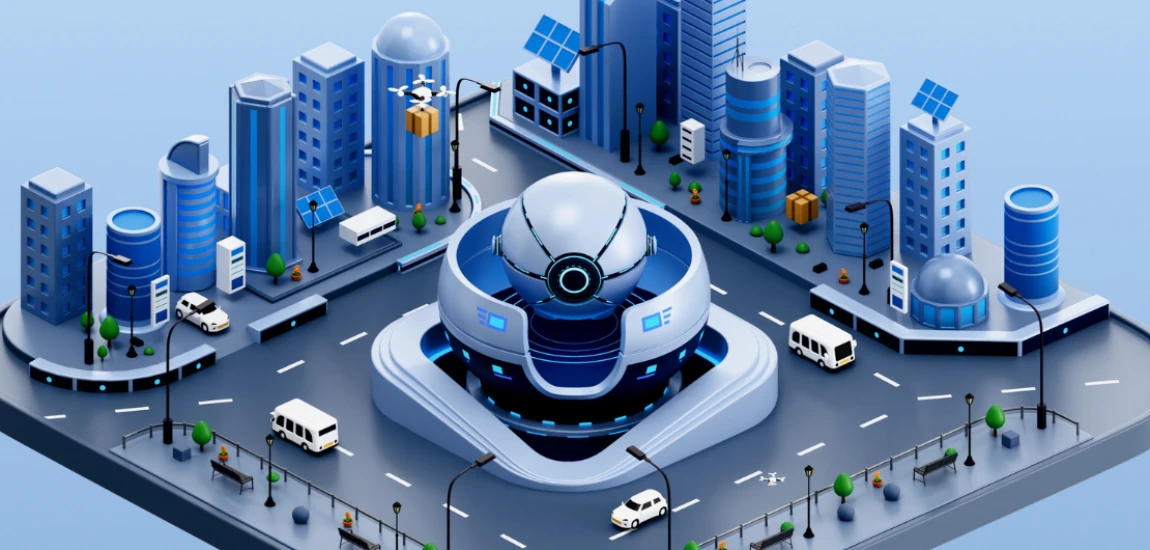
The Earth’s oceans remain one of the least explored frontiers, covering more than 70% of the planet’s surface while holding vast untapped resources, ecosystems, and scientific mysteries. As climate change, population growth, and land scarcity increase, researchers and ocean engineers are turning toward a bold new vision: building AI-Driven Underwater Smart City Systems and Deep-Sea Human Habitat Coordination Architectures.
These futuristic systems aim to create fully functional underwater civilizations powered by artificial intelligence, robotics, renewable marine energy, and advanced life-support technologies. Instead of traditional surface-based cities, these smart underwater habitats would exist deep beneath the ocean, where AI manages infrastructure, environmental control, communication systems, and human safety in real time.
AI-driven underwater cities would integrate autonomous marine robotics, deep-sea transportation networks, intelligent energy systems, and biosphere management technologies. These systems could support scientific research, resource extraction, environmental conservation, and even long-term human habitation beneath the ocean.
As ocean exploration technologies advance, underwater smart cities may become a critical part of humanity’s future expansion beyond terrestrial boundaries.
Understanding AI-Driven Underwater Smart City Systems

AI-driven underwater smart city systems are advanced marine infrastructure networks designed to support autonomous, sustainable, and intelligent human habitats beneath the ocean surface.
Artificial Intelligence in Marine Infrastructure
Artificial intelligence plays a central role in managing underwater cities by controlling environmental conditions, infrastructure stability, and resource allocation. AI systems continuously analyze underwater data such as pressure levels, temperature variations, salinity, and structural integrity.
Machine learning algorithms predict potential risks such as underwater earthquakes, currents, or equipment failures. These predictive systems help prevent disasters before they occur, ensuring the safety of underwater inhabitants.
AI also coordinates energy usage, oxygen distribution, and communication systems within submerged habitats, making underwater living more efficient and stable.
Smart Ocean Sensor Networks
Underwater smart cities rely heavily on dense sensor networks deployed across the ocean floor and surrounding environments. These sensors monitor marine conditions in real time, including water quality, seismic activity, biological activity, and infrastructure health.
IoT-enabled devices transmit continuous data to central AI systems that analyze and respond to environmental changes instantly. These networks ensure that underwater habitats remain stable and adaptable in dynamic ocean conditions.
Sensor-driven intelligence is essential for maintaining long-term underwater habitation.
Autonomous Marine Infrastructure Management
Underwater cities require constant maintenance due to extreme pressure and corrosive ocean environments. AI-driven systems manage infrastructure health by monitoring buildings, tunnels, and transportation networks.
Autonomous robots inspect and repair underwater structures without human intervention. These systems ensure continuous operation of underwater habitats even in harsh conditions.
This level of automation reduces risk and improves sustainability of deep-sea living environments.
Deep-Sea Human Habitat Coordination Architectures

Deep-sea human habitat coordination architectures are integrated systems designed to support human life, safety, and productivity in underwater environments using AI and advanced engineering systems.
Life Support and Environmental Regulation Systems
Underwater habitats require carefully controlled environments to sustain human life. AI systems regulate oxygen levels, carbon dioxide removal, temperature control, and humidity balance.
Advanced filtration systems recycle water and air continuously, ensuring sustainable living conditions. AI also monitors human health and environmental comfort levels in real time.
These systems create stable and livable underwater environments for long-term habitation.
Autonomous Energy Generation Systems
Energy supply is critical for underwater cities. AI-driven systems manage renewable energy sources such as tidal energy, ocean thermal energy conversion, and underwater wind systems.
These energy networks are optimized in real time based on environmental conditions and consumption patterns. Energy storage systems ensure continuous power supply even during environmental fluctuations.
Sustainable energy management is essential for deep-sea habitation.
Communication and Data Connectivity Systems
Maintaining communication between underwater cities and surface systems is a major challenge. AI-driven communication networks use acoustic signals, fiber-optic cables, and satellite-linked relay systems.
These networks ensure real-time data exchange between underwater habitats and external command centers. AI optimizes signal transmission and reduces communication delays.
Reliable connectivity is essential for safety, coordination, and scientific research.
Core Technologies Behind Underwater Smart Cities

Several advanced technologies enable the development of intelligent underwater city systems and deep-sea coordination frameworks.
Underwater Robotics and Autonomous Vehicles
Autonomous underwater vehicles (AUVs) and robotic systems are essential for exploration, maintenance, and construction in deep-sea environments.
These robots can map ocean floors, repair infrastructure, and transport materials between underwater stations. AI navigation systems allow them to operate independently in complex underwater conditions.
Robotics is the backbone of underwater urban development.
Artificial Intelligence and Predictive Ocean Modeling
AI systems simulate ocean behavior, predict environmental changes, and optimize underwater infrastructure performance.
Machine learning models analyze vast datasets from ocean sensors to forecast underwater currents, pressure variations, and ecological changes.
These predictive models improve safety and operational efficiency in underwater cities.
Advanced Marine Construction Materials
Building underwater habitats requires materials that can withstand extreme pressure, corrosion, and temperature variations.
Advanced composites, bio-inspired materials, and self-healing structures are being developed for underwater construction. These materials increase durability and reduce maintenance requirements.
Material innovation is critical for long-term underwater habitation.
Applications of Underwater Smart City Systems

AI-driven underwater cities have multiple applications across science, industry, and environmental sustainability.
Marine Scientific Research Centers
Underwater smart cities can serve as advanced research hubs for marine biology, oceanography, and climate science.
Scientists can study deep-sea ecosystems directly in their natural environments. AI systems assist in data collection, analysis, and environmental monitoring.
These research centers can significantly expand human understanding of ocean ecosystems.
Deep-Sea Resource Exploration
Oceans contain vast resources such as minerals, energy deposits, and biological compounds. AI-driven underwater systems can locate and extract these resources sustainably.
Autonomous machines ensure minimal environmental disruption during extraction processes. This improves efficiency while preserving marine ecosystems.
Resource exploration can support global economic development.
Climate Change Monitoring Systems
Underwater cities can play a crucial role in monitoring climate change effects such as rising sea levels, temperature shifts, and ecosystem disruption.
AI systems analyze oceanic data to track global environmental changes. This helps governments and scientists develop better climate strategies.
Underwater habitats become key tools in global climate research.


Derek Baron, also known as "Wandering Earl," offers an authentic look at long-term travel. His blog contains travel stories, tips, and the realities of a nomadic lifestyle.
Derek Baron

Prev Post
Next Post