
AI-Driven Space Robotics Platforms and the Evolution of Autonomous Extraterrestrial Exploration
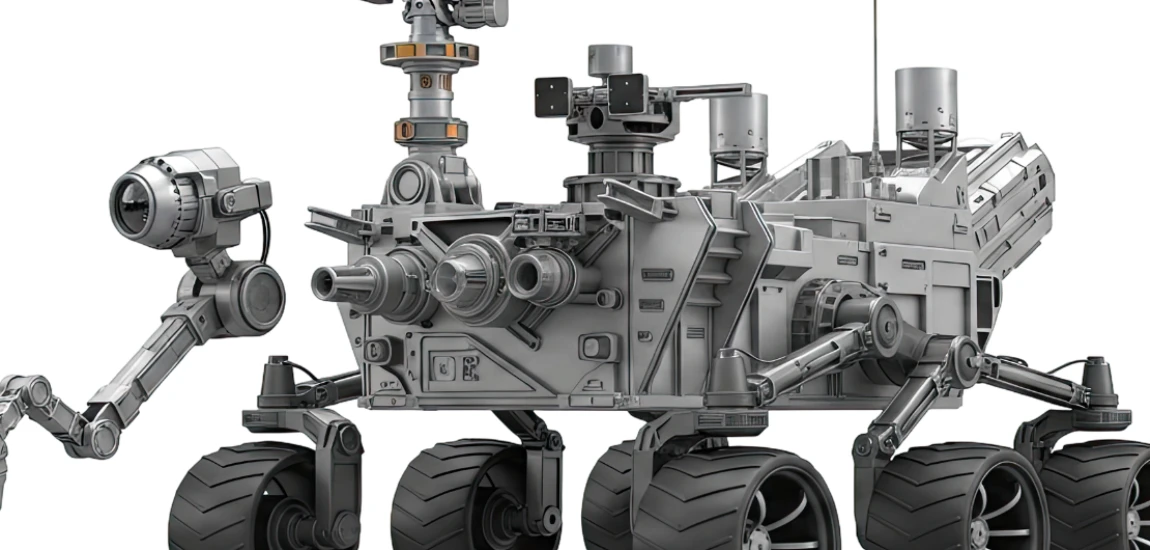
Space exploration has always pushed the limits of science, engineering, and human imagination. From the first satellites orbiting Earth to robotic missions exploring Mars and deep space, technological innovation has enabled humanity to investigate environments that are too distant or dangerous for astronauts. As missions become increasingly ambitious, space agencies and private aerospace companies are turning to AI-Driven Space Robotics Platforms to improve efficiency, autonomy, and scientific discovery beyond Earth.
Artificial intelligence allows space robots to analyze their surroundings, make decisions with minimal human intervention, adapt to changing environments, and perform complex scientific tasks independently. Combined with advanced sensors, autonomous navigation systems, cloud-based mission planning, and machine learning, these intelligent robotic platforms can explore planets, moons, asteroids, and other celestial bodies more effectively than traditional remotely controlled systems.
Although human exploration will continue to play an important role in future space missions, autonomous robotic platforms are expected to become the foundation of long-duration extraterrestrial exploration. This article explores the technologies behind AI-Driven Space Robotics Platforms, their benefits, real-world applications, scientific challenges, and their future role in expanding humanity's presence throughout the solar system.
Understanding AI-Driven Space Robotics Platforms

The Evolution of Intelligent Space Exploration
AI-Driven Space Robotics Platforms represent the next generation of autonomous space exploration systems. Unlike conventional robotic spacecraft that depend heavily on commands transmitted from Earth, these advanced platforms use artificial intelligence to interpret sensor data, make operational decisions, and adapt to unexpected situations without waiting for instructions.
Communication delays between Earth and distant planets can range from several minutes to much longer depending on mission distance. Because immediate human control is often impossible, autonomous decision-making becomes essential. AI enables robotic explorers to identify scientific targets, avoid hazards, optimize navigation, and prioritize mission objectives independently.
This increased autonomy allows missions to operate more efficiently while maximizing scientific discoveries in challenging extraterrestrial environments.
Artificial Intelligence as the Mission Control System
Artificial intelligence serves as the cognitive engine behind modern space robotics. Machine learning algorithms continuously process information from cameras, radar systems, environmental sensors, spectrometers, and navigation equipment to build an understanding of the surrounding environment.
AI systems help robotic explorers recognize geological formations, identify mineral deposits, detect atmospheric changes, and evaluate terrain conditions suitable for scientific investigation or future human exploration. Predictive algorithms also monitor spacecraft health by identifying potential equipment failures before they become mission-threatening problems.
These intelligent capabilities improve mission reliability while reducing dependence on continuous human supervision.
Autonomous Collaboration Between Space Robots
Future space exploration may involve networks of intelligent robots working together across planetary surfaces or orbital environments. Multiple robotic systems could share information, divide exploration tasks, and coordinate scientific experiments while communicating through intelligent mission networks.
For example, aerial drones, planetary rovers, stationary research stations, and orbital satellites may collaborate to create detailed maps, collect geological samples, monitor environmental conditions, and transmit scientific data back to Earth.
This cooperative robotic approach increases exploration efficiency while enabling missions to investigate larger and more complex regions than individual robots could explore independently.
Core Technologies Behind Autonomous Extraterrestrial Exploration

Machine Learning and Autonomous Decision-Making
Machine learning enables robotic spacecraft to improve performance through experience rather than relying exclusively on predefined instructions. AI models analyze sensor data, recognize environmental patterns, classify terrain features, and adjust operational strategies according to changing mission conditions.
Autonomous decision-making becomes particularly valuable when exploring unfamiliar planetary environments where communication delays prevent immediate human guidance. Intelligent robots can evaluate multiple options, select safe navigation routes, and prioritize scientific observations while maintaining mission objectives.
As machine learning algorithms continue improving, future robotic explorers will become increasingly capable of solving complex problems independently.
Advanced Sensors and Intelligent Navigation
AI-Driven Space Robotics Platforms rely on sophisticated sensors to understand extraterrestrial environments. High-resolution cameras, LiDAR systems, radar instruments, thermal sensors, spectrometers, and environmental monitoring equipment generate enormous volumes of scientific information.
Artificial intelligence combines these sensor inputs to create comprehensive environmental models that guide navigation and scientific exploration. Intelligent navigation systems detect obstacles, evaluate terrain stability, identify scientifically valuable locations, and calculate energy-efficient travel routes.
These capabilities allow robotic explorers to operate safely while maximizing scientific productivity during extended planetary missions.
Edge Computing and Space Communication Systems
Space missions generate enormous quantities of data that cannot always be transmitted immediately to Earth. Edge computing enables robotic platforms to process critical information locally, reducing communication delays while supporting real-time decision-making.
Artificial intelligence performs immediate analysis of scientific observations, equipment status, and environmental conditions directly on the spacecraft or rover. Cloud-based mission control systems on Earth then receive prioritized data for further evaluation and long-term mission planning.
Advanced communication technologies ensure reliable information exchange between robotic explorers, orbiting satellites, and mission control centers, creating highly coordinated extraterrestrial exploration networks.
Benefits of AI-Driven Space Robotics Platforms

Expanding Scientific Discovery
AI-Driven Space Robotics Platforms significantly increase scientific productivity by enabling continuous exploration with minimal human intervention. Intelligent robots can conduct geological analysis, atmospheric monitoring, sample collection, and environmental observation around the clock while adapting to changing mission priorities.
Artificial intelligence helps identify unusual geological formations, chemical signatures, and environmental conditions that may indicate valuable scientific discoveries. Automated analysis allows researchers to focus on interpreting results rather than manually processing every observation.
These capabilities increase the efficiency of planetary science while accelerating our understanding of the solar system and beyond.
Improving Mission Safety and Operational Efficiency
Autonomous robotics improve mission safety by reducing the need for astronauts to perform dangerous tasks in hostile extraterrestrial environments. Robotic systems can explore hazardous terrain, inspect spacecraft, perform equipment maintenance, and evaluate environmental conditions before humans arrive.
AI continuously monitors spacecraft systems, predicts maintenance requirements, optimizes energy consumption, and identifies operational risks before they threaten mission success. These intelligent capabilities improve reliability while extending mission lifetimes.
Greater operational efficiency also reduces mission costs by maximizing scientific output from available resources.
Supporting Future Human Space Exploration
AI-Driven Space Robotics Platforms will play an essential role in preparing for future human missions to the Moon, Mars, and beyond. Autonomous robots can construct infrastructure, inspect landing sites, deploy scientific equipment, extract local resources, and establish communication networks before astronauts arrive.
These robotic systems may also assist human crews by transporting supplies, conducting inspections, monitoring habitats, and performing repetitive or hazardous tasks. By working alongside astronauts, intelligent robots improve mission safety while allowing human explorers to focus on scientific research and strategic decision-making.
As technology continues advancing, AI-driven robotics will become indispensable partners in humanity's long-term exploration and settlement of extraterrestrial environments.
Real-World Applications in Space Exploration

Planetary Exploration and Scientific Research
AI-Driven Space Robotics Platforms are already influencing the future of planetary exploration by enabling robotic systems to perform increasingly autonomous scientific missions. Modern robotic explorers can analyze terrain, identify geological formations, collect environmental data, and prioritize scientifically valuable targets with less reliance on constant human instructions. As artificial intelligence continues to improve, future robotic missions will become even more capable of making independent operational decisions while exploring distant celestial bodies.
On planetary surfaces such as Mars or the Moon, AI-powered robotic platforms could investigate rock samples, search for evidence of ancient water, study atmospheric conditions, and map underground structures using advanced sensing technologies. Intelligent onboard software can continuously evaluate mission objectives and adjust exploration routes according to newly discovered scientific opportunities.
Future missions may also deploy multiple robotic explorers that collaborate as coordinated teams. Ground rovers, aerial drones, orbiting satellites, and stationary research stations could exchange information in real time, dramatically increasing scientific productivity while expanding the range of extraterrestrial exploration.
Space Infrastructure and Resource Utilization
Long-term space exploration depends on building sustainable infrastructure beyond Earth. AI-Driven Space Robotics Platforms are expected to play a major role in constructing habitats, deploying communication equipment, maintaining power systems, and preparing landing zones before astronauts arrive.
Robotic systems may also support in-situ resource utilization by identifying and extracting local materials such as water ice, minerals, and construction resources. Artificial intelligence would optimize excavation, processing, and transportation while reducing energy consumption and improving operational efficiency.
Autonomous maintenance robots could inspect spacecraft, repair damaged equipment, monitor structural integrity, and replace worn components without requiring immediate human intervention. These capabilities would increase mission reliability while supporting extended exploration missions on the Moon, Mars, and other destinations.
Satellite Servicing and Deep Space Missions
Artificial intelligence is expected to improve satellite operations by enabling robotic spacecraft to perform inspection, maintenance, refueling, and debris removal in Earth orbit. Intelligent robotic servicing missions may extend satellite lifespans while reducing operational costs and minimizing space debris.
Deep space missions also benefit from increased autonomy because communication delays become much longer as spacecraft travel farther from Earth. AI-powered robotic platforms can independently respond to unexpected environmental conditions, optimize navigation, and continue scientific operations even when immediate communication with mission control is impossible.
These technologies will become increasingly valuable as future exploration expands toward asteroids, icy moons, and the outer regions of the solar system.


Ben Schlappig runs "One Mile at a Time," focusing on aviation and frequent flying. He offers insights on maximizing travel points, airline reviews, and industry news.
Ben Schlappig

Prev Post

Next Post