
AI-Driven Space Exploration Systems and Interplanetary Mission Automation Platforms
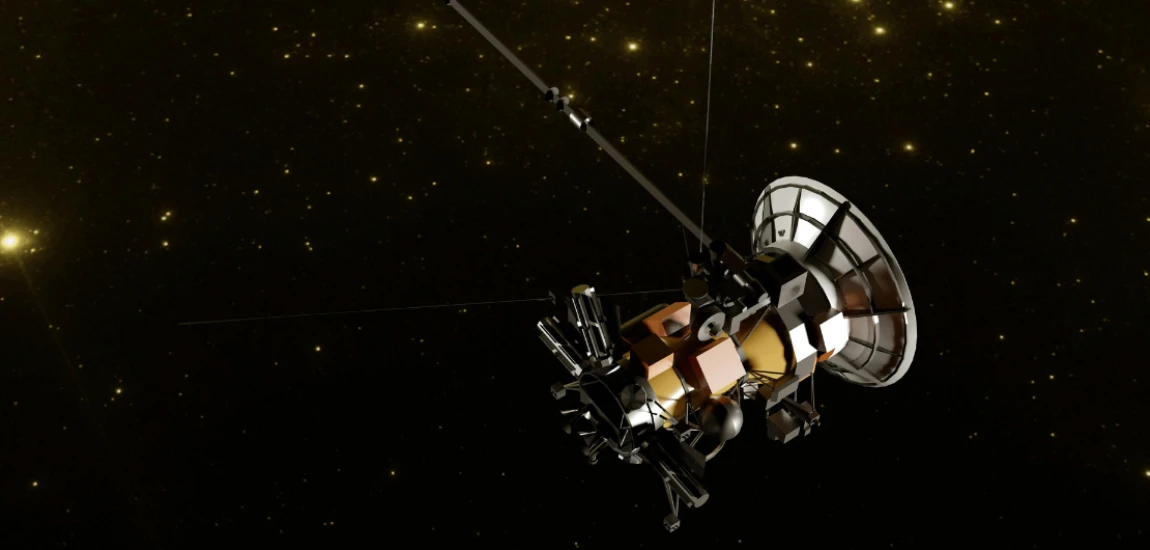
Space exploration has always been one of humanity’s most ambitious endeavors, pushing the boundaries of science, engineering, and imagination. In recent years, the integration of artificial intelligence has transformed how space missions are designed, executed, and managed. AI-driven space exploration systems are now enabling spacecraft to operate autonomously, make real-time decisions, and adapt to unpredictable cosmic environments.
Interplanetary mission automation platforms are at the heart of this transformation. These platforms allow spacecraft and robotic systems to perform complex tasks without constant human intervention. From navigating vast distances across space to analyzing planetary surfaces, AI is playing a critical role in making deep space exploration more efficient and scalable.
As space agencies and private companies aim for missions to Mars, the Moon, and beyond, automation has become essential. Communication delays, harsh environments, and limited human control make AI indispensable for modern space exploration. This blog explores the architecture, technologies, applications, challenges, and future trends of AI-driven space exploration systems in detail.
Understanding AI-Driven Space Exploration Systems

What Are Space Exploration AI Systems
AI-driven space exploration systems are intelligent frameworks designed to assist spacecraft, satellites, and robotic explorers in performing complex missions autonomously. These systems use artificial intelligence to analyze data, make decisions, and execute tasks without requiring continuous human input.
They are capable of handling navigation, obstacle detection, scientific data analysis, and system diagnostics. This autonomy is essential for deep space missions where real-time communication with Earth is not always possible due to vast distances.
Evolution of Space Automation Technologies
The evolution of space exploration technology has moved from manual control systems to highly autonomous AI-powered platforms. Early spacecraft required constant monitoring from mission control centers on Earth, but modern systems can operate independently for extended periods.
Advancements in machine learning, robotics, and sensor technology have enabled spacecraft to process data onboard and respond to environmental changes instantly. This shift has significantly increased mission efficiency and success rates.
Core Components of AI Space Systems
AI-driven space systems consist of several critical components, including onboard computers, sensor arrays, navigation modules, and decision-making algorithms. These components work together to ensure smooth operation in space environments.
Onboard AI systems process data from sensors, interpret environmental conditions, and execute mission objectives. This integrated architecture allows spacecraft to function as intelligent autonomous entities.
Interplanetary Mission Automation Platforms

Role of Automation in Deep Space Missions
Interplanetary mission automation platforms are designed to manage and control spacecraft operations across vast distances. These platforms enable missions to operate with minimal human intervention, which is essential for deep space exploration.
Automation ensures that spacecraft can handle unexpected situations, such as equipment failure or environmental hazards, without waiting for instructions from Earth.
Autonomous Navigation and Decision Systems
Navigation in space requires extreme precision due to the vast distances and unpredictable conditions. AI-powered navigation systems allow spacecraft to adjust their trajectory in real time based on sensor data and mission objectives.
Decision-making systems analyze multiple variables, such as fuel levels, gravitational forces, and planetary conditions, to determine the best course of action.
Mission Control and Remote Coordination
Even with high levels of autonomy, mission control centers still play a vital role in monitoring and guiding space missions. AI platforms facilitate seamless communication between Earth-based teams and spacecraft.
These systems also enable predictive mission planning, allowing engineers to simulate different scenarios and optimize mission outcomes.
Technologies Powering AI Space Exploration

Artificial Intelligence and Machine Learning
Artificial intelligence is the foundation of modern space exploration systems. Machine learning algorithms analyze vast amounts of space data to identify patterns, predict outcomes, and improve system performance over time.
These technologies enable spacecraft to learn from experience and adapt to new environments, making missions more efficient and reliable.
Robotics and Autonomous Systems
Robotic systems are widely used in space exploration for tasks such as surface exploration, sample collection, and equipment maintenance. These robots are equipped with AI capabilities that allow them to operate independently.
Autonomous robots can navigate planetary surfaces, avoid obstacles, and perform scientific experiments without direct human control.
Advanced Sensor and Imaging Technologies
Sensors play a crucial role in space exploration by collecting data about the environment. High-resolution cameras, spectrometers, and radar systems provide detailed information about planetary surfaces and atmospheric conditions.
AI systems analyze this data in real time, enabling faster decision-making and improved mission accuracy.
Applications of AI-Driven Space Exploration Systems

Planetary Exploration and Research
AI-driven systems are extensively used in exploring planets such as Mars and the Moon. These systems analyze soil composition, detect signs of water, and study atmospheric conditions.
Robotic explorers equipped with AI can navigate harsh terrains and conduct experiments autonomously, providing valuable scientific insights.
Satellite Management and Space Infrastructure
AI is also used in managing satellite networks and space infrastructure. These systems optimize satellite positioning, monitor system health, and ensure efficient communication between satellites.
This improves the reliability and performance of global communication and navigation systems.
Deep Space Missions and Interstellar Exploration
For deep space missions, AI is essential for managing long-duration operations. Spacecraft traveling to distant planets or asteroids rely on autonomous systems to make decisions without real-time human input.
These missions benefit from AI’s ability to adapt to unknown environments and handle unexpected challenges.


Dave Lee runs "GoBackpacking," a blog that blends travel stories with how-to guides. He aims to inspire backpackers and offer them practical advice.
Dave Lee

Prev Post

Next Post