
AI-Driven Precision Agriculture Systems and Smart Crop Monitoring Optimization Networks
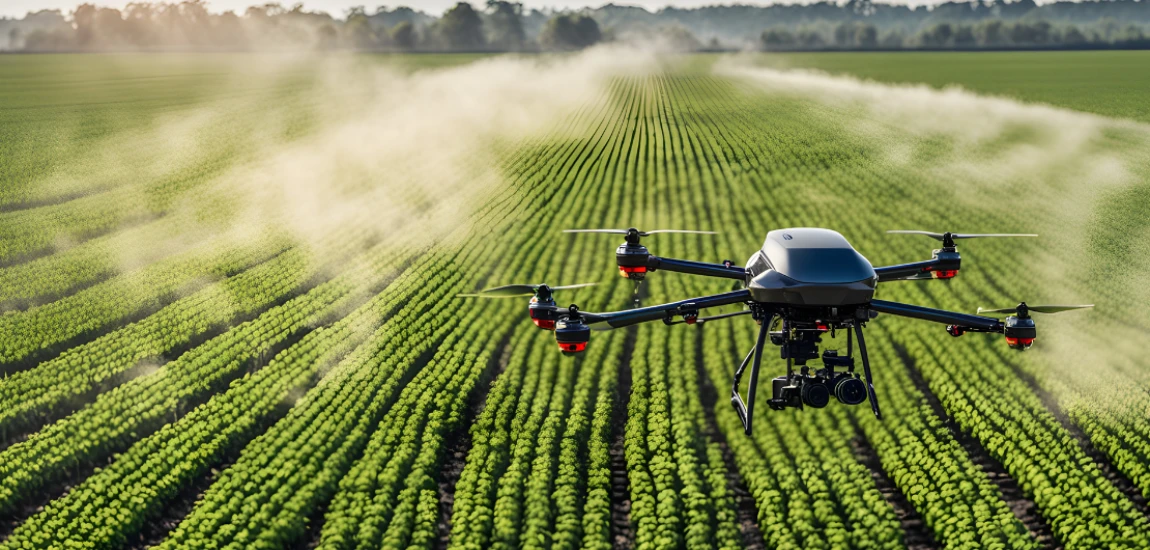
Agriculture is undergoing a major technological transformation as farmers and agricultural industries increasingly adopt artificial intelligence, automation, and data-driven farming strategies. Traditional agricultural methods often struggle to meet the growing global demand for food due to climate change, water scarcity, unpredictable weather patterns, pest outbreaks, and declining soil fertility. To address these challenges, AI-driven precision agriculture systems and smart crop monitoring optimization networks are emerging as powerful solutions capable of improving productivity, sustainability, and operational efficiency across modern farming ecosystems. These intelligent agricultural technologies combine artificial intelligence, machine learning, IoT sensors, drones, satellite imaging, predictive analytics, and automated machinery to monitor crop conditions, optimize resource usage, and support data-driven decision-making in real time. Unlike conventional farming approaches, precision agriculture systems continuously analyze environmental conditions, soil quality, crop health, and weather forecasts to deliver highly accurate farming recommendations. Smart crop monitoring optimization networks further enhance agricultural productivity by automating irrigation, detecting diseases early, reducing waste, and improving harvest planning. As global food security becomes an increasingly critical issue, AI-powered precision agriculture is shaping the future of sustainable and efficient farming worldwide.
Understanding AI-Driven Precision Agriculture Systems

Evolution of Smart Farming Technologies
Agriculture has evolved significantly from labor-intensive traditional practices to highly advanced digital farming systems powered by artificial intelligence and automation. Earlier farming methods relied heavily on manual observation, seasonal experience, and generalized resource application, often resulting in inefficiencies and crop losses.
The introduction of GPS technology, remote sensing, and automated farm equipment marked the beginning of precision agriculture. Over time, advancements in AI, IoT connectivity, and big data analytics transformed farming into a highly intelligent and data-driven industry.
Modern AI-driven precision agriculture systems can collect and process vast amounts of environmental and crop-related data in real time. These systems help farmers make accurate decisions regarding irrigation, fertilization, pest management, and harvesting operations.
Today, precision farming technologies are becoming essential for improving crop yields, reducing environmental impact, and ensuring long-term agricultural sustainability.
Core Technologies Behind Precision Agriculture
Several advanced technologies work together to power AI-based agricultural systems. Artificial intelligence and machine learning algorithms analyze farm data to identify patterns, predict crop behavior, and optimize farming strategies.
IoT-enabled sensors continuously monitor soil moisture, nutrient levels, temperature, humidity, and environmental conditions across agricultural fields. Drones and satellite imaging systems capture high-resolution crop images that help detect plant stress, disease outbreaks, and irrigation issues.
Cloud computing platforms store and process large-scale agricultural data efficiently, while edge computing supports faster decision-making in remote farming environments. Robotics and automated farm machinery further improve operational efficiency by performing tasks such as planting, spraying, and harvesting with high precision.
Predictive analytics and AI-powered simulation models enable farmers to forecast crop yields, weather risks, and market demands more accurately than ever before.
Benefits for Modern Farming
AI-driven precision agriculture systems provide numerous advantages for modern farming operations. One of the most important benefits is improved crop productivity through optimized resource management and real-time decision-making.
Farmers can reduce water consumption, fertilizer usage, and pesticide applications while maintaining healthy crop growth. Precision agriculture also minimizes operational costs and reduces environmental damage caused by excessive chemical usage.
These technologies improve farm sustainability by enhancing soil health, conserving natural resources, and supporting climate-smart agricultural practices. Farmers also gain better visibility into field conditions, enabling faster responses to emerging agricultural challenges.
Smart Crop Monitoring Optimization Networks

Real-Time Crop Health Monitoring
Smart crop monitoring systems continuously analyze crop conditions using AI-powered imaging technologies, IoT sensors, and drone surveillance. These systems collect real-time data about plant growth, nutrient deficiencies, water stress, and disease symptoms across large agricultural fields.
Machine learning algorithms process this data to identify abnormal crop behavior and detect problems before visible damage occurs. Early detection enables farmers to take corrective actions quickly, reducing crop losses and improving productivity.
Real-time crop monitoring also helps optimize irrigation schedules and nutrient management practices by identifying field zones with specific resource requirements. This precision approach improves farming efficiency while minimizing unnecessary resource consumption.
AI-based crop health monitoring is especially valuable for large-scale commercial farming operations where manual field inspection can be time-consuming and inefficient.
Drone and Satellite-Based Agricultural Imaging
Drones and satellite imaging technologies play a major role in modern precision agriculture systems. Equipped with multispectral and thermal imaging cameras, drones capture highly detailed aerial images of agricultural fields.
These images provide valuable insights into crop health, vegetation density, soil conditions, and pest infestations. AI-powered image analysis systems can identify disease outbreaks, irrigation issues, and nutrient deficiencies with remarkable accuracy.
Satellite-based agricultural monitoring further supports large-scale farm management by providing continuous environmental observations and weather-related information. Farmers can monitor remote fields efficiently and make informed operational decisions based on accurate visual data.
Drone technology also improves efficiency by reducing the need for manual crop scouting and enabling targeted agricultural interventions.
Predictive Crop Analytics
Predictive analytics is transforming farming by enabling farmers to anticipate agricultural challenges and optimize production strategies proactively. AI-driven predictive models analyze historical farm data, weather forecasts, soil conditions, and crop performance patterns.
These systems forecast potential disease outbreaks, yield variations, irrigation demands, and harvesting timelines. Predictive crop analytics also support better supply chain planning and market forecasting.
Farmers can use predictive insights to improve planting schedules, select suitable crop varieties, and reduce operational risks associated with climate variability and market fluctuations.
Such data-driven agricultural intelligence significantly improves long-term farm profitability and sustainability.
Artificial Intelligence in Resource Optimization

Automated Irrigation Management
Water scarcity is one of the most critical challenges facing global agriculture today. AI-powered irrigation systems help farmers use water resources more efficiently by monitoring soil moisture levels, weather conditions, and crop water requirements in real time.
Intelligent irrigation networks automatically adjust watering schedules based on environmental conditions and crop growth stages. This prevents overwatering and reduces water wastage significantly.
Machine learning algorithms continuously optimize irrigation strategies to improve crop hydration while minimizing energy and water consumption. Such systems are especially valuable in drought-prone regions where water conservation is essential for sustainable agriculture.
Automated irrigation management also reduces labor requirements and improves operational efficiency for large-scale farming operations.
Smart Fertilizer and Nutrient Management
Precision agriculture technologies optimize fertilizer application through AI-driven nutrient management systems. Soil sensors and crop monitoring tools analyze nutrient levels continuously and identify deficiencies accurately.
AI algorithms recommend precise fertilizer quantities and application timings based on crop needs and soil conditions. This targeted approach reduces excessive chemical usage and minimizes environmental pollution caused by fertilizer runoff.
Smart nutrient management improves soil health, enhances crop growth, and lowers farming costs. Farmers also benefit from higher yields and improved crop quality through balanced nutrient application strategies.
Pest and Disease Prediction Systems
AI-powered pest and disease prediction systems help farmers identify agricultural threats before severe infestations occur. Machine learning models analyze environmental conditions, crop health data, and historical outbreak patterns to forecast potential risks.
Computer vision technologies can detect early disease symptoms from crop images captured by drones and field cameras. Autonomous spraying systems then apply pesticides only where necessary, reducing chemical usage and environmental impact.
Predictive pest management improves crop protection efficiency while supporting sustainable farming practices that minimize ecological damage.
Robotics and Automation in Precision Agriculture

Autonomous Farm Machinery
Agricultural robotics is rapidly transforming farm operations through automation technologies capable of performing tasks with high precision and efficiency. Autonomous tractors, robotic harvesters, and AI-powered planting machines are becoming increasingly common in modern agriculture.
These intelligent machines use GPS navigation, computer vision, and machine learning algorithms to operate independently across agricultural fields. Autonomous machinery reduces labor dependency and improves operational consistency.
Robotic farming systems can work continuously under various environmental conditions, improving productivity and reducing human fatigue. Such technologies are particularly important as agricultural labor shortages continue affecting farming industries globally.
AI-Powered Harvesting Systems
Harvest timing is critical for maximizing crop quality and profitability. AI-powered harvesting systems analyze crop maturity, environmental conditions, and market demand to determine optimal harvesting schedules.
Computer vision technologies help robotic harvesters identify ripe produce accurately while minimizing crop damage. Automated harvesting systems improve efficiency, reduce waste, and enhance supply chain management.
These technologies are especially valuable for high-value crops such as fruits and vegetables where harvesting precision directly affects market quality and profitability.
Smart Greenhouse Automation
Greenhouse farming is increasingly adopting AI-powered automation systems to optimize environmental conditions for crop growth. Intelligent greenhouse platforms regulate temperature, humidity, lighting, ventilation, and irrigation automatically.
AI systems continuously monitor plant health and adjust environmental settings dynamically to maximize productivity. Smart greenhouse automation supports year-round food production while reducing energy and resource consumption.
Such controlled-environment agriculture technologies are becoming increasingly important for urban farming and sustainable food production initiatives.


Ben Schlappig runs "One Mile at a Time," focusing on aviation and frequent flying. He offers insights on maximizing travel points, airline reviews, and industry news.
Ben Schlappig

Prev Post

Next Post