
The Future of Immersive Storytelling with Mixed Reality
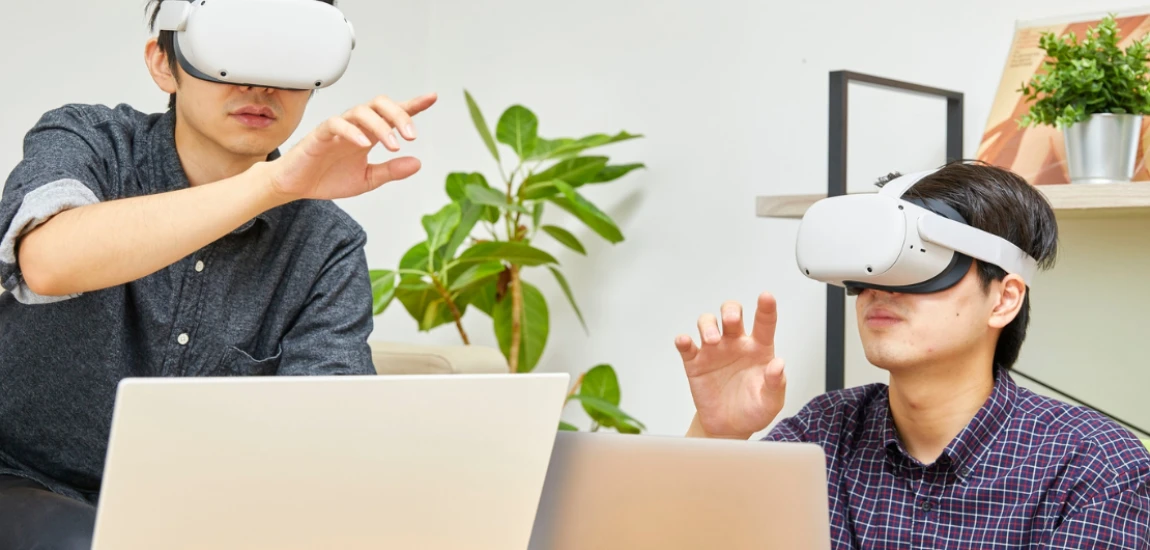
How Mixed Reality Blends Physical and Digital Worlds
Mixed reality sits between augmented reality (AR) and virtual reality (VR), allowing physical and digital elements to interact seamlessly. Unlike VR, which blocks out the real world, or AR, which overlays data onto it, MR creates a hybrid storytelling space. This combination enables narratives to unfold around users in real time—through interactive holograms, spatial audio, gesture-based controls, and environment-aware visuals. As MR devices become more accessible, storytellers now have freedom to build worlds that respond dynamically to user movement, touch, and expression.
The Cultural Shift Toward Immersive Experiences
Today’s audiences crave deeper emotional engagement and interactive content, leading to the rise of immersive art installations, escape rooms, virtual exhibitions, and interactive films. This shift is driven by Gen Z and Gen Alpha, who grew up with hyper-digital experiences. Mixed reality taps into this cultural demand by offering narrative spaces where users don’t just watch the story—they participate in it. As entertainment becomes more user-driven, MR experiments redefine storytelling as a collaborative, sensory-rich adventure.
The Rise of Spatial Computing and Next-Gen Hardware
The future of immersive storytelling with mixed reality is also powered by advancements in spatial computing hardware. Devices like the Meta Quest Pro, Apple Vision Pro, and Microsoft HoloLens create high-definition, environment-aware interactions. These technologies support realistic lighting, 3D mapping, eye-tracking, and voice recognition. As hardware improves, mixed reality experiences gain smoother animations, richer textures, and more responsive storytelling environments—making fictional worlds feel almost tangible.
How Mixed Reality Is Transforming Narrative Design

Interactive Story Arcs and Nonlinear Plot Structures
Traditional storytelling follows a linear structure, but MR encourages nonlinear, multi-path narratives. Users can influence story direction based on their choices, movement, and interactions with virtual objects. For example, walking through a different room, picking up a holographic object, or speaking to a virtual character can alter plot progression. This creates personalized narratives that feel more immersive and meaningful.
Environment-Driven Story Moments
Mixed reality storytellers use the physical environment as a narrative tool. Walls can turn into cinematic screens, furniture can transform into portals, and real-world lighting can shift based on story tension. By merging storytelling with the user’s physical space, creators build experiences that blur the lines between performance and reality. This environment-driven design enhances emotional impact because users feel physically involved in the narrative.
Character Interaction and AI-Driven Personalization
AI-driven characters in mixed reality can adapt to user behavior. They can hold conversations, react to emotions, and remember previous interactions—creating a more personal connection between users and narrative elements. This personalization helps MR storytelling mimic real human interaction, deepening emotional engagement. As conversational AI improves, virtual characters will become more lifelike, responsive, and empathetic.
The Role of Mixed Reality in Film, Gaming, and Entertainment

Reinventing Film Experiences
Mixed reality introduces new possibilities for filmmakers looking to push creative boundaries. Instead of simply watching a movie, viewers can step inside the storyline. Scenes can unfold around them, characters can walk beside them, and environments can respond to their presence. MR also allows films to become replayable experiences—because user involvement changes outcomes or reveals new angles each time.
Expanding the Future of Gaming
Gaming already thrives on interactive storytelling, making it the perfect playground for MR innovation. Players can bring digital characters into their living rooms, fight virtual creatures in real-world spaces, or solve mysteries by physically exploring environments. MR gaming blends physical action with digital story elements, elevating immersion well beyond traditional consoles or VR.
Mixed Reality in Stage Performance and Live Events
The future of immersive storytelling with mixed reality also extends to live entertainment. Theatre productions can incorporate holographic performers, animated sets, and spatial soundscapes that transform traditional stages. Concerts can feature virtual worlds surrounding attendees, blending live artists with digital environments. These mixed formats create unforgettable, multi-sensory storytelling experiences.
Mixed Reality in Education, Training, and Cultural Preservation

Interactive Learning and Educational Storytelling
MR is revolutionizing education by turning lessons into fully immersive narratives. Students can walk through historical events, explore scientific concepts as 3D models, or interact with virtual characters representing experts or historical figures. This narrative-based learning boosts comprehension, engagement, and memory retention—offering educators powerful tools for storytelling.
Professional Training and Simulated Scenarios
Mixed reality is widely used in medical, aviation, military, and emergency response training. Learners can enter high-pressure scenarios with digital overlays guiding them through tasks. Storytelling enhances these simulations by creating emotionally realistic environments—where decisions matter and consequences feel tangible. This form of narrative-based training builds confidence and real-world readiness.
Preserving Culture, Heritage, and History
Cultural institutions use MR to bring ancient stories, artifacts, and heritage sites to life. Visitors can see historical cities reconstructed around them, watch reenactments, or interact with digital recreations of endangered cultural practices. By blending storytelling with MR, museums and heritage centers offer dynamic, memorable educational experiences—making culture more accessible to global audiences.
Challenges and Ethical Considerations in Mixed Reality Storytelling

Balancing Immersion with User Well-Being
Fully immersive narratives can blur reality, leading to motion sickness, sensory overload, or emotional fatigue. As mixed reality becomes more intense and realistic, creators must prioritize user health with features like comfort modes, time limits, and grounding elements that maintain awareness of the real world.
Ensuring Privacy and Data Protection
MR storytelling often involves eye-tracking, movement data, voice recordings, and environmental mapping. While this personalization enhances immersion, it raises privacy concerns. Content creators and MR platforms must adopt transparent data practices, limit unnecessary tracking, and provide users with control over permissions.
Ethics of Narrative Influence and Behavioral Impact
Mixed reality experiences can be persuasive—capable of shifting emotions, perceptions, or decision-making. Storytellers must navigate ethics by ensuring content respects emotional boundaries, avoids manipulation, and promotes responsible engagement. As MR becomes more influential, ethical standards will play a critical role in shaping trustworthy storytelling practices.
What the Future Holds for Mixed Reality and Immersive Storytelling

The Convergence of AI, Spatial Computing, and Holographic Worlds
Future MR storytelling will integrate advanced AI capable of generating adaptive storylines in real time. Characters will become more intelligent, environments more responsive, and narratives more emotionally attuned. Holographic technology will turn homes and public spaces into interactive stages for stories to unfold around us.
Multisensory Storytelling and Full-Body Interaction
The next wave of MR innovation will include haptic feedback, scent simulation, temperature changes, and spatial sound. Full-body immersion will allow users to feel textures, vibrations, or environmental effects—all synchronized with unfolding narratives. This multisensory approach will redefine what immersive storytelling truly means.
Shared Mixed Reality Worlds and Social Storytelling
Beyond individual experiences, MR will enable shared storytelling spaces where multiple users interact within the same narrative. Friends can explore virtual worlds together, participate in collaborative missions, or step into interactive stories as different characters. Social MR will become a new era of collective entertainment.


Shivya Nath authors "The Shooting Star," a blog that covers responsible and off-the-beaten-path travel. She writes about sustainable tourism and community-based experiences.
Shivya Nath
Prev Post

Next Post