
Synthetic Nostalgia: When the Past Is Recreated by Machines
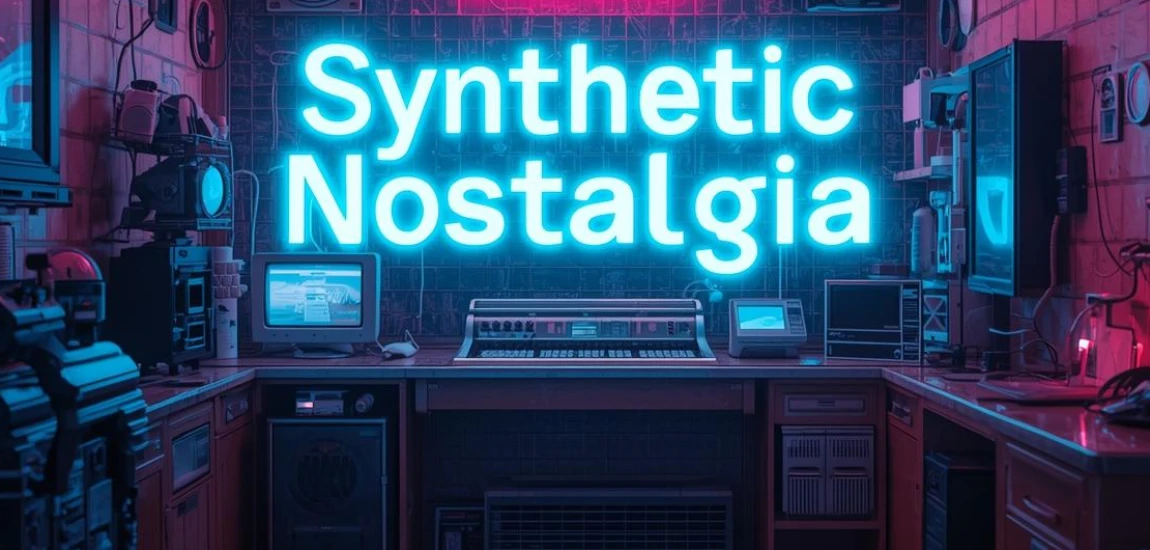
In an age of artificial intelligence and algorithmic aesthetics, even memory has gone digital. “Synthetic nostalgia” describes a growing cultural phenomenon: our collective longing for pasts that machines recreate—and that many of us never actually experienced. It’s the warm VHS filters on TikTok, AI-generated 1980s “photos” of nonexistent families, or lo-fi playlists designed to sound like forgotten decades. These machine-made memories comfort us, confuse us, and subtly rewrite our sense of history.
This blog explores how synthetic nostalgia reshapes authenticity, emotion, and culture. We’ll look at how AI manufactures memories, how brands and media exploit nostalgia as a marketing tool, and why the digital generation is so deeply drawn to a past that never existed.
The Age of Manufactured Memory

The human brain naturally romanticizes the past. But now, that instinct is being algorithmically replicated. Synthetic nostalgia isn’t about remembering—it’s about simulating remembrance. AI models, trained on decades of visual and auditory data, can now generate vintage-style content that feels intimately familiar, even when it’s entirely fabricated.
AI as the New Memory-Maker
Artificial intelligence tools like Midjourney, DALL·E, and Runway can generate images that evoke specific eras—‘90s Polaroids, ‘70s film stills, or grainy 2000s party photos. The uncanny realism of these creations taps directly into our emotional circuits. They feel real because they’re built from real cultural artifacts. But the people, places, and moments they depict never existed.
The Rise of Digital Hauntology
This phenomenon echoes the concept of hauntology—the idea that we’re haunted by lost futures and simulated pasts. Synthetic nostalgia operates in this liminal space: we long for something that never was, yet emotionally, it feels true. The digital world becomes a haunted archive, constantly replaying memories that don’t belong to us.
The Emotional Algorithm
AI doesn’t feel, but it knows what emotion looks like. Trained on millions of images, it recognizes the color palettes, lighting, and textures that evoke warmth and longing. The result is engineered emotion—a perfect imitation of sentimentality, optimized for engagement.
Why We Long for Eras We Never Lived

Why do Gen Z users crave Y2K aesthetics? Why are AI-generated “’80s family photos” going viral among people born in the 2000s? The answer lies in collective disillusionment and digital exhaustion. The past—real or synthetic—offers a refuge from the relentless acceleration of the present.
Escaping the Present Tense
In an era defined by constant change, nostalgia acts as emotional stabilization. The digital world moves too fast; the analog past feels slow, safe, and stable. Even if AI fabricates that past, the emotional response remains real. Synthetic nostalgia provides the illusion of permanence in a culture of endless updates.
The Aesthetic of Imperfection
The grain, the blur, the flicker—imperfections signal authenticity. AI now recreates these artifacts digitally, mimicking the tactile flaws of film or VHS. In a world obsessed with HD precision, we crave distortion. It reminds us of the human hand, even when none was involved.
Collective Memory Without Experience
Synthetic nostalgia creates shared experiences out of nothing. Millions engage with “memories” of mall arcades, 1980s suburban nights, or childhood bedrooms filled with cathode-ray TVs—despite never having lived them. The internet transforms cultural residue into communal fantasy, blending personal memory with public myth.
The Commodification of Nostalgia

Nostalgia has always been a marketing goldmine—but AI has supercharged it. Now, companies can generate infinite retro imagery, personalized to each consumer’s taste. Synthetic nostalgia isn’t just an emotion; it’s a monetized aesthetic.
Algorithmic Advertising and Emotional Targeting
Social media platforms already use engagement data to target ads based on emotion. AI-driven nostalgia deepens this, creating ads that look like your past. Imagine being shown a “childhood memory” of a cereal brand—except the photo was generated by an algorithm based on your demographic data. Nostalgia becomes precision-engineered persuasion.
Retro Reinvented
Brands are now reviving old logos, vintage fonts, and faux analog textures through AI-generated design. From music videos that mimic 1990s VHS to sneaker ads framed like grainy film reels, synthetic nostalgia sells both familiarity and fantasy. The consumer feels emotionally anchored while participating in an entirely fabricated history.
The Marketing of Emotion
Synthetic nostalgia blurs the line between emotional connection and emotional manipulation. Companies understand that nostalgia reduces resistance—it softens skepticism and evokes comfort. AI simply automates that process, producing infinite variations of emotional triggers.
The Collapse of Temporal Boundaries

One of the strangest effects of synthetic nostalgia is temporal confusion. Online, eras collapse into one endless scroll of blended aesthetics. The past is constantly remixed into the present, creating a sense of “temporal flatness” where everything feels simultaneous.
Eternal Present, Artificial Past
On TikTok, a 2025 teenager might post a “vintage” video edited to look like 2003; another might use AI to generate a 1980s classroom scene. In this collapsing timeline, there’s no clear “before” or “after.” Memory becomes style, not sequence.
The Erasure of Authentic History
Synthetic nostalgia risks replacing real memory with simulation. As AI-generated content floods our feeds, it becomes harder to distinguish between genuine historical artifacts and fabricated ones. This soft distortion subtly rewrites collective memory, replacing history with emotional truth rather than factual accuracy.
Time as Entertainment
Temporal dislocation becomes pleasurable. The blending of past aesthetics into the present gives culture a sense of timeless familiarity. We no longer consume the past to learn from it—we consume it for mood, for ambiance, for vibe. History becomes entertainment, not education.
The Ethics of Reconstructed Memory

Synthetic nostalgia raises deep ethical questions: Who owns collective memory? What happens when AI fabricates cultural pasts? And what are the consequences of emotionally engaging with memories that never existed?
Authenticity in the Age of Simulation
When machines replicate the emotional texture of memory, authenticity becomes performative. A photo that feels real may generate genuine emotion, even if it’s a fabrication. This emotional realism challenges our ability to discern what’s genuine—and whether that distinction even matters anymore.
Consent and Cultural Appropriation
Many AI nostalgia projects draw from real photos, aesthetics, and identities from specific cultural or ethnic contexts. When these are algorithmically repurposed without consent, synthetic nostalgia veers into digital appropriation. Whose memories are being remixed—and who benefits from them?
The Psychological Feedback Loop
Engaging with synthetic nostalgia can create a cycle of emotional dependence. People may find comfort in fabricated memories precisely because they lack the complexity or discomfort of real ones. This curated longing, repeated endlessly, reinforces emotional escapism rather than reflection.
Finding Authenticity in a Manufactured Past

The rise of synthetic nostalgia doesn’t mean we must reject it entirely. Instead, we can learn to engage critically—appreciating its aesthetic while questioning its implications. There’s value in exploring why we crave these machine-made memories.
Reclaiming Emotional Agency
Awareness is the first act of resistance. By recognizing how AI manipulates sentimentality, users can reclaim emotional agency. Instead of passively consuming nostalgic content, we can ask: What am I really longing for? The image, or the feeling behind it?
Using AI Creatively, Not Deceptively
AI can be used ethically—to reinterpret rather than replicate the past. Artists can blend real archives with AI tools to reflect on memory, loss, or cultural identity. When used consciously, synthetic nostalgia becomes a medium for storytelling, not just simulation.
Reconnecting with Real Memory
Perhaps the most powerful antidote to synthetic nostalgia is genuine remembrance. Revisiting old photos, writing personal histories, and preserving family archives offer a grounded way to engage with the past. Real nostalgia connects us to lived experience; synthetic nostalgia connects us to the idea of it. Balancing the two might be the only way forward.


Ben Schlappig runs "One Mile at a Time," focusing on aviation and frequent flying. He offers insights on maximizing travel points, airline reviews, and industry news.
Ben Schlappig

Prev Post
Next Post