
Recursive Culture: Art, Code, and the Infinite Remix
Understanding recursion in art and technology
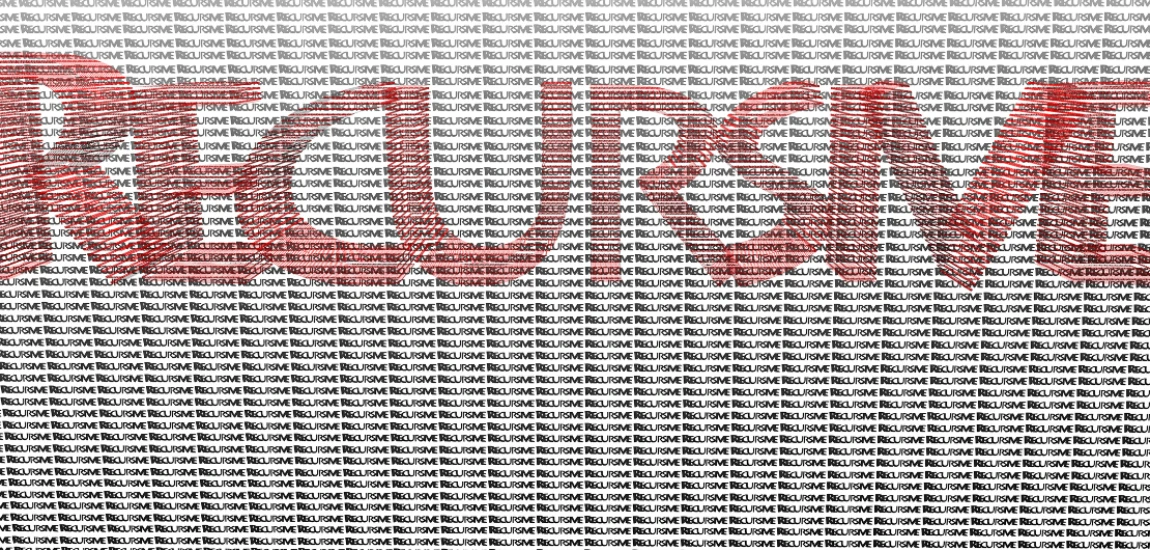
Recursion, in its simplest form, means something that refers back to itself. In technology, it’s a function that calls itself; in culture, it’s the endless cycle of reference, imitation, and reinvention. From meme culture to AI-generated music, recursion defines the creative patterns of our time. Every remix begets another, and the original disappears into a sea of versions. Recursive culture thrives on iteration—it’s not about creating something new, but about reinterpreting what already exists in infinitely novel ways.
The end of originality and the birth of remix logic
The modern creative landscape is built on remixing. Sampling in music, collaging in digital art, and algorithmic image generation all embody recursive processes. Originality is no longer about inventing from scratch but about how effectively one reconfigures the existing. Platforms like TikTok and YouTube exemplify this recursion: trends loop endlessly as users replicate, edit, and reperform the same idea with slight variations. What was once imitation is now innovation.
Code as cultural DNA
At the center of recursive culture lies code—the language that governs repetition and transformation. Algorithms dictate what we see, how we create, and even what we consider “popular.” Each line of code becomes a cultural gene, reproducing itself across millions of screens. As humans interact with these systems, our behaviors become inputs for further recombination. Culture is no longer linear or authored; it is computational, self-referential, and recursive by design.
The Algorithmic Artist: Creativity in the Age of Code

From tool to collaborator
Once considered mere instruments, algorithms have evolved into creative partners. Artists now work with AI models like DALL·E, Runway, and ChatGPT, co-creating outputs that neither human nor machine could produce alone. This collaboration blurs the boundary between intention and automation. The artist becomes a curator of algorithms—guiding, prompting, and refining recursive processes rather than controlling them outright. The machine learns from culture, and culture learns from the machine.
The aesthetic of iteration
Recursive culture values iteration over completion. Each version of an artwork, meme, or remix gains significance not as a final product but as a node in a larger feedback loop. The process itself becomes the art. Consider generative visual art, where code continuously modifies images in real time, producing infinite variations. Here, meaning emerges not from stability but from perpetual transformation. The aesthetic ideal shifts from perfection to flux.
The ethics of co-creation
As AI-generated works flood digital spaces, questions of ownership and authenticity arise. Who is the creator—the human who wrote the prompt, the developer who built the model, or the algorithm that executed the task? Recursive culture complicates authorship, revealing that every creation is built upon countless invisible layers of prior input. Ethical creativity in this era requires transparency, acknowledgment of sources, and an understanding of cultural interdependence.
The Infinite Remix: Culture Without an Endpoint

The remix as cultural engine
Remixing is the lifeblood of recursive culture. It’s not merely repetition—it’s reinterpretation. When artists remix, they engage in a dialogue with the past, the present, and even the algorithmic. In this sense, culture becomes an open system of loops, where every output generates the next input. From mashup videos to meme remixes, every iteration reflects the collective consciousness of a hyperconnected world.
Memetic evolution
Internet memes are perhaps the purest expression of recursive culture. They evolve like digital organisms, mutating with each repost, caption, and filter. Memes demonstrate how culture now operates algorithmically—selected, amplified, and recombined based on virality. Their humor and power lie in their recursive structure: they reference themselves, parody themselves, and reproduce themselves endlessly. The meme, like recursion, is both self-aware and self-replicating.
The paradox of infinite content
As remixing becomes infinite, meaning becomes unstable. The abundance of content risks flattening cultural depth—everything becomes derivative, self-referential, and contextless. Yet this instability also fosters new creativity. In the noise of infinite remix, originality re-emerges not through invention, but through selection—the ability to find, frame, and give significance to one version among millions.
Feedback Loops: When the Audience Becomes the Algorithm

The participatory loop
Recursive culture dissolves the distinction between creator and consumer. Every view, like, and share becomes an act of co-creation, feeding data back into the algorithm. Platforms like Instagram, YouTube, and TikTok function as self-learning ecosystems where audience behavior directly shapes content trends. The more we engage, the more the system refines its understanding of what we want—creating a recursive loop between desire and design.
Emotional algorithms
Algorithms are not neutral; they amplify emotions that generate engagement. Outrage, humor, and nostalgia are algorithmically privileged because they fuel recursion—content that triggers strong feelings is more likely to be shared, remixed, and reinterpreted. In this sense, emotion itself becomes a recursive function. Our reactions train the algorithms, and those algorithms, in turn, manipulate our reactions. Culture becomes a feedback system of emotional recursion.
The illusion of personalization
Personalized feeds create the illusion of individuality, but in truth, they reflect collective recursion. The algorithm doesn’t know you—it knows patterns across millions of users like you. As a result, personalization becomes standardization. Everyone receives slightly different versions of the same cultural loop. The diversity of output masks the homogeneity of input—a paradox that defines our digital existence.
Recursive Aesthetics: The Art of Infinite Variation

The beauty of repetition
Repetition has always been central to art—from the refrains of music to the patterns of architecture. In recursive culture, repetition gains new meaning. It’s not about redundancy but about transformation through iteration. Artists like Refik Anadol and Holly Herndon use machine learning to create evolving works that continuously remix data, sound, and imagery. Each loop adds nuance, layering meaning over time. This recursive aesthetic challenges the notion of art as static—it becomes temporal, alive, and ever-changing.
Generative design and the machine imagination
Generative art operates on the principle of recursion—where algorithms produce infinite variations from a single set of parameters. The artist sets the rules, and the system explores the possibilities. This process reflects how creativity itself may be algorithmic: recursive thinking, iteration, and refinement are not exclusive to code but inherent to the human imagination. In this dialogue, machine and artist reflect one another.
The return of the handmade
Paradoxically, as digital recursion dominates, there’s a renewed appreciation for the analog, the handmade, and the imperfect. Artists are exploring the boundaries between human touch and algorithmic process, intentionally reintroducing error into recursive systems. This hybrid approach reclaims authenticity within recursion—acknowledging that imperfection, too, is a form of creative resistance.
Beyond the Loop: Finding Meaning in Infinite Repetition

Escaping the recursive trap
While recursive culture fosters creativity, it also risks trapping us in endless repetition. The challenge is to find meaning within the loop—to transform recursion from an echo chamber into a site of reflection. This requires conscious engagement: curating our digital environments, questioning algorithmic influence, and seeking depth amid the remix. Awareness is the first step toward reclaiming agency within recursive systems.
Conscious creation in the age of automation
To create meaningfully in recursive culture, artists and thinkers must embrace recursion as a tool, not a trap. This means designing systems that encourage diversity, not homogenization—platforms that promote curiosity, not just consumption. Recursive creativity can be ethical and expansive when guided by intentionality. Rather than endlessly remixing the familiar, we can use recursion to explore what lies beyond it.
Toward a post-recursive imagination
Perhaps the next cultural revolution will emerge not from new technology but from new consciousness—a recognition that recursion mirrors human thought itself. Our memories, habits, and languages are recursive systems. By understanding this, we can reimagine creativity not as infinite repetition, but as infinite reflection. The loop becomes not a prison, but a mirror through which culture continuously rediscovers itself.


Anil Polat, behind the blog "FoxNomad," combines technology and travel. A computer security engineer by profession, he focuses on the tech aspects of travel.
Anil Polat

Prev Post

Next Post