
Machine Muse: AI as a Collaborator, Not a Competitor
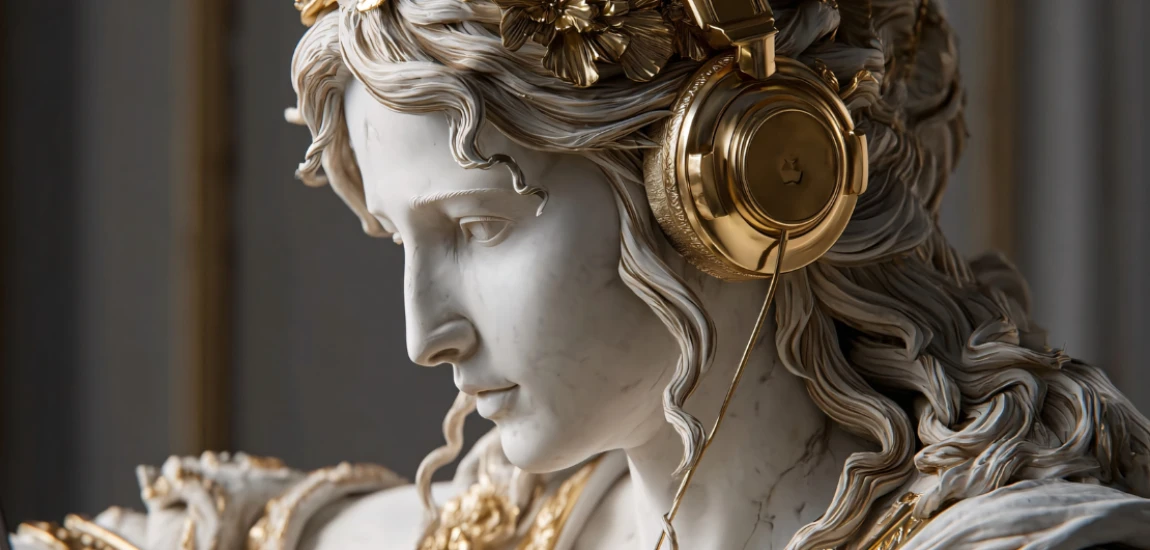
From automation to imagination
For decades, AI was built to replace human effort—whether in factories or data analysis. But the 21st century brought a shift: AI entered the realm of imagination. Instead of performing repetitive tasks, today’s AI systems—like ChatGPT, Midjourney, or Suno—co-create with humans, turning data into dialogue and algorithms into artistry. This marks the beginning of a new partnership between human intuition and machine intelligence.
The rise of generative creativity
Generative AI models produce original content—text, images, sound, and video—by learning from massive datasets. Tools like DALL·E and Runway ML allow creators to visualize ideas instantly, expanding creative possibilities without replacing human emotion. The artist remains the director, and AI becomes the instrument, amplifying inspiration through speed and scale.
Why collaboration matters more than competition
While early debates framed AI as a threat to creative jobs, the reality is more symbiotic. Human imagination fuels the prompts, context, and emotional depth that AI lacks. Collaboration between humans and machines doesn’t diminish creativity—it multiplies it. The creative process becomes less about “man vs. machine” and more about “what we can make together.”
Human-AI Symbiosis: Redefining the Creative Process

The role of intuition and pattern recognition
AI excels at identifying patterns—color palettes, narrative arcs, chord progressions—while humans excel at intuition and emotional nuance. When these strengths merge, the result is creative synergy. An AI might suggest a melody, but a musician decides its emotional direction. The machine offers possibilities; the human gives purpose.
Collaborative co-creation in practice
Writers now use AI to brainstorm storylines, visual artists to generate drafts, and filmmakers to design concept scenes. Instead of replacing creative input, AI acts as a sparring partner—challenging assumptions and accelerating exploration. The process feels less like outsourcing creativity and more like an improvisational duet between artist and algorithm.
From muse to mentor
In some cases, AI even guides creators toward better work. Tools that analyze writing tone, audience sentiment, or design balance offer instant feedback, making creators more aware of their own tendencies. In this way, AI becomes a mentor—one that never tires, judges, or limits human imagination.
The New Aesthetics of Machine Collaboration

Co-authored aesthetics
Art created with AI embodies a hybrid aesthetic—one that blurs the line between human and machine intention. The imperfections of human touch meet the precision of algorithmic symmetry. This fusion produces a new visual and narrative language that feels distinctly posthuman yet deeply human in emotion.
The emergence of algorithmic style
Every AI model carries its own aesthetic “fingerprint.” Midjourney images, for instance, tend to exhibit dreamlike lighting and surreal symmetry. Creators who understand these tendencies learn to coax style from code, treating the algorithm like a collaborator with its own artistic temperament.
Reimagining authorship and ownership
AI collaboration forces us to reconsider what it means to be an author. If a poet feeds ideas into a text generator and refines the results, who is the “creator”? The answer lies in framing creativity as a process, not a product. The human remains the curator—the one who interprets, edits, and imbues work with intent.
Creativity Across Industries: AI as a Partner in Innovation

In art and design
Designers use AI to generate thousands of variations in minutes, sparking ideas that would take days to conceive manually. Fashion houses experiment with AI-assisted pattern design, while architects simulate structures in virtual environments. The collaboration speeds up prototyping while preserving the human designer’s creative direction.
In music and film
AI tools like AIVA or Suno compose melodies based on emotional prompts, while filmmakers use AI for pre-visualization and sound design. Directors can test camera angles or lighting setups digitally before filming. This allows for more experimentation, reducing production costs without stifling artistic intent.
In writing and journalism
Writers leverage AI to draft outlines, refine tone, or conduct research. But the most effective uses occur when AI becomes part of the conversation—helping writers think faster, not write less. In journalism, AI aids in summarizing data-heavy topics, freeing journalists to focus on storytelling and analysis.
The Ethics and Boundaries of Creative Collaboration

Preserving human authenticity
As AI-generated content floods the internet, authenticity becomes a currency. The challenge is not just to create faster—but to create meaningfully. Audiences crave human stories, emotions, and imperfections. Transparency about AI collaboration fosters trust and highlights the human decisions behind the digital curtain.
Bias and representation in machine creativity
AI learns from human data, which means it inherits human bias. Creators must actively interrogate the datasets and models they use to ensure fair representation. True collaboration means guiding the machine ethically, not just aesthetically. Artists must become both creators and custodians of digital responsibility.
The legal frontier: who owns co-created work?
Copyright laws lag behind technological progress. When AI contributes to an artwork, determining authorship becomes complex. Legal frameworks must evolve to recognize human-led collaboration, ensuring that creative ownership reflects human agency even when machines assist in production.
The Future of the Machine Muse: Toward a New Creative Renaissance

Expanding human imagination
AI’s greatest contribution to creativity may be cognitive expansion. By presenting unexpected associations, AI helps humans think in new ways. The machine muse doesn’t just generate output—it sparks inspiration. This dynamic mirrors historical creative renaissances, where new tools—from the printing press to photography—expanded artistic potential.
Human creativity as irreplaceable
Despite AI’s growing sophistication, it lacks consciousness, empathy, and moral context. It can simulate style but not soul. Human creativity remains irreplaceable because it’s rooted in lived experience—the feelings, contradictions, and vulnerabilities machines can only approximate. AI may help us create, but it cannot feel what we create.
A partnership built on curiosity
The next phase of creativity will be defined by collaboration, not competition. Artists, designers, and thinkers who approach AI with curiosity—not fear—will lead the next wave of innovation. The goal is not to outsmart machines, but to co-evolve with them—shaping a world where technology amplifies, rather than replaces, human expression.


Gary Arndt operates "Everything Everywhere," a blog focusing on worldwide travel. An award-winning photographer, Gary shares stunning visuals alongside his travel tales.
Gary Arndt

Prev Post
Next Post