
Ghostwriters 3.0: AI as the Invisible Hand of Global Storytelling
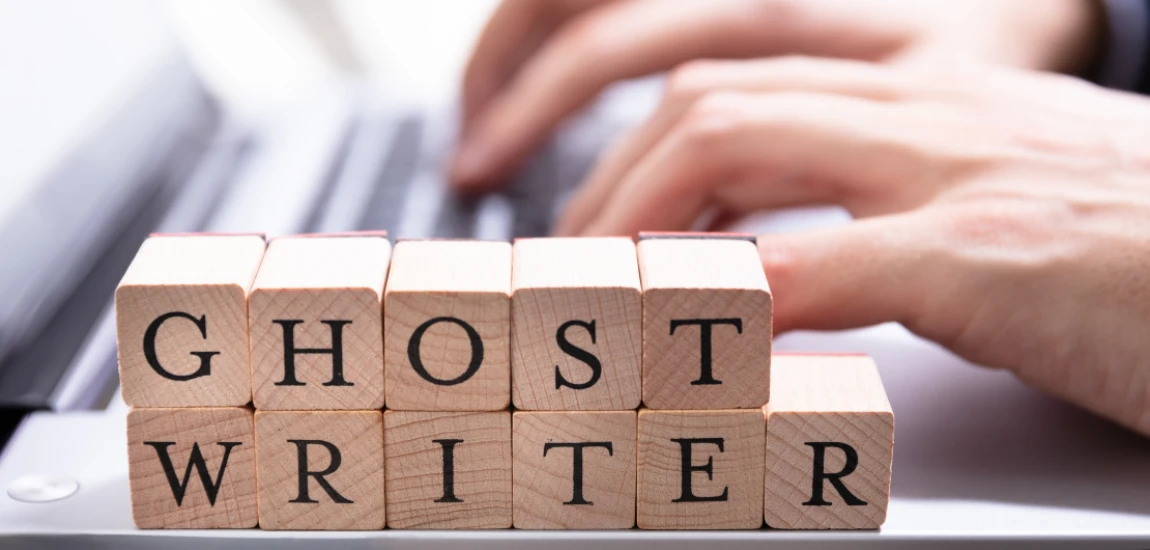
The art of ghostwriting has always been about invisibility. For centuries, talented writers have shaped speeches, novels, and scripts without receiving public credit. But now, in the age of artificial intelligence, ghostwriting has entered a new era—one where the “invisible author” isn’t human at all. Welcome to Ghostwriters 3.0, where algorithms, neural networks, and large language models like ChatGPT and Gemini are becoming co-authors of the global imagination.
Unlike traditional ghostwriters who work behind closed doors, AI systems operate silently in the background, analyzing massive datasets to generate stories that resonate emotionally and culturally. These digital collaborators can produce everything from novels and film scripts to brand campaigns and social media content—instantly and at scale.
The result? A new kind of authorship where creativity is distributed, shared, and redefined. The question is no longer whether AI can write—but what it means for human storytelling when machines begin to shape the world’s narratives. This marks a turning point not just in technology, but in culture itself—a moment when the authorship of imagination becomes a collective process between minds, both biological and artificial.
The Evolution of Ghostwriting in the Age of AI

From Typewriters to Transformers
The first wave of ghostwriting was manual—writers typing behind the scenes for celebrities, politicians, or executives. The second wave arrived with the internet, as freelancers filled content pipelines for blogs and digital platforms. Now, in the third wave—Ghostwriters 3.0—AI systems are not just tools but collaborative intelligence capable of understanding tone, emotion, and style.
The Mechanics of AI Ghostwriting
AI ghostwriters rely on natural language processing (NLP) and deep learning models trained on billions of words. These systems can emulate any author’s voice, mimic cultural nuances, and even invent entirely new styles of expression. Through contextual learning, AI adapts to user preferences, making the writing process more efficient and personalized than ever before.
Ghostwriting Without Borders
Unlike human writers, AI ghostwriters transcend geography and language barriers. They can generate stories in multiple languages, blending global influences seamlessly. This linguistic universality is transforming storytelling into a borderless enterprise, connecting readers and creators across continents through shared digital imagination.
In short, Ghostwriters 3.0 are not replacing humans—they’re globalizing creativity, enabling stories to travel faster and speak to wider audiences than ever before.
The Craft of the Algorithm: How AI Writes Stories

Learning the Language of Emotion
Modern AI systems don’t just process text; they interpret emotional patterns. By analyzing millions of sentences, AI learns to replicate tone—whether poetic, suspenseful, or humorous. This emotional intelligence allows AI to craft stories that feel human, bridging the gap between machine logic and human sentiment.
Narrative Structure and Predictive Creativity
AI ghostwriters employ predictive modeling to anticipate story arcs. By understanding narrative rhythm—introduction, conflict, climax, resolution—these systems can generate cohesive plots that rival those of human authors. Writers now use AI as a co-creator, feeding it prompts and guiding its “imagination” toward unique outcomes.
Co-Creation and Creative Direction
Many modern authors, screenwriters, and journalists use AI as a silent partner. It can draft outlines, refine syntax, or even generate metaphors based on input keywords. The human creator remains the director, shaping raw AI output into emotionally rich narratives. This partnership represents a creative symbiosis—the fusion of machine efficiency and human intuition.
As a result, writing becomes less about labor and more about curation. The creative process evolves into a dialogue between imagination and computation.
AI Ghostwriters and the Globalization of Storytelling

Cultural Cross-Pollination
One of the most profound impacts of AI ghostwriters is their ability to absorb and remix cultural narratives from around the world. A story that begins with Japanese folklore can effortlessly blend with Latin American magical realism or African futurism. AI facilitates a kind of cultural fusion that expands storytelling beyond national and linguistic limits.
Democratizing Access to Creativity
For aspiring writers in developing nations, AI offers access to tools once reserved for professionals. Platforms powered by AI enable anyone with an idea to turn it into a publishable story, regardless of education or background. This democratization of creativity is giving rise to new voices and global perspectives that traditional publishing often overlooked.
Bridging Human Experience Through Data
AI doesn’t just copy stories—it studies humanity itself. By analyzing patterns in global literature, social media, and online discussions, AI ghostwriters identify universal emotional themes—love, loss, resilience—that resonate across cultures. These shared patterns allow AI-generated stories to connect diverse audiences through collective empathy.
In many ways, AI is helping to write the world’s first truly global mythos—a shared narrative tapestry woven from human data and machine imagination.
Ethical and Creative Implications

The Question of Authorship
When an AI ghostwriter crafts a story, who owns it? The programmer, the user, or the algorithm itself? This question sits at the heart of modern intellectual property debates. Legal frameworks are still catching up, leaving creators uncertain about ownership in the age of co-authored creativity.
Authenticity vs. Automation
Critics argue that AI-generated content lacks authenticity—that machines can imitate art but not feel it. Yet, supporters see AI as an amplifier of creativity, capable of freeing writers from mechanical labor to focus on emotional depth and originality. The truth likely lies in collaboration, not competition.
Ethical Storytelling and Cultural Sensitivity
AI models are trained on vast datasets that may include biased or outdated perspectives. Without careful human oversight, AI ghostwriters could unintentionally perpetuate stereotypes. Ethical storytelling, therefore, requires diverse data training and cultural accountability—ensuring AI-generated narratives uplift rather than exploit.
This new era demands transparent authorship, ethical data use, and a reimagining of creativity as a shared human-machine endeavor.
The Future of Writing: From Ghostwriter to Story Engine

Adaptive Storytelling and Real-Time Feedback
Future AI ghostwriters will not only generate stories but evolve them in response to audience feedback. Imagine novels that update based on reader emotions or interactive films that rewrite themselves in real time. This is the next step in living literature, where storytelling becomes dynamic and participatory.
The Emergence of Hybrid Authors
Tomorrow’s storytellers may identify as hybrid authors—creators who blend human creativity with AI precision. Writers will act as curators of machine-generated ideas, shaping them into nuanced, emotionally intelligent works. Just as photography didn’t kill painting, AI won’t replace writers—it will redefine their craft.
The Philosophy of Machine Authorship
The rise of AI ghostwriters forces us to rethink creativity itself. If machines can tell stories that move us, does the source matter? Perhaps the essence of storytelling lies not in who writes it, but in how it makes us feel. The next era of narrative will be defined not by ownership, but by connection—a global network of minds, human and artificial, writing the future together.
Ghostwriters 3.0 aren’t stealing the pen—they’re helping humanity write a bigger, more connected story than ever before.


Shivya Nath authors "The Shooting Star," a blog that covers responsible and off-the-beaten-path travel. She writes about sustainable tourism and community-based experiences.
Shivya Nath

Prev Post

Next Post