
AI, Aesthetics, and the End of Originality
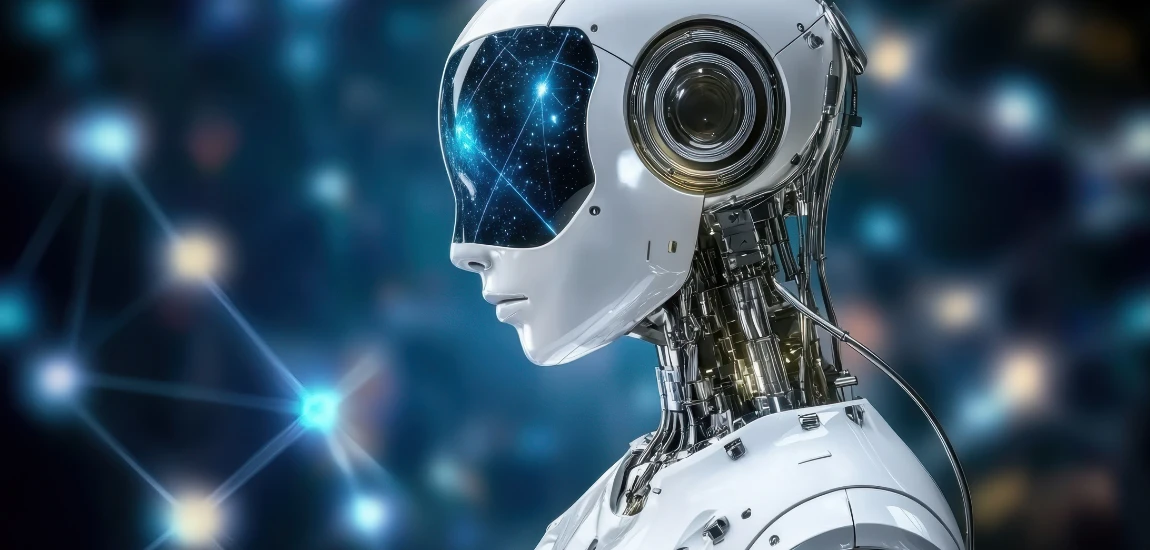
The algorithmic takeover of art
Artificial Intelligence is no longer just a background tool—it’s a collaborator, a competitor, and, in many ways, a curator of human creativity. From AI-generated paintings to ChatGPT-written poetry and music composed by machine learning models, creativity has entered a new frontier. Yet, as algorithms become better at mimicking artistic expression, they raise a provocative question: is originality dying, or just evolving?
How AI learns to imitate art
AI models like DALL·E, Midjourney, and Stable Diffusion are trained on vast datasets of existing human-made images, learning the patterns of composition, style, and emotion that define art. The more data they ingest, the better they become at producing outputs that “feel” human. But this process is inherently derivative—AI doesn’t create from experience or emotion; it statistically reassembles fragments of what’s already been made. The result is often stunning, but also strangely hollow.
The comfort of the familiar
Part of AI’s appeal lies in its ability to deliver exactly what we want—instantly. It generates what looks good, what feels relevant, and what fits seamlessly into current trends. But that familiarity is also what limits it. When creativity becomes predictable, originality dissolves into comfort, and art risks becoming an algorithmic echo chamber.
The Death of Authenticity: Aesthetic Homogenization in the Age of AI

The algorithm’s taste
Aesthetic trends on the internet already move at lightning speed. AI accelerates this even further. Once a particular style gains traction—say, pastel minimalism, vaporwave surrealism, or “digital nostalgia”—AI tools amplify it exponentially. The result is a homogenized visual culture where everything begins to look the same.
The erosion of artistic voice
When anyone can generate “art” in seconds, the value of an authentic artistic voice becomes harder to discern. AI doesn’t have influences—it has inputs. It doesn’t have perspective—it has probability. As machine-made aesthetics flood platforms like Instagram, Pinterest, and Behance, individual artists struggle to maintain distinction in a sea of sameness. The unique signatures of human imperfection—the brushstroke, the typo, the hesitation—are erased in favor of algorithmic perfection.
Beauty without meaning
Aesthetic perfection is seductive, but it’s also empty without intention. Art has always been about struggle, emotion, and context—the invisible labor behind the image. When AI replicates style without substance, it transforms beauty into a commodity. The art looks right but feels wrong. It becomes decorative rather than disruptive, smooth rather than soulful.
Generative Imitation: When Inspiration Turns to ReproductionCreativity by copy

Creativity by copy
Generative AI doesn’t invent; it interpolates. It takes existing data points and merges them into new configurations that seem novel. But this remixing is not the same as true originality. When a human artist draws inspiration, they filter influence through emotion, experience, and memory. When an algorithm “creates,” it merely calculates.
The blurred line between plagiarism and creativity
This distinction matters because AI’s training data often includes copyrighted work—paintings, photographs, or text that belong to real creators. The outputs may be “new,” but they’re built from uncredited labor. This raises serious ethical questions: if a machine’s art is composed of human fragments, who truly owns it? And can something derivative ever be truly original?
The illusion of infinite creativity
AI’s ability to generate endless variations gives the impression of infinite creativity, but in reality, it’s recycling the past at an unprecedented scale. The same motifs—cyberpunk skylines, dreamlike portraits, neo-gothic landscapes—repeat endlessly across feeds. The machine’s imagination is vast, but it’s confined to the limits of what it’s already seen. In this sense, AI doesn’t expand creativity—it loops it.
The Economic and Cultural Cost of Algorithmic Art

The commodification of creativity
AI art tools promise accessibility, but they also devalue creative labor. When businesses can generate logos, copy, and concept art instantly, human creators face a crisis of relevance. What used to require skill, time, and artistry now requires a prompt. This democratization sounds empowering, but in practice, it reinforces the commodification of creativity—turning art into cheap, endless output.
The creator’s paradox
Artists now face a paradox: ignore AI and risk irrelevance, or use it and risk dilution. Many creatives integrate AI tools into their workflow as assistants—speeding up ideation or expanding creative boundaries—but doing so blurs authorship. The result is a hybrid model of creation that’s both exciting and ethically murky.
Cultural consequences
As AI-generated art floods the digital ecosystem, culture risks losing its sense of origin. The collective archive of creativity becomes algorithmically recycled, erasing the lineage of artistic evolution. In this feedback loop, culture no longer progresses—it reproduces itself endlessly in slightly altered forms, each iteration losing a little more depth.
The New Aesthetic of the Machine: Post-Human Creativity

The rise of machine aesthetics
AI-generated visuals are developing their own aesthetic signature—one that’s distinctly post-human. The dreamlike distortions, uncanny symmetry, and surreal precision have become hallmarks of “AI art.” This aesthetic reveals something fascinating: while AI can mimic human creativity, it also produces a new kind of beauty, one that emerges from computation itself.
When humans imitate machines
Interestingly, the flow of influence is beginning to reverse. Designers, photographers, and digital artists are now emulating AI’s style—hyperreal textures, blended color palettes, impossible perspectives. The machine no longer imitates the human; the human imitates the machine. This recursive loop blurs authorship even further, creating an aesthetic ecosystem where origin no longer matters.
The question of authorship
If art reflects its maker, what happens when the maker is a machine? The very notion of “artist” becomes unstable. Some argue that human creativity lies not in making images but in designing systems that make them. Others believe that by outsourcing imagination, we lose the essence of art itself: the translation of human experience into form.
Preserving Originality in an Age of Infinite Imitation

Reclaiming intention
Originality in the AI era doesn’t mean avoiding technology—it means using it intentionally. Artists who approach AI with curiosity rather than dependency can still create work that feels deeply human. The key is to maintain authorship through interpretation—to use AI as a brush, not as a replacement for vision.
Cultivating creative friction
True originality often comes from limitations and mistakes—the very things AI eliminates. Embracing imperfection can be a rebellion against automation. By reintroducing friction into the creative process—through manual work, mixed media, or spontaneous experimentation—artists can restore authenticity to their output.
A future for human creativity
The end of originality isn’t inevitable—it’s a choice. AI can either flatten culture into repetition or inspire a renaissance of reflection. If creators, educators, and audiences demand transparency, credit, and context, we can build a digital culture where technology amplifies creativity rather than erasing it. The challenge isn’t to compete with AI—but to remember what it means to feel, to imagine, and to create from the human soul.


Ben Schlappig runs "One Mile at a Time," focusing on aviation and frequent flying. He offers insights on maximizing travel points, airline reviews, and industry news.
Ben Schlappig
Prev Post
Next Post